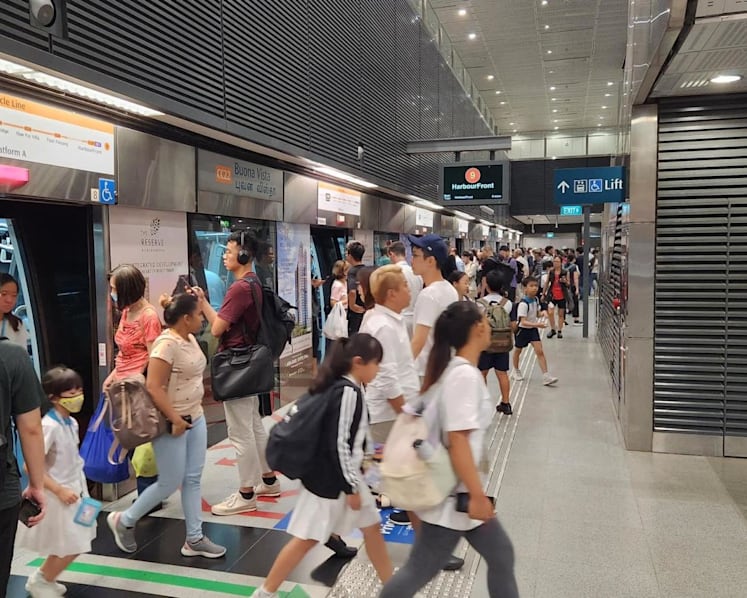
Commuters urged to plan alternative routes ahead of scheduled 3-month Circle Line disruption
The scheduled disruption is expected to last from Jan 17 to Apr 19 and will affect about 480,000 commuters daily.
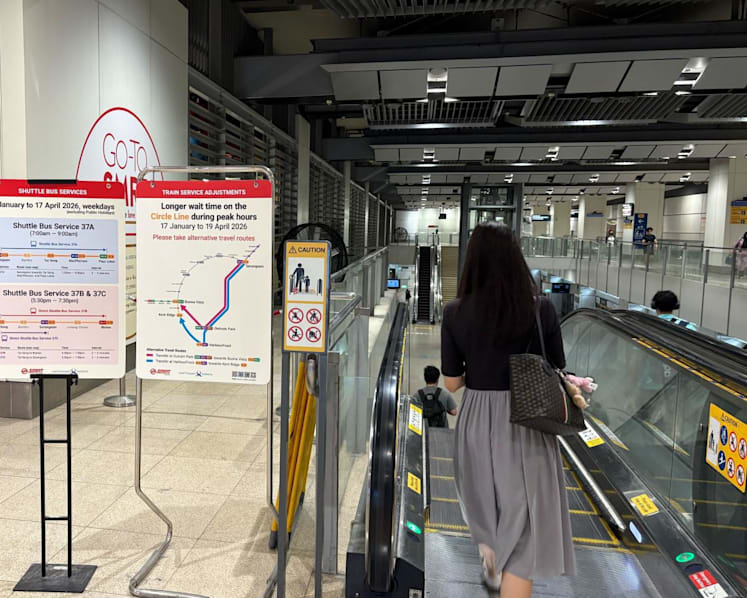
Posters at Serangoon MRT station on Jan 13, 2026, ahead of a three-month disruption on the Circle Line. (Photo: CNA/Justin Ong)

This audio is generated by an AI tool.


SINGAPORE: Commuters on the Circle Line (CCL) should begin planning alternative routes ahead of a scheduled service disruption from Jan 17 to Apr 19, said Acting Transport Minister Jeffrey Siow on Tuesday (Jan 13).
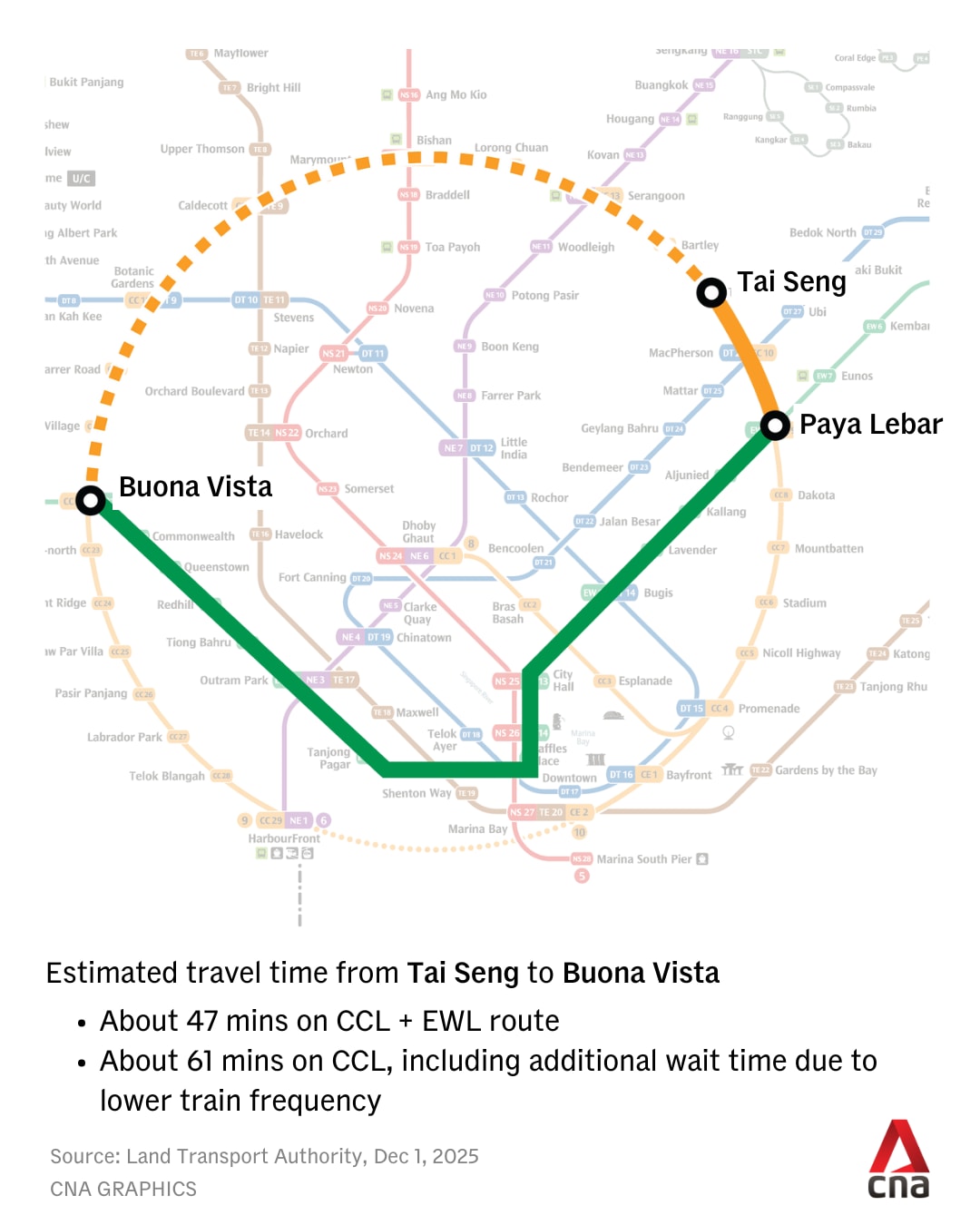
During the three-month period, trains will run on a single platform between three CCL stations – Mountbatten, Dakota and Paya Lebar – to allow for tunnel strengthening works.
The scheduled disruption is expected to affect about 480,000 commuters daily.
"There will still be some train service, but the headways will be significantly degraded to about 10 minutes, which means that if you take this route, you will probably have an additional 30 minutes added to your schedule, plus or minus," said Mr Siow during a visit to Serangoon MRT station on Tuesday.





"If you can avoid taking this route, I would suggest you do so. If there are alternative pathways along the train network, then please try to take them."
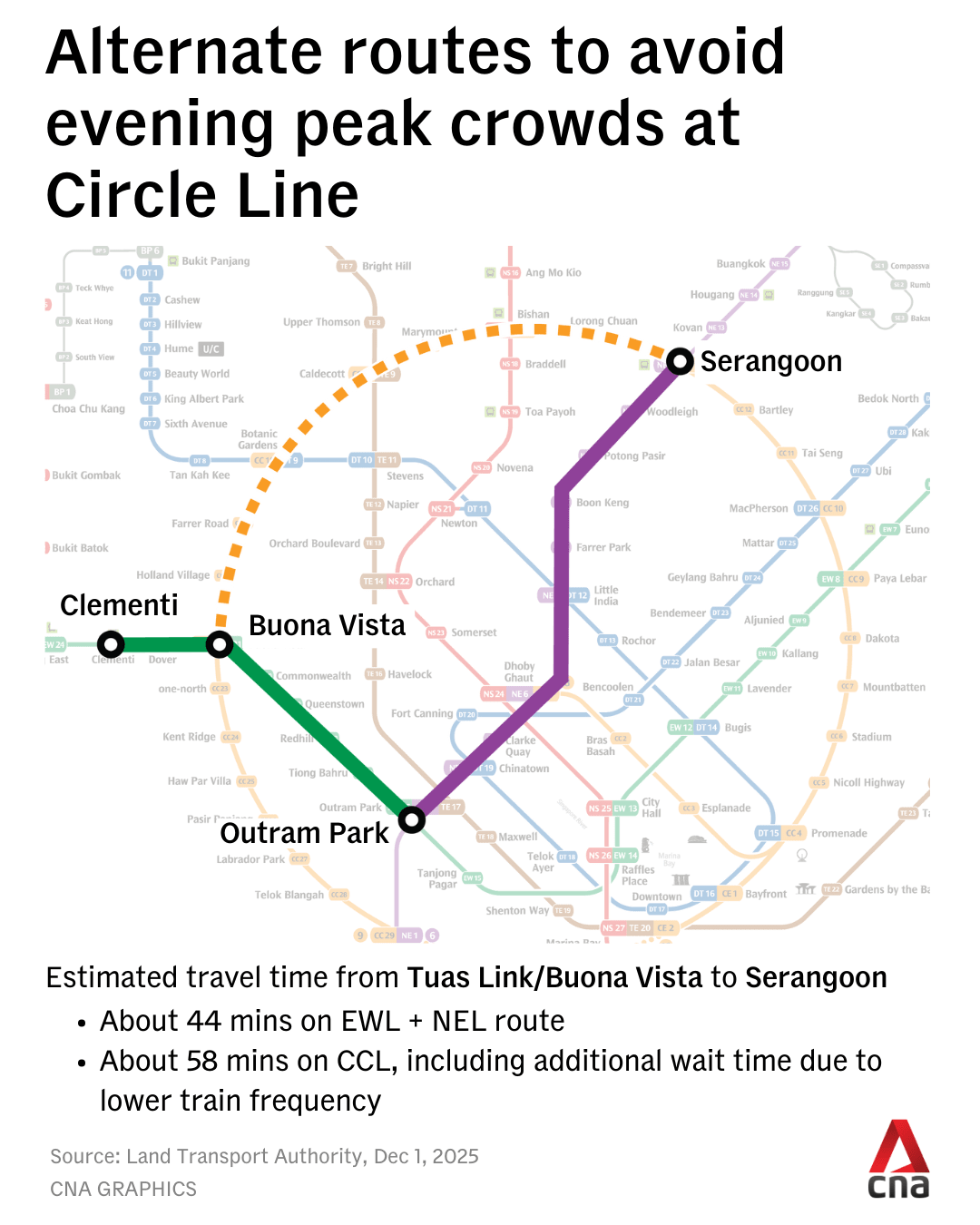
For example, commuters travelling from the northeast of Singapore to the west can take the North East Line to Outram Park and change to the East-West Line, instead of taking the CCL.
Shuttle bus services also started on Jan 5 to help familiarise commuters with the new routes. An additional 500 people will be deployed starting Jan 17 to control crowds and guide commuters to alternative transport arrangements.
“Our hope is that some of the commuters will try this out, so that they know whether the route is suitable for them, or how long ... it will take for them to take this journey,” said Mr Siow.
In the first week of operation during the familiarisation stage, 6,000 commuters took the shuttle buses.
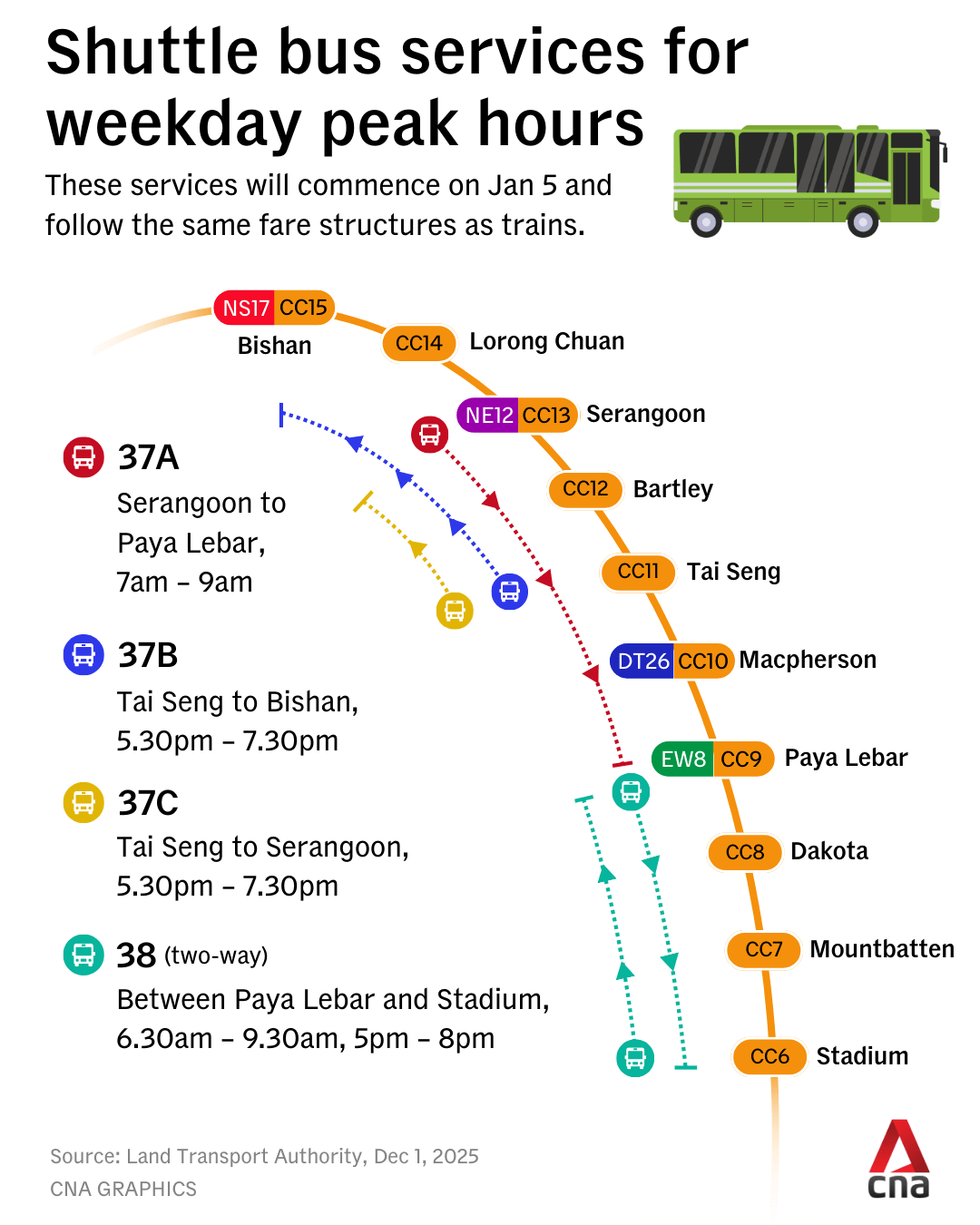
At Serangoon MRT station on Tuesday morning, there were signs for the shuttle bus service and ushers directing commuters.
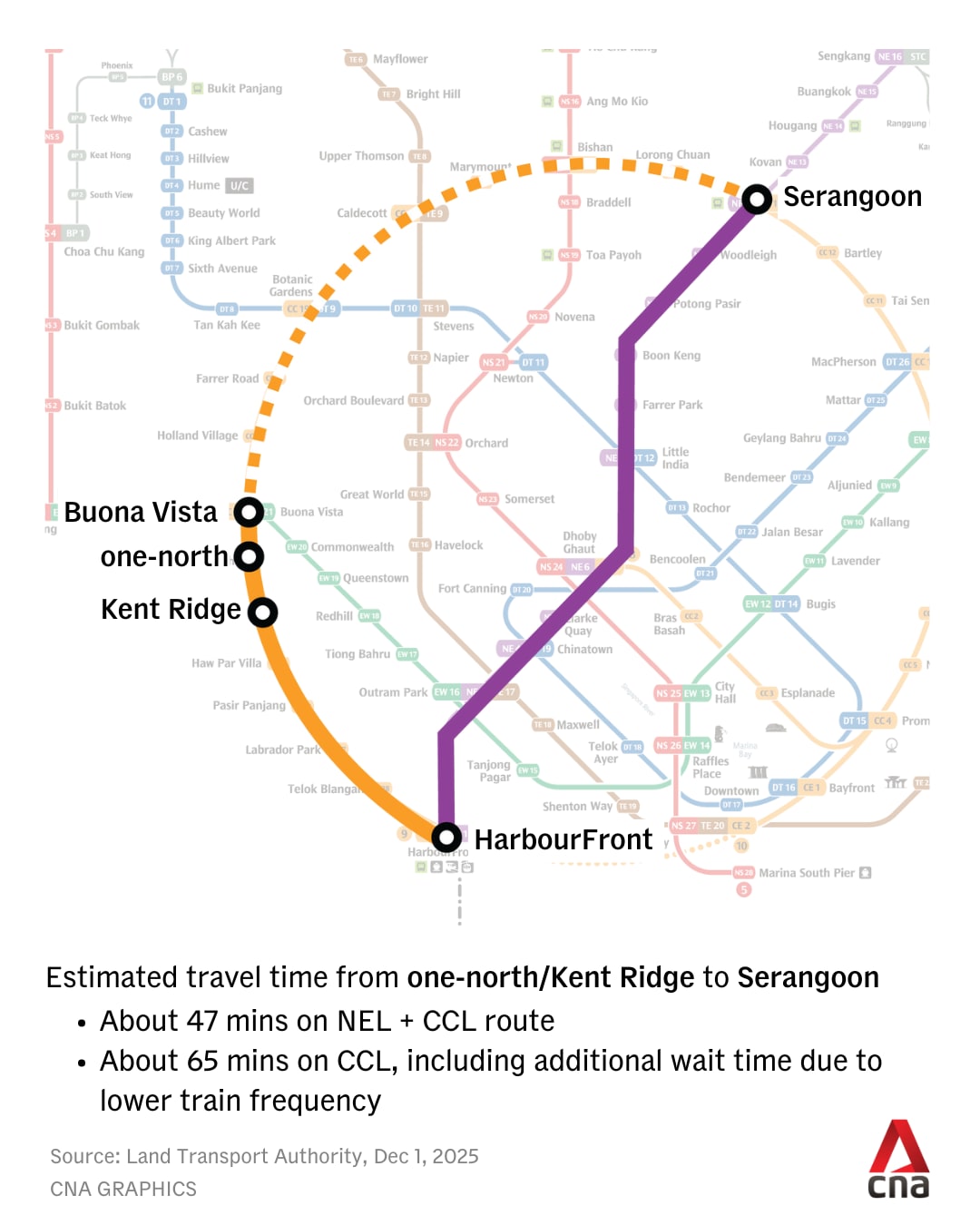
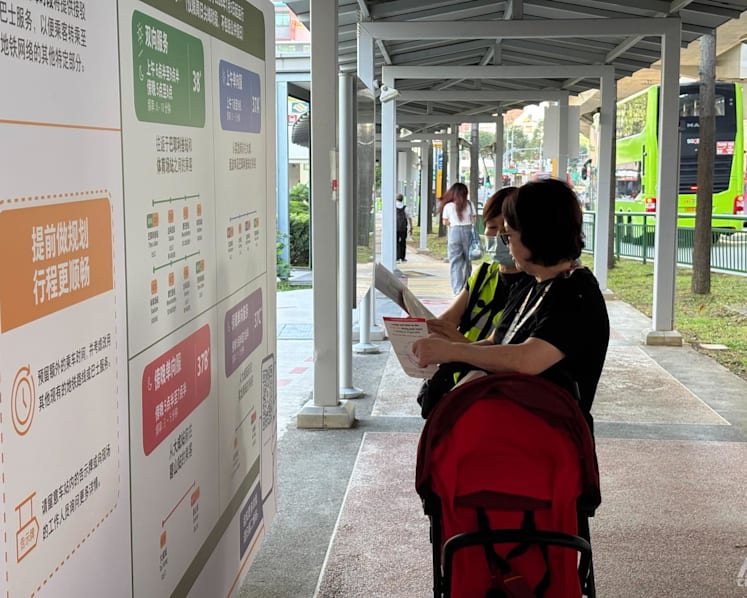
Posters will also be put up at affected stations about the alternative routes.
When asked why the scheduled disruption was chosen during a period that would coincide with Chinese New Year, Mr Siow said that there is “no perfect time to do the work”.
A balance had to be struck between commuters’ convenience and the time required to bring in contractors and recruit additional manpower.
“All that considered, we made the best effort,” he said.
“The most important thing is to do the work as quickly as we can, finish them up, and also to make it as safe as we can for the workers.”
The first week of the scheduled disruption will be “slightly more disorienting for the commuters”, said Mr Yeo Teck Guan, senior group director of public transport at the Land Transport Authority (LTA).
“In the steady state, we will have about 500 people on the ground, but in the first week, we will put more,” he added.
LESSONS FROM PREVIOUS DISRUPTIONS
The recent scheduled station closures on the East-West Line between Nov 29 to Dec 8 have taught transport operator SMRT some lessons, said the president of SMRT trains, Mr Lam Sheau Kai.
“In terms of crowd management… we learnt a lot, and we’ve made quite a number of improvements,” he said. “I think one of the key ones is really running the shuttle service early to get people to acclimatise to it.”
Mr Siow said that past scheduled disruptions have allowed transport staff to "gain some experience" in how to move, direct and explain to commuters why the disruption is taking place.
Mr Siow said in November that there would be more planned MRT line closures as the train network ages and requires more maintenance.
He said on Tuesday that in metro lines all over the world, there are "quite often" scheduled closures, so there is an "extended period of time" to do major works.
"You can expect that as our MRT network gets older and you need to do more replacement and renewal works, you have to do some of these scheduled closures," he added.
PREPARATION WORKS
Tunnel strengthening works are being carried out along sections of the Circle Line due to a phenomenon called “tunnel squatting”.
Tunnel squatting is the deformation of the tunnel lining as a result of compression of the soft clay the tunnel is within, beyond the expected tolerances.
Severe tunnel squatting can lead to consequences such as concrete cracking or spalling, which might fall onto the train moving past the tunnel and pose risks to public safety.
The strengthening process involves installing steel plates along the walls of the tunnel, and this requires heavy machinery, specialised lifting equipment and multiple engineering teams.
LTA said in a statement on Tuesday that underground preparation works are "intensifying".
Equipment and machinery such as customised robotic arms, mini gantry and jib cranes, have been specially modified onto the engineering wagons, and have been tested and commissioned to ensure that they are operationally ready to commence works.
Affected utility cables and cable brackets along the tunnel walls have also been relocated to make way for the steel plates, among other preparation works.
There is also a full-scale tunnel boundary replica featuring actual cable layouts that has been set up in Kim Chuan Depot for contractors to train on.
“Despite carrying out similar strengthening works in Shanghai, the contractors continue to undergo rigorous practice to familiarise themselves with Singapore’s tunnel constraints,” said LTA.