







Longer waits of up to 30 minutes for three months during Circle Line tunnel works in 2026
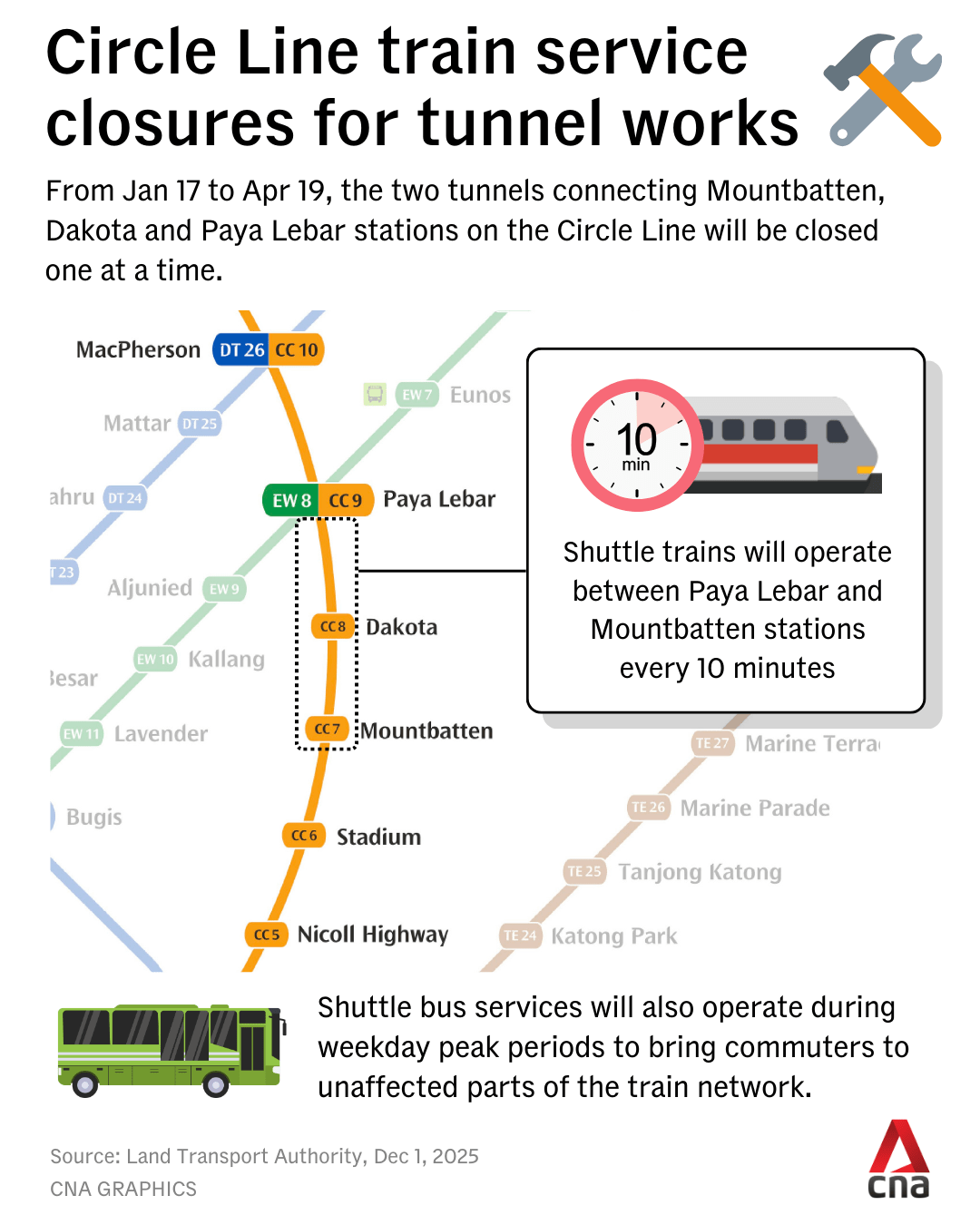
Over the 93-day period, the two tunnels that connect Mountbatten, Dakota and Paya Lebar stations will be closed one at a time, with shuttle trains operating on a single platform.

This audio is generated by an AI tool.


SINGAPORE: Some journeys on the Circle Line (CCL) will take significantly longer for nearly three months in early 2026, as trains run on a single platform between three stations to allow for tunnel strengthening works.
The Land Transport Authority (LTA) said on Monday (Dec 1) that commuters should expect additional waiting times of up to 30 minutes during peak periods from Jan 17 to Apr 19, when tunnels serving Mountbatten, Dakota and Paya Lebar stations are partially closed.
In one of the longest scheduled service disruptions to date across the entire MRT network, the two parallel tunnels that connect the three CCL stations will be closed one at a time.
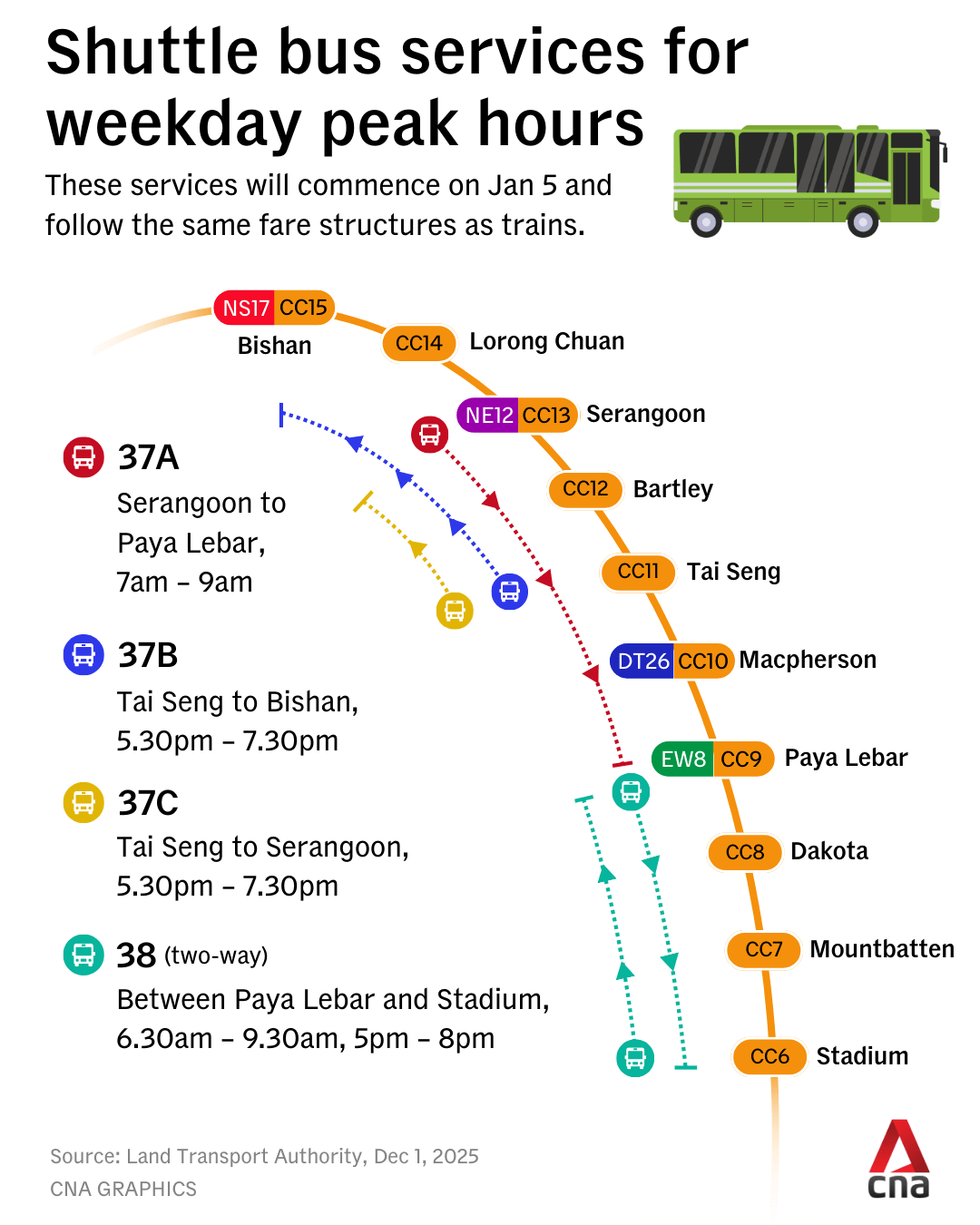
The trains will arrive at 10-minute intervals - up from the usual three - at the affected stations using the single open tunnel. To supplement the service adjustment, a new shuttle bus service will operate during weekday peak periods to bring commuters to unaffected parts of the train network.
OTHER STATIONS ALSO AFFECTED
In addition to the affected stretch, other parts of the CCL will also have increased waiting times during the works.
Peak-hour waiting times between HarbourFront and Paya Lebar stations will increase to about three minutes, from the current two.





Waiting times between Mountbatten and Dhoby Ghaut or Marina Bay will increase to about 10 minutes, from the current six.
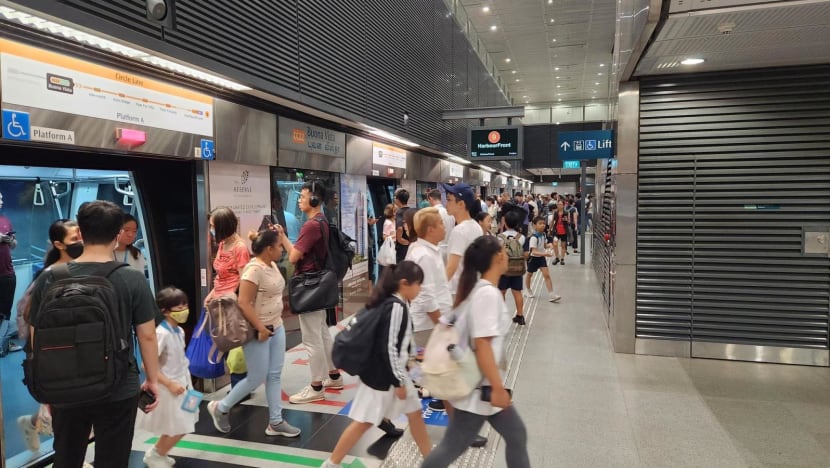
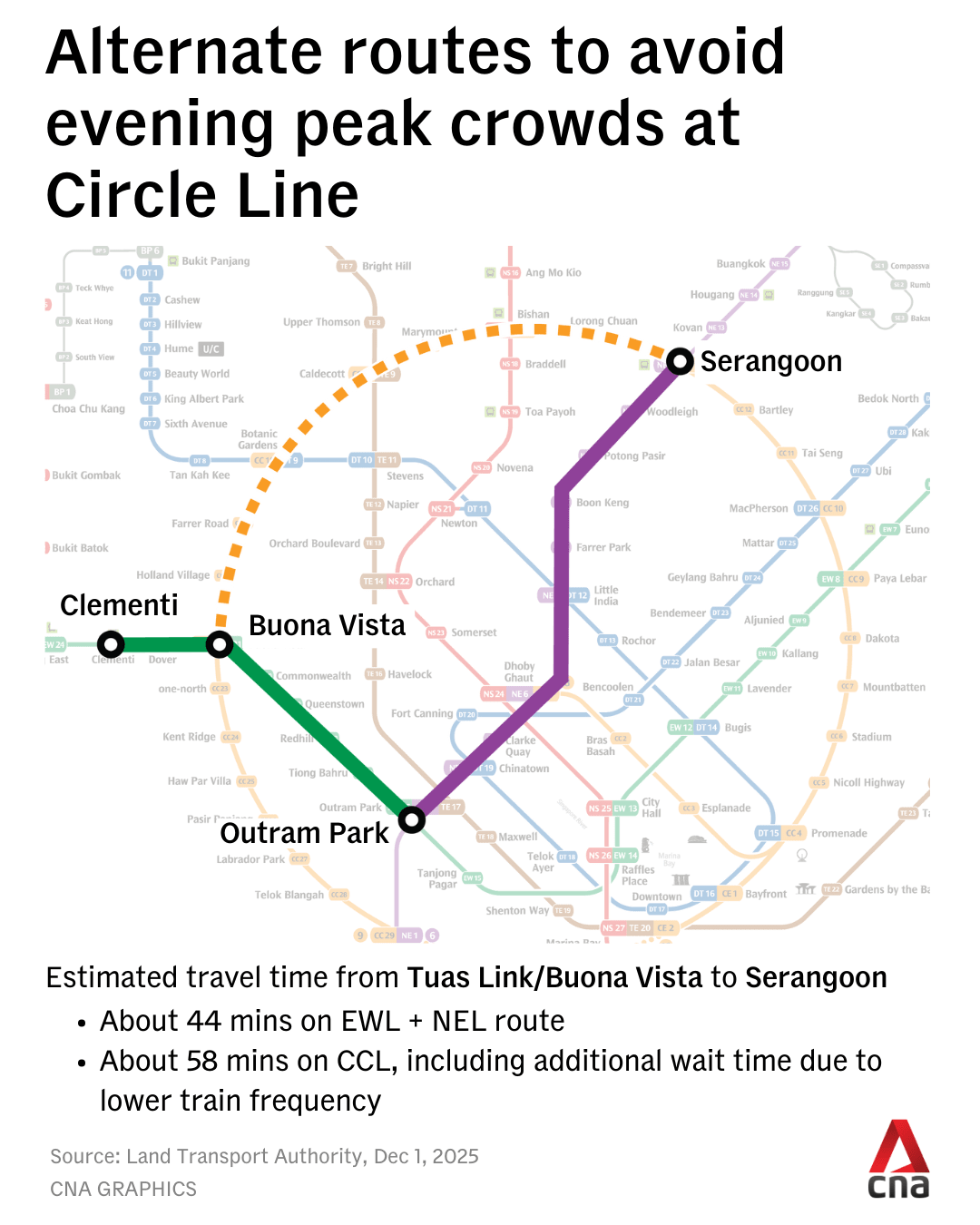
“We expect CCL interchange stations - such as Bishan, Serangoon and Buona Vista - to be crowded during morning and evening peak periods,” said LTA in its statement.
“During these periods, additional waiting time could extend to up to 30 minutes compared to typical travel times.”
The works will be required due to a phenomenon affecting several sectors of the CCL tunnels known as “tunnel squatting”. This occurs when soft marine clay that some parts of the tunnel are built in slowly compresses over time.
This can lead to disruptions in train operations and structural defects in the tunnel over the long-term if left unaddressed, said LTA.
In November, Acting Minister for Transport Jeffrey Siow said commuters should expect more planned closures of MRT lines as Singapore's rail network ages and requires extended maintenance time for major upgrades.
He said that the current approach of slightly extending maintenance hours – by ending services earlier and starting later – is no longer enough.
COMMUTERS TO CONSIDER ALTERNATIVE ROUTES
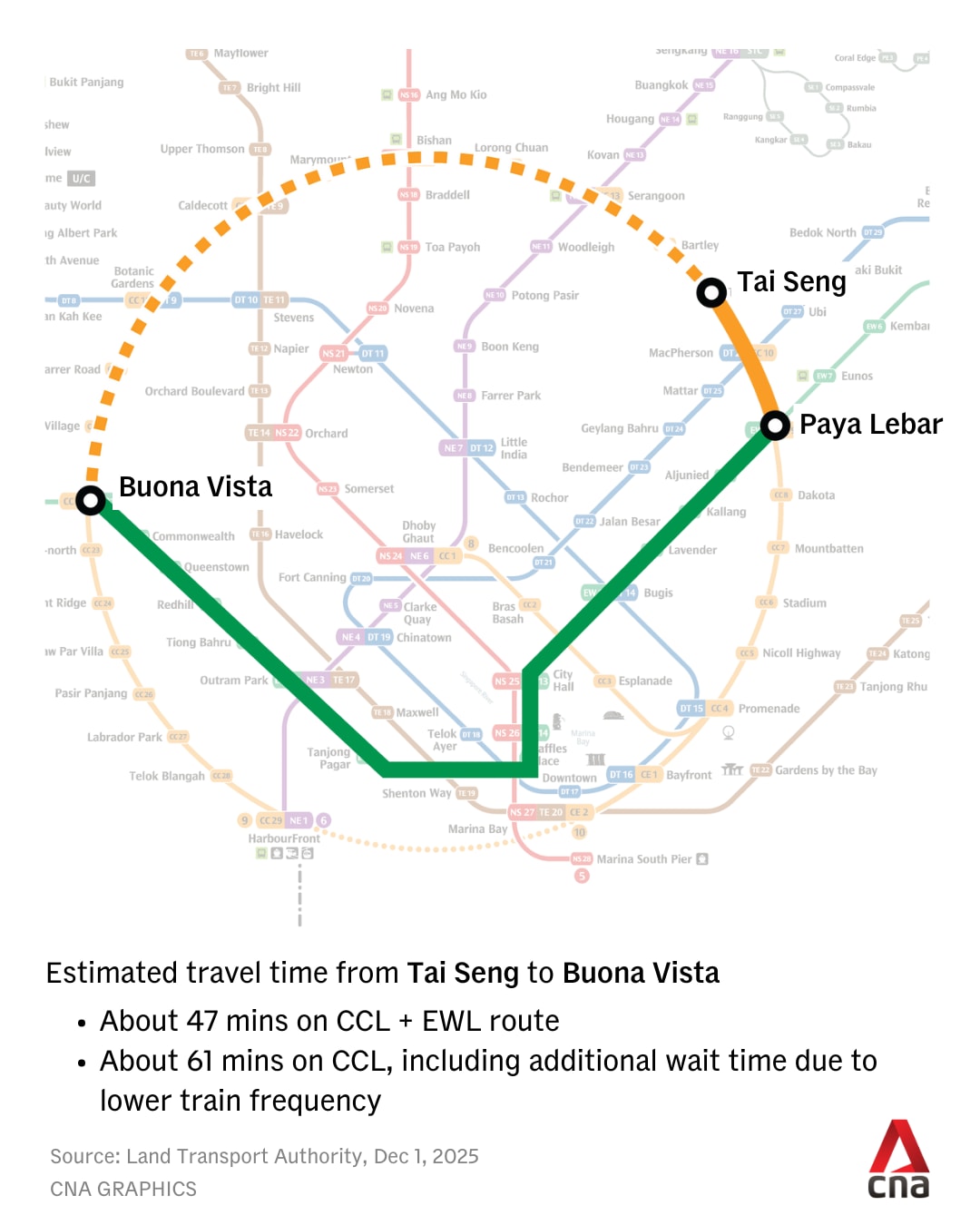
During the tunnel closure period, commuters are encouraged to plan ahead and consider alternative travel timings and travel options other than taking the affected stretch on the CCL.
“Where possible, commuters should consider other MRT lines to avoid the affected sections of the CCL,” said LTA.
“Commuters travelling during morning and evening peak periods may find it faster and more convenient to travel via other MRT routes, avoiding crowded stretches on the CCL.”
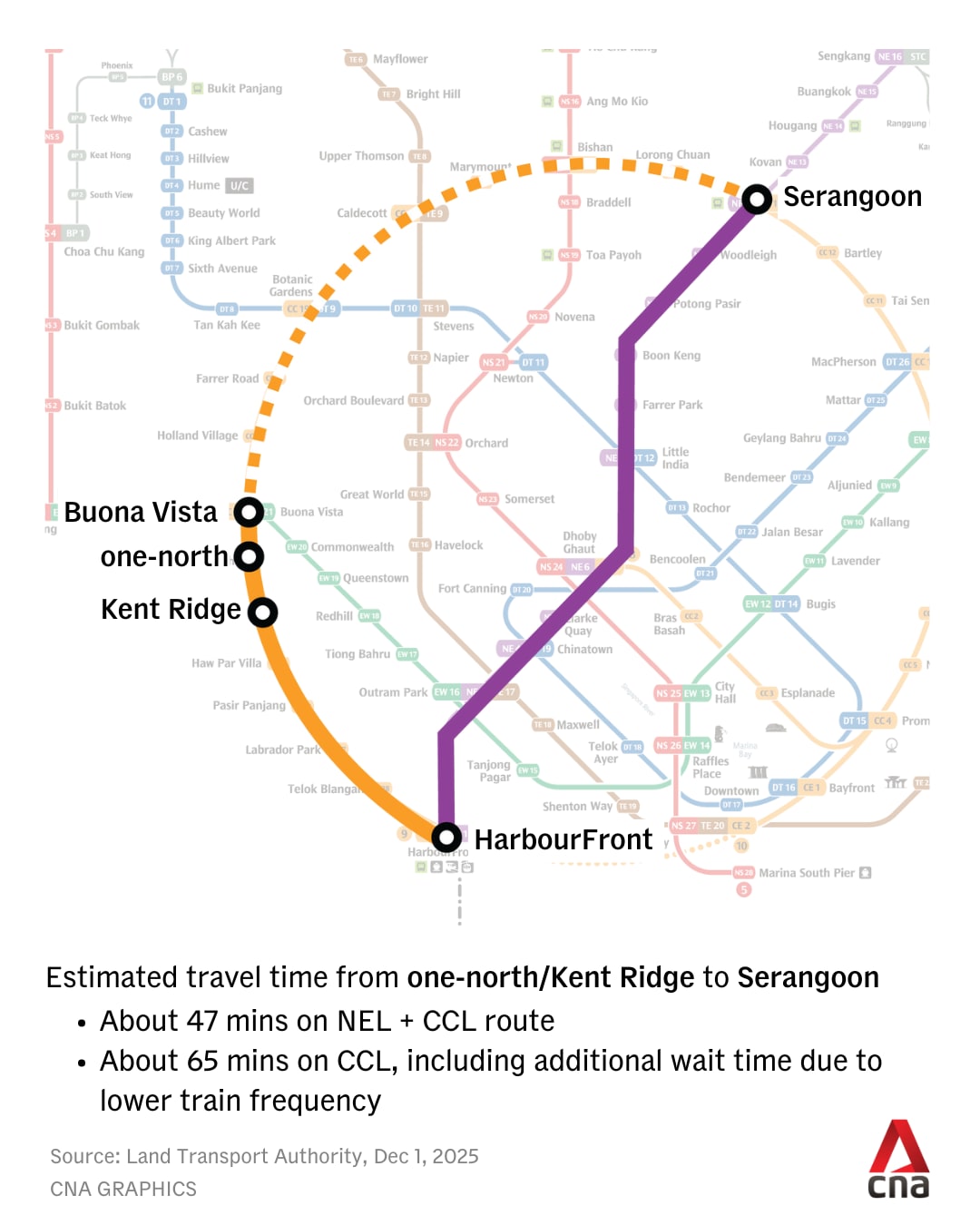
The peak-period shuttle bus services will commence on Jan 5 - about two weeks before the tunnel closure - so that commuters can familiarise themselves with the new travel options.
The shuttle bus services are:
Regular bus services that ply the affected areas remain available for commuters as alternatives.
For further details, commuters may also refer to LTA’s MyTransport.SG mobile app as well as social media channels managed by LTA and SMRT.
WHY WORKS HAVE TO BE 24/7
LTA noted that tunnel squatting has been monitored for over a decade, with recent scans identifying three tunnel sectors between Stadium and Paya Lebar as being more significantly affected.
There have also been minor defects in tunnels which were more affected by the phenomenon, such as signs of water leakage, which were rectified by using grouting to seal up the leaks, LTA added.
"While we have addressed these issues, we decided to carry out precautionary strengthening works, to reduce the risk of affecting rail services if left unaddressed," said LTA.
Tunnel squatting is deformation of the tunnel lining as a result of compression of the soft clay the tunnel is within, beyond the expected tolerances, said Mr David Ng, the Chairman of the Civil & Structural Engineering Technical Committee at the Institution of Engineers, Singapore.
He said that the soft clay is "like sponge filled with water to maintain its shape, when the water is squeezed out, the sponge will be compressed".
This compression will happen as a result of change in surrounding factors such as the changes to the groundwater table, which is the underground boundary where rock or soil is fully saturated with water.
"Imagine that if the tunnel is within the soft clay which is a sponge, when the sponge compressed, the tunnel within it will suffer deformation known as squatting," said Mr Ng.
He added that if excessive, tunnel squatting can lead to consequences such as concrete cracking or spalling which might fall onto the train moving pass the tunnel and will pose safety risks to public safety.
LTA said that the strengthening process involves installing steel plates along the circumference of the tunnel. This requires heavy machinery, specialised lifting equipment, and multiple engineering teams.
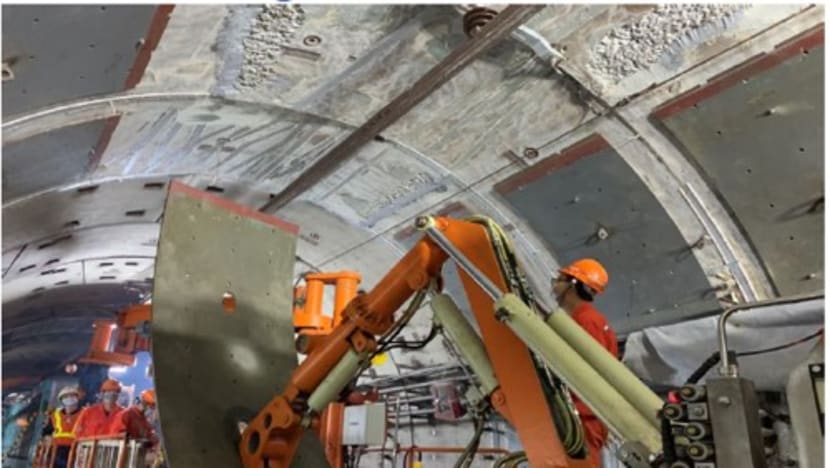
More than 300 workers and engineers will be deployed within the tunnels to install these plates across 450m of tunnel segments.
“Due to the scale and complexity of the works, we require longer blocks of engineering hours to ensure that strengthening works can be carried out safely and effectively,” said LTA.
To minimise the duration of service adjustments for commuters, the installation will be carried out 24/7 under a single, continuous tunnel closure, LTA added.
Tunnel squatting is not unique to Singapore. Cities such as Shanghai, Taipei, Busan, Barcelona and Lisbon have experienced similar issues and carried out comparable strengthening measures.
Train services can continue operating in one tunnel at a time because expert consultants have deemed the remaining open tunnel safe for use while works proceed in the other.


LTA said that it cannot rule out the need for further works, as tunnel squatting is "the result of geological processes".
"We will continue to monitor the tunnel and ground to ensure they have stabilised even after works are completed."
This is not the first prolonged service adjustment for tunnel works. Between January and April last year, one platform each at Telok Blangah and HarbourFront was temporarily closed to integrate Stage 6 of the CCL with the existing line.
In June 2023, there were train service adjustments at seven Circle Line stations, with shuttle trains serving stations between Promenade and Nicoll Highway as precautionary maintenance and strengthening works were carried out in the tunnels.
LTA added that next year’s adjustments are scheduled to be completed ahead of Stage 6’s opening, which will finally close the Circle Line loop.




