







Demand up for patient chaperones in ageing society
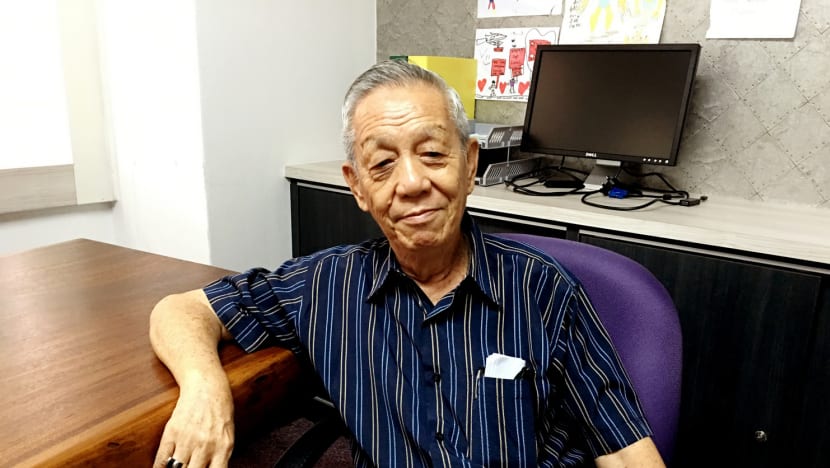
Mr Raymond Wee, 80, who has worked as a medical escort since 2006, said medical escorts need compassion, love and tolerance when serving their clients. PHOTO: KENNETH CHENG


SINGAPORE — Demand is on the rise for a small but growing pool of escorts who chaperone patients to and from clinics and hospitals, as awareness of such services grows and Singapore faces a steadily greying population.
Hospitals, too, are working with medical escorts to settle patients back into their homes.
The providers of such services run the gamut from voluntary welfare organisations and social enterprises to smaller private firms and freelance escorts.
They handle mostly older and frail patients, and the service usually starts in the patient’s home, where they may transfer those who are less mobile from beds to wheelchairs, and onto vehicles. The escort then accompanies the patient throughout the doctor’s consultation, unless told otherwise.





Other responsibilities include helping patients use the toilet and collecting their medicine before taking them home.
GROWING POOL OF SERVICE PROVIDERS
At Handicaps Welfare Association, the number of clients who use its medical-escort transport service more than doubled from 89 last July to 211 this July. Last month alone, a total of 780 such trips were made, compared with 381 trips in July last year, the association’s executive director Subrata Banerjee said.
There are now six drivers and 17 healthcare attendants who serve the central and western areas of Singapore — an increase from just two drivers and four attendants serving only the central region when the service started in November 2014.
At Touch Home Care, the home-care arm of Touch Community Services, the average monthly intake of new clients for its medical-escort transport service — which began in 1995 — has risen 25 per cent over last year’s figure, its director Kavin Seow said. From just one staff member and a van, the team now has five drivers, four medical escorts and two transport coordinators, supported by a group of 10 volunteers.
Other home-care providers such as Comfort Keepers get about five calls a month from individuals for such services, an increase from several years ago. Ms Sally Benjamin, its business development executive, said that it also has ongoing projects with healthcare institutions such as Tan Tock Seng Hospital and Khoo Teck Puat Hospital to settle patients back into their homes, when the hospitals discharge them to try to ease the crunch on beds.
NTUC Health is also seeing rising demand, although the social enterprise did not give figures. Ms Karen Bek, its deputy director of home-care and service partnership, said that about one-tenth of its clients require medical escort services.
Its team of 90 or so employees who provide home care, including medical escort services, has grown about four-fold over the past five years.
The cost of hiring a medical escort varies. Handicaps Welfare Association charges S$60 for a two-way trip, while a morning session with NTUC Health costs S$22 an hour, for at least three hours, before government subsidies. Freelance medical escort Tina, 42, who goes by a single name, charges S$25 an hour.
KEEPING AN EYE ON FOLLOW-UP APPOINTMENTS
Medical escorts are pivotal in helping patients follow through with their appointments.
Mr Seow from Touch Home Care said that most patients who find it too difficult to go for medical appointments end up ignoring them and stop taking medication, thus complicating their health conditions. “This is why medical escort and transport services will continue to be relevant in enabling the elderly to enjoy a better quality of life,” he added.
Ms Tina, who manages an informal team of six escorts and lists their services on websites such as Caregiver Asia, said that during the appointments, escorts take note of crucial information and the doctor’s instructions, and then update the patient’s family members.
Some patients also tend to discard their medicines or mix them up, so their families would instruct the escorts to put the pills in a certain place and send them a photo of it so they know where to find the medication when they visit the patient.
Ms Tina added that another factor for the service’s demand is the “emotional baggage” and friction between older patients and their children, and a third party helps in such situations.
Those who hire medical escorts for their aged parents also cite time pressures as a reason, Ms Benjamin said, given that appointments could stretch into a “whole-day affair”.
The escorts’ familiarity with the healthcare environment helps as well. For instance, Comfort Keepers’ caregivers would take patients to the food court for a drink or go for a stroll while waiting their turn.
For Mr Raymond Wee, 80, who has worked as a medical escort since 2006, one of the challenges is managing difficult clients, including those who refuse help and gripe about long waits. As medical escorts, they “need compassion and love and tolerance” when serving these patients, he said.




