GDP growth may no longer translate to jobs; deliberate strategy needed to create diverse opportunities: DPM Gan
Growing Singapore’s economy and creating good jobs are “twin challenges” for the country, said Deputy Prime Minister Gan Kim Yong.

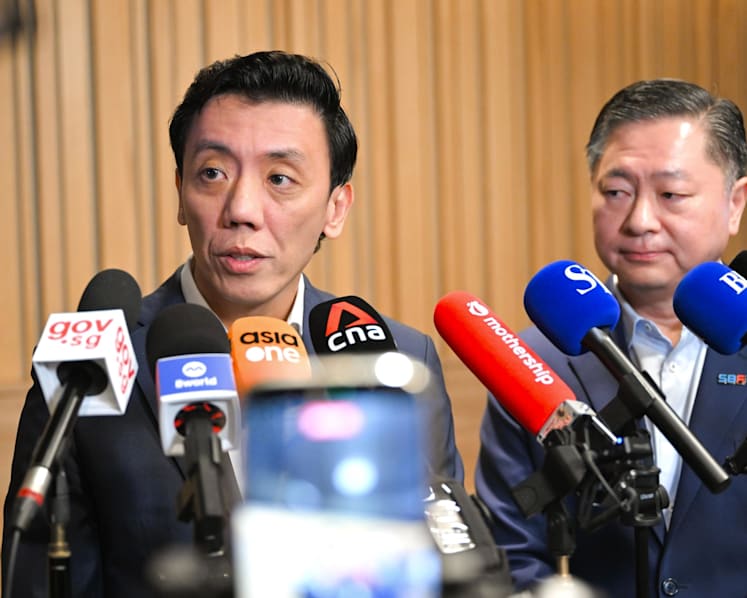
Deputy Prime Minister and Minister for Trade and Industry Gan Kim Yong addressing the media during the Economic Strategy Review mid-term update on Jan 29, 2026. (Photo: CNA/Alyssa Tan)

This audio is generated by an AI tool.


SINGAPORE: Economic growth may not automatically lead to job creation given technological advancements, and Singapore needs to be "deliberate" about its policies and strategies, said Deputy Prime Minister Gan Kim Yong.
Given that Singapore is "relatively mature", growth is already hard to achieve. This is made more difficult given the challenging external environment, said Mr Gan on Thursday (Jan 29).
The minister for trade and industry and chair of the Singapore Economic Resilience Taskforce was speaking to reporters as part of the mid-term update for the Economic Strategy Review.
Even if Singapore can grow its economy, jobs may not be created. “We can no longer assume that growth will automatically generate jobs,” said Mr Gan.
With automation and artificial intelligence, there will be higher value-adding industries and business activities. And with higher value-add per worker, fewer workers would be needed, he said.





The International Labour Organization’s (ILO) World Employment and Social Outlook Trends report in 2025 highlighted the same issue.
“Artificial intelligence is speeding up the digital transformation in ways that are producing more signs of job disruption,” the report said, noting that the incorporation of such technology has started to lead to job displacement.
A 2026 ILO report said that global job quality has stagnated despite resilient growth.
“Especially in these turbulent times, relying on economic growth alone is insufficient to deliver meaningful progress in decent work,” ILO director-general Gilbert Houngbo wrote.
“Governments, employers and workers must act together to develop and promote strategies that reduce decent work deficits and promote social justice.”
Singapore’s five Economic Strategy Review committees were set up in August last year to come up with ways to keep the country competitive amid structural shifts.

Growing Singapore’s economy and creating good jobs are “twin challenges” for the country, said Mr Gan.
“We need to be quite deliberate in our policies and our economic strategy, to focus on these two twin objectives, to make sure that both of them can be achieved,” he said.
"This is what we have set up the five committees to look into. At the same time, we are also thinking about how we can continue to achieve our medium- to long-term growth of between 2 per cent (and) 3 per cent.
"It is going to be very challenging, but we will work very hard to do that. And with the recommendations of these committees, we hope to be able to push ourselves towards growth on the higher end of the 2 per cent to 3 per cent over the next decade."
To that end, the review committees have proposed seven recommendations to drive growth and support workers.
They include doing more to position Singapore as an AI leader, broadening the range of good jobs available and making lifelong learning a practical reality.
BEYOND TECH ROLES
New opportunities cannot be concentrated only in a few sectors, the committees said in a media factsheet.
“We should boost our efforts to uplift and transform jobs in sectors that may be more resilient to global shifts and offer opportunities for quality employment,” they said, citing skilled trades such as technicians, as well as jobs in care and social services.
“There will be new roles that come about with technology, AI, but that alone by itself will not be enough,” said Acting Minister for Culture, Community and Youth David Neo, who co-chairs the committee focusing on equipping workers with relevant skills.
"There is a whole range of jobs, a lot of jobs, that Singaporeans are engaged in today."
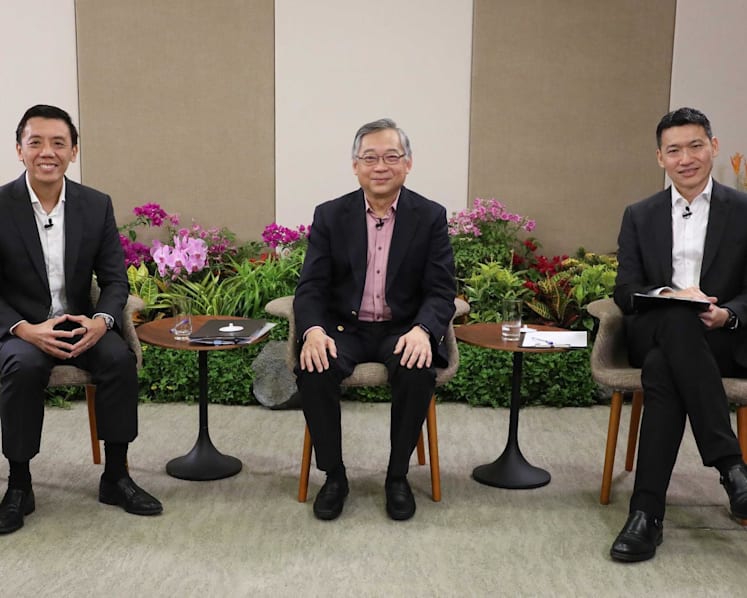
He said there will still be demand for common services that households and businesses need, and some jobs cannot be replaced by AI.
For example, electricians may be able to learn new skills and obtain certification to help service electric vehicles.
In the healthcare industry, technology can help workers be more effective and productive. Mr Neo pointed to cameras being used in Singapore General Hospital so that nurses can monitor patients.
Mr Gan said there will be anxiety among workers when a big change is underway.
“The key is, can we transform fast enough? Can we transform faster than our competitor, as a country, as a workforce?” he said.
"And this anxiety will always be there. So I think the ... assurance that we can give is that we will be with you every step of the way.
"We must do this as a whole of society, and not just you take care of yourself and you do what you can do, I do what I can do. I think that will be counterproductive."