







Economic uncertainties to put dent in S’pore birth rate
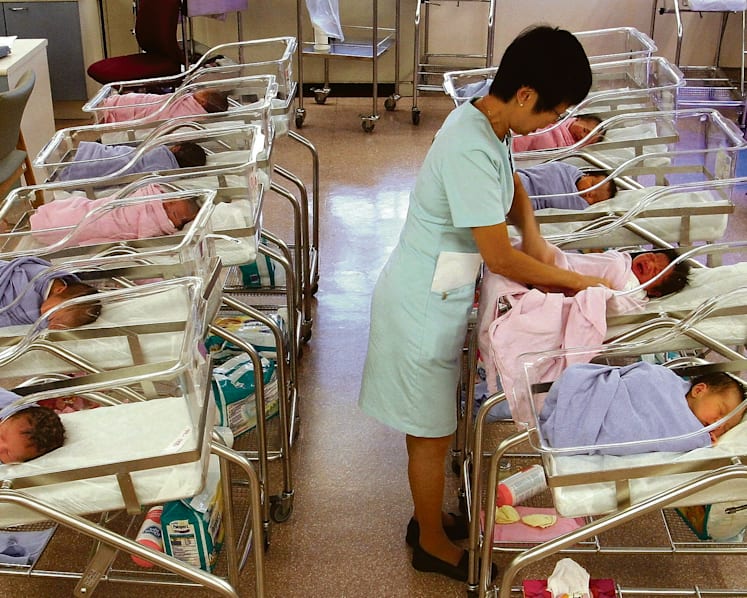
Economic uncertainties may put a dent in Singapore's birth rate. TODAY file photo


SINGAPORE — The Republic’s chances of continuing a four-year streak of healthy birth numbers could be dealt a blow by concerns over the gloomy economic outlook, said sociologists, though one felt the “gradual shift” in attitudes here towards parenthood will be enough to keep the trend going.
Their comments followed news earlier this week that an estimated 33,793 Singaporean babies were born last year, the highest in more than a decade, including the previous peak of 33,205 in 2012 — the Year of the Dragon; seen as auspicious by the Chinese.
But uncertainties in the economy, said National University of Singapore (NUS) sociologist Tan Ern Ser, “will not augur well for our fertility situation” as there will be couples concerned with not being able to provide the best for their children.
“My own sense is that as more Singaporeans become middle class, and with the current pessimistic economic outlook, there will be more married couples concerned about not being able to provide the best opportunities, which include both time and resources, for their children, so that their children can do well in future,” he added.





Likewise, Deputy Director of NUS’ Centre for Family and Population Research Thang Leng Leng said while it would be hard to predict birth numbers, baby bonuses and monetary incentives amid the gloomy economic outlook may play a bigger role in encouraging couples who are unsure about starting a family. Last month, Senior Minister of State in the Prime Minister’s Office Josephine Teo, who helps to oversee the National Population and Talent Division, said more measures to help future and new parents will be rolled out this year, including helping fathers play a more active role in parenting. Making affordable quality childcare more readily available, and enhancing workplace and community support for young parents are other areas of priority, she added.
Senior research fellow at the Institute of Policy Studies Mathew Mathews said it takes time for government measures to boost birth rates to reap results. “Some of these measures, such as getting fathers to play a more active role, will require some culture shifts especially with regard to how men negotiate their time at work,” he added.
But head of the Social Science Core at SIM University Kang Soon-Hock said last year’s citizen-birth numbers already suggest a “gradual shift” in what Singaporean couples think of parenthood.
“SG50 was a one-off event and while its feel-good factor may have contributed to the number of births, the increases are primarily a result of the earlier (Marriage and Parenthood) packages that laid the groundwork for the mindset change seen among married Singaporean couples considering parenthood,” he added.
On the new efforts announced by Mrs Teo, Dr Kang said these measures tackle issues that are “close to the hearts” of many couples who are deciding if they want to become parents, and give them the “peace of mind that there are mechanisms in place to support their parenthood decisions”. SIAU MING EN AND AMANDA LEE




