







By-election: Chee’s greater social media reach didn’t translate to votes
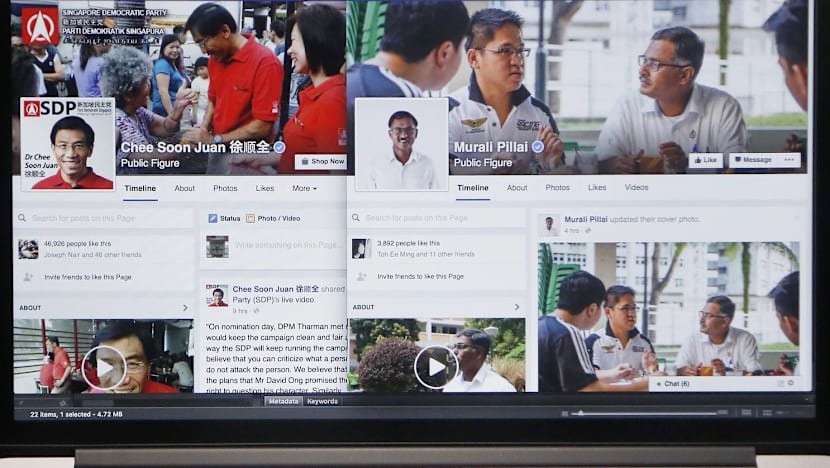
The official Facebook pages of Bukit Batok candidates Chee Soon Juan (SDP) and Murali Pillai (PAP). Photo: Raj Nadarajan


SINGAPORE — Despite putting up fewer Facebook advertisements than his opponent during the Bukit Batok by-election hustings, Singapore Democratic Party (SDP) chief Chee Soon Juan garnered greater reach on the social media site, although this did not translate into votes for him.
According to payment receipts from Facebook, Dr Chee’s most wide-reaching post garnered 115,469 impressions, a term that refers to the number of times a post is displayed, including occasions when they are not clicked on.
Dr Chee’s impressions were about eight times that of the 13,875 garnered by People’s Action Party (PAP) candidate Murali Pillai, who won the by-election.
Dr Chee spent S$686 advertising on Facebook, slightly more than twice the amount Mr Murali spent, which was S$317.50.





Their spending on Facebook advertisements formed part of the poll expenses that the two men declared to the Elections Department (ELD), which opened for public inspection yesterday.
Dr Chee’s top Facebook post was a 42-second video titled “Your Choice”, featuring scenes of Singaporeans and himself during house visits and previous rallies. Part of its description read: “Your lives, your family and your homes matter. You matter … So make that choice to let us be Your Voice to speak up on issues and policies that matter to you in Parliament.”
The video was first posted on April 7 and re-posted five times leading up to the May 7 by-election.
Mr Murali’s top post was a one-minute video titled “Bukit Batok. Our Home, Our Future”, featuring scenes around the neighbourhood and interviews with residents on their opinion of Mr Murali.
Facebook offers advertising packages based on various objectives, such as getting users to “like” a Facebook page, boosting specific Facebook posts, or directing people to a website. It is not clear from the receipts which ones each candidate opted for.
Overall, Dr Chee’s campaign bill totalled S$87,200, about S$5,100 more than Mr Murali’s S$82,091, according to the expenses declared to the ELD.
This means the SDP spent S$3.39 on each of Bukit Batok’s 25,727 voters, compared with the PAP’s S$3.19.
The ELD had raised the maximum spending limit for each voter to S$4 in August last year, up from S$3.50 to account for inflation.
The by-election, which was triggered by former PAP Member of Parliament David Ong’s resignation, saw Mr Murali elected into Parliament with 61.23 per cent of the votes, compared with Dr Chee’s 38.77 per cent.
The same two parties also contested in Bukit Batok during last September’s General Election, with the PAP spending S$2.83 per voter and the SDP spending S$1.27.
Big-ticket items for both candidates in the Bukit Batok by-election included procuring publicity materials and organising rallies. The SDP held four rallies, while the PAP had two.
Almost half (48 per cent) of Dr Chee’s expenses, amounting to S$41,932, were used to print posters, flyers and advertise on Facebook. Another 36 per cent, or S$31,660, were spent on booking sites, stage and sound systems for rallies.
Mr Murali’s spending on publicity, which also included costs for translating material into vernacular languages, amounted to S$37,279, or 45 per cent of his total expenditure. Another 34 per cent of the expenses, amounting to S$28,584, were due to the two rallies.
Other outlays included transport, stationery and food — the McDonald’s outlet at Bukit Batok Central appeared to be a frequent haunt for campaign agents and volunteers from both parties.
Under the Parliamentary Elections Act, the election agents of all candidates must submit a declaration and a return of election expenses within 31 days of the election results are published in the Government Gazette.
Members of the public can examine the submissions over the next six months at the Elections Department.




