Participation in EMA’s demand response scheme grows as firms curb peak electricity use
The scheme aims to ease pressure on the grid and stabilise prices, says the Energy Market Authority, as energy-intensive businesses turn to battery storage and solar to manage rising electricity costs.
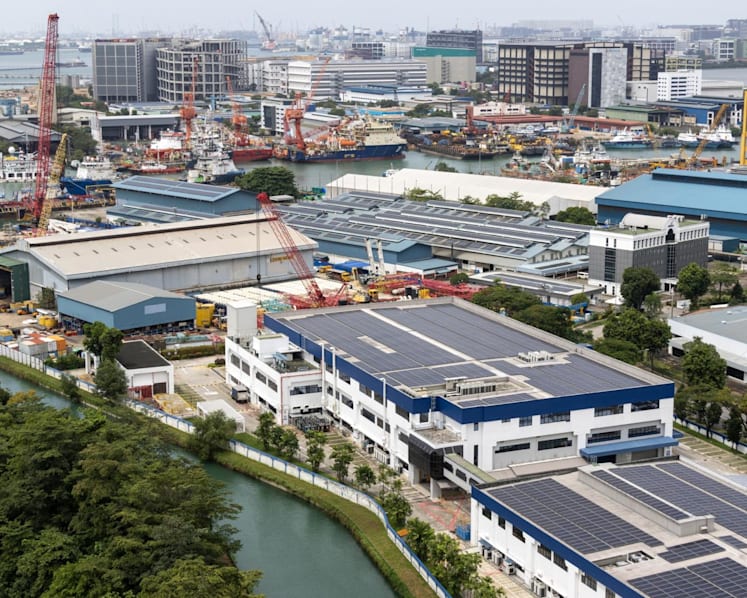
More energy-intensive firms in Singapore are adjusting electricity use and adopting solutions like solar and battery storage to manage rising costs and support grid stability. (Photo: iStock)

This audio is generated by an AI tool.




SINGAPORE: More energy-intensive firms in Singapore are cutting their power use during peak periods, as part of a scheme that rewards them for doing so when demand and prices are high.
The Energy Market Authority (EMA) said participation in its demand response programme has grown from four businesses in 2023 to 16 this year.
The number of service providers – which act as intermediaries between the power grid and businesses – has also doubled from three to six.
The scheme allows companies with heavy energy needs – such as manufacturers – to reduce electricity use when the grid is under stress. In return, they receive payments for reducing usage during these periods.
Electricity consumption cuts under the programme have reached 167 megawatts (MW) – enough to power about 300,000 four-room HDB flats for an hour.
HOW THE PROGRAMME WORKS
Demand response is designed to ease pressure on the power grid and can result in more stable electricity prices, says the EMA.
Firms can sign up via electricity retailers or aggregators. Those who can offer to reduce their power consumption by at least 0.1MW can also join the scheme directly.
Businesses commit in advance how much electricity they can cut during periods of high demand by bidding into the wholesale market.
When prices rise or supply tightens, EMA activates these bids, and participating firms reduce consumption to ease pressure on the grid.
Participants can either adjust operations – for instance, by temporarily switching off non-critical equipment – or rely on alternative power sources such as batteries or back-up generators.
In exchange, they receive incentive payments when activated. These payments can go up to S$4,500 (US$3,500) per megawatt-hour – the ceiling for electricity prices in Singapore’s wholesale market.
Firms will receive no payouts for partial delivery and may face financial penalties if they fall below an 80 per cent compliance threshold – the minimum required level of load reduction.
They may also face investigation for persistent underperformance and risk suspension after repeated under-delivery.





FIRMS TURN TO ALTERNATIVES AS COSTS SURGE
But not all firms can easily cut usage. For sectors such as cold chain logistics or data centres, where operations run round the clock, reducing power consumption is not always feasible.
Instead, companies are increasingly turning to battery storage systems.
These systems store electricity when demand is lower and release it when needed. This helps firms better manage costs.
Blue Whale Energy, which provides such systems, said interest has surged since disruptions to oil and gas shipments through the Strait of Hormuz began in March, driving sharp increases in electricity prices.
One of its cold room clients saw its monthly bill rise from about S$50,000 in December to S$85,000 by March, noted CEO Gabriel Lim.
Mr Lim said his company’s sales pipeline has jumped 151 per cent since the crisis began.
The firm is scaling up quickly, from three systems deployed last year to about 14 by the end of this month, and potentially 40 by year-end.
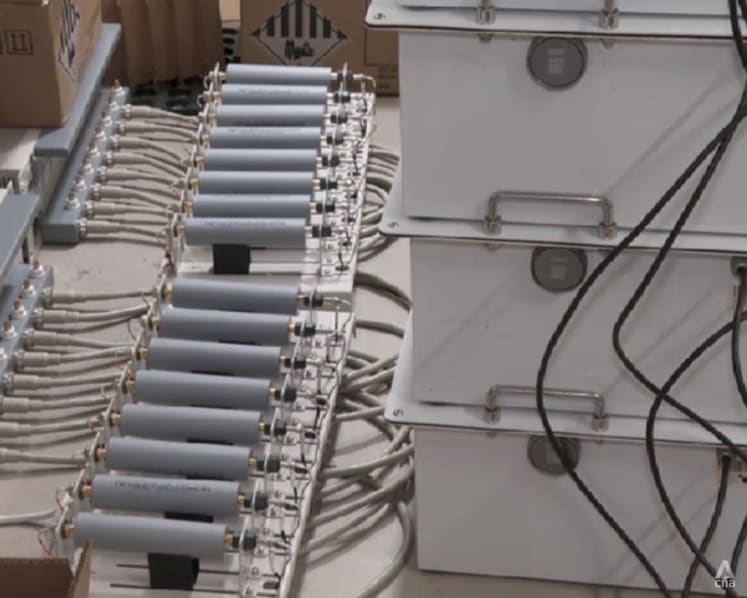
“Customers who consume a lot of electricity, where electricity is a very large and core part of their cost of goods … have been disproportionately impacted by the surge in wholesale electricity prices,” he said.
He added that businesses are combining solutions such as solar panels, battery storage and demand response to cope with rising costs.
SOLAR EXPANSION AND ENERGY RESILIENCE
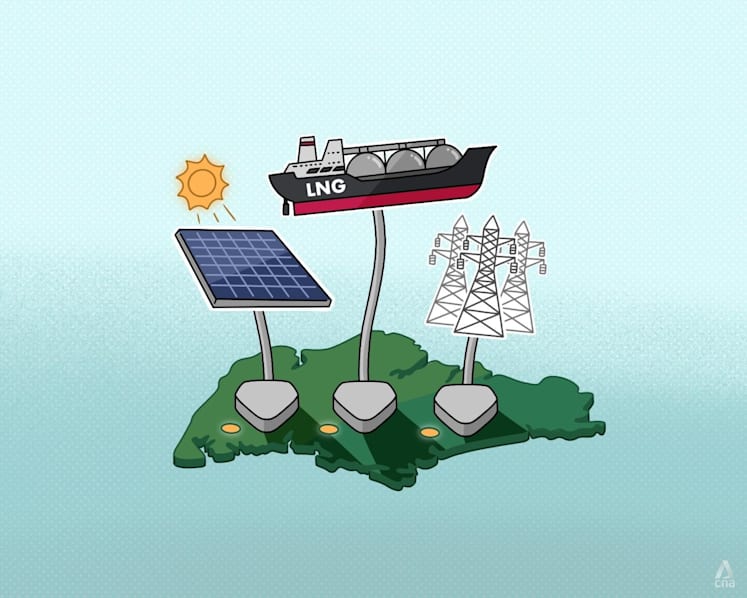
Beyond managing demand, Singapore is also expanding supply through solar as part of efforts to strengthen energy resilience.
Ms Violet Chen, director of solar and grid solutions at EMA, said solar capacity has grown strongly, rising by about 30 per cent over the past year from 1.6 gigawatt peak at end-2024 to around 2.1 gigawatt peak by end-2025.
Singapore is working towards a target of at least 3 gigawatt-peak of solar capacity by 2030.
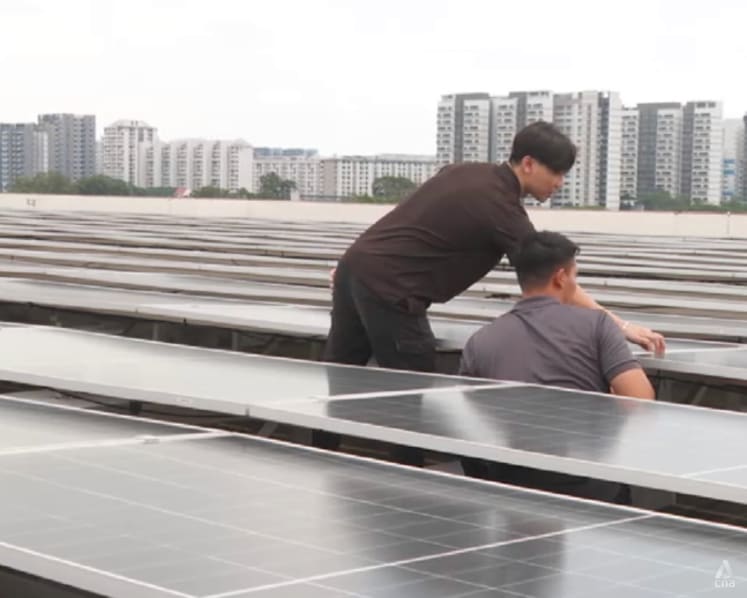
Falling solar panel costs and new financing options are also making adoption more attractive for both businesses and households, with some able to recover installation costs in under five years, she added.
However, solar energy alone is expected to meet only about 10 per cent of Singapore’s electricity needs, according to the EMA, as limited land and the intermittent nature of solar power constrain how much can be deployed.
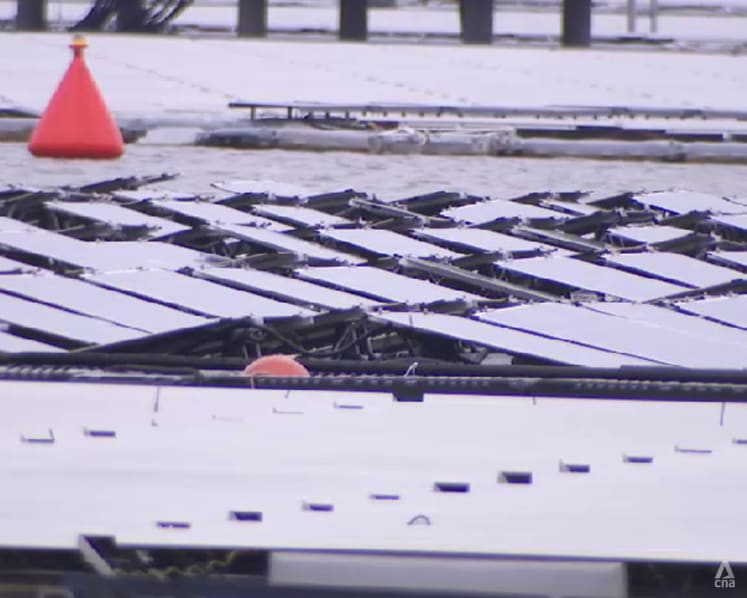
This means the country will still need to rely on imports for a significant share of its electricity. But analysts warn that this may not be straightforward.
Dr David Broadstock, partner at the Lantau Group, a Hong Kong-based energy consultancy, said countries are increasingly looking to produce electricity “as close to home as they can” to improve energy resilience.
This could affect Singapore’s ability to import low-carbon electricity, as neighbouring countries may reconsider whether it would make sense to “let it escape the country” as energy supplies tighten.
He noted that while renewable energy is a “very sensible pathway”, scaling it up will require significant investment in grid infrastructure to support imports and ensure a stable supply.
“There’s simply not enough of that in place at the moment to cope with everything that we hope to be able to bring in,” he added.
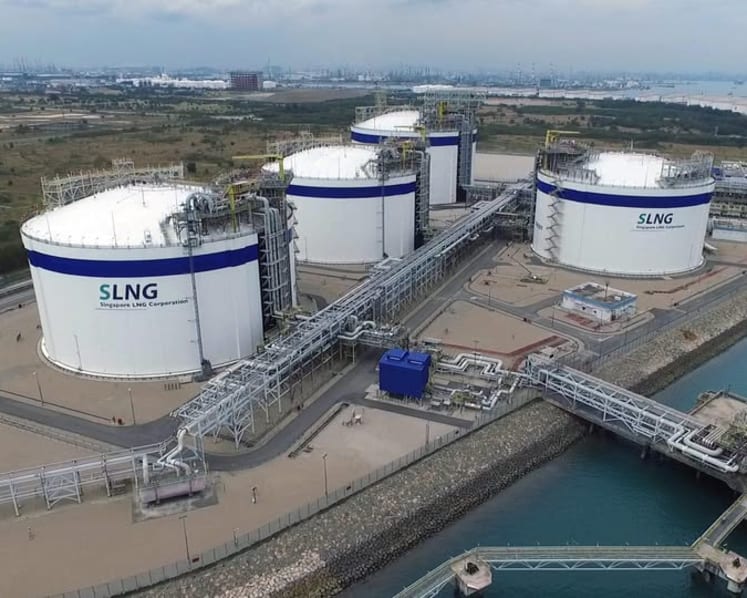
As electricity prices remain volatile, industry players say more businesses are expected to explore ways to better manage their energy use.
“I think this is probably a defining moment for Singapore, where we think about our energy sovereignty,” said Blue Whale Energy’s Mr Lim.
“It’s important that we really build as many renewable energy sources as possible, because every single kilowatt hour that's generated by a solar panel is a kilowatt hour that we don't have to import,” he added.