Singapore's March non-oil exports rise 15.3% on strong AI-driven electronics demand
The jump was also a result of a low base from a year ago.
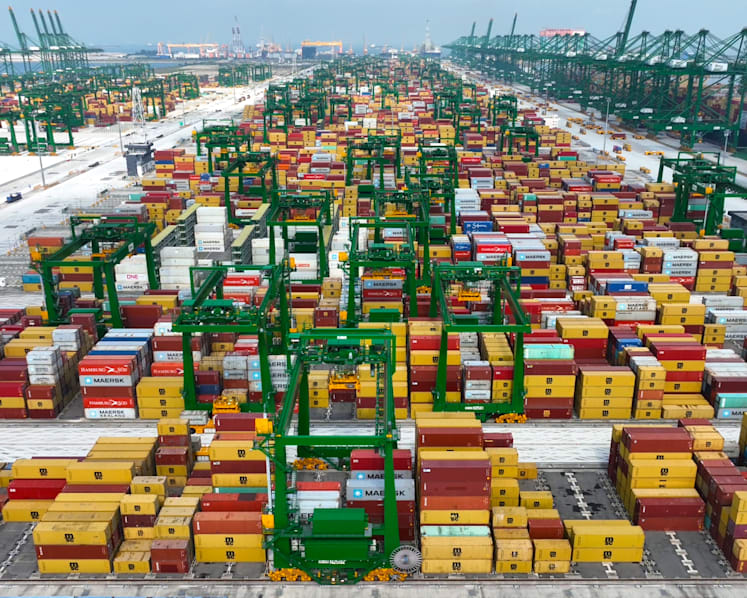
A view of Tuas Port, currently the world's largest automated terminal with 12 operational berths. (Photo: PSA Singapore)

This audio is generated by an AI tool.
SINGAPORE: Singapore's non-oil domestic exports (NODX) rose 15.3 per cent in March, as strong AI-related demand boosted electronics shipments, according to figures released by Enterprise Singapore (EnterpriseSG) on Friday (Apr 17).
This marks the seventh consecutive month of expansion, following February's 4 per cent growth. NODX grew 9.6 per cent for the first quarter of 2026.
The higher-than-expected increase, which beat Bloomberg estimates, was led by a surge in electronics exports. These grew 74 per cent from a year earlier, supported by strong AI-related demand and a low base.
The increase was driven mainly by integrated circuits (ICs), which surged 113.8 per cent, disk media products, up 78.3 per cent, and personal computers (PCs), which rose 57.3 per cent.
DBS senior economist Chua Han Teng said the momentum in electronics exports is expected to continue. This, he said, is supported by global AI-related demand and strength in Singapore’s memory chips and server-related products, with limited near-term negative impact from Middle East tensions in March.
"Nonetheless, we are still monitoring downside risks as the global AI and electronics cycle is not fully insulated from Middle East-related disruptions, given the sector’s reliance on helium, of which Qatar is a major global supplier," said Mr Chua.





Non-electronic NODX fell last month by 0.6 per cent, but at a much slower pace than the 6.9 per cent decrease in February.
The decline was driven by structures of ships and boats, food preparations and pharmaceuticals, which dropped 99.8 per cent, 42 per cent and 18.4 per cent, respectively.
Among key markets, NODX to China, Hong Kong, Taiwan rose substantially in March, while exports to Indonesia, the European Union, Thailand and the United States fell.
Non-electronics exports to the US declined 27.6 per cent from a year ago, while electronic exports to the country climbed by 165.3 per cent.
On a year-on-year basis, total trade expanded by 38.5 per cent in March as both exports and imports grew.
On the situation in the Strait of Hormuz, Mr Chua said that even if the strait reopens soon, it will "take time for shipments from the Middle East to normalise and return to pre-war levels, due to lingering security concerns, weak confidence and damaged infrastructure in the Gulf.
The Monetary Authority of Singapore (MAS) tightened monetary policy and increased its inflation forecast on Apr 14, as the Middle East conflict continued to cause volatility in energy prices and supply.
It had said a tightening in global financial conditions or an unexpected pullback in AI-related investment would also compound downside risks to growth.