







Why some food manufacturers stay in Singapore even as costs push production abroad
Food manufacturing in Singapore may not compete on volume and price, but higher-value functions – and the jobs that come with them – are growing, say industry players.
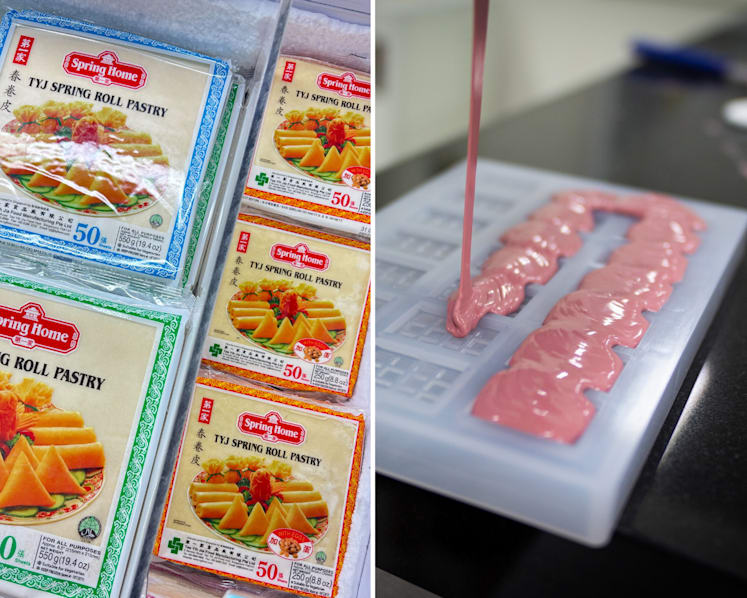
Tee Yih Jia's frozen spring roll pastry and Barry Callebaut's chocolate and cacao coatings are manufactured in Singapore. (Photos: CNA, Facebook/Barry Callebaut)

This audio is generated by an AI tool.


SINGAPORE: For frozen food manufacturer Tee Yih Jia, producing spring roll skins and roti prata in Singapore is a point of pride as well as a business strategy.
Over the years, the homegrown company behind the Spring Home brand has shifted more labour-intensive production to facilities in China and Malaysia, where cost structures are more competitive and better suited for scale-driven manufacturing, general manager Laureen Goi told CNA.
But the firm has also kept some production in Singapore for strategic reasons – the country’s brand name, access to foreign markets and stable regulatory environment.
These are some of the reasons why food producers are adding higher-skilled jobs in Singapore even as manufacturing moves out to the region, according to industry players.





It comes as household names have undergone recent shake-ups.
In March, beverage maker Yeo Hiap Seng – better known as Yeo’s – and Tiger Beer brewer Asia Pacific Breweries (APB) Singapore announced they will wind down some operations here. Yeo’s laid off 25 workers after moving all can manufacturing to Malaysia, while 130 jobs will be affected at APB Singapore as it scales down brewing operations by end-2027.
Yet from 2022 to 2025, Singapore’s food manufacturing sector as a whole exceeded a projection of 2,500 higher value-added jobs, according to Enterprise Singapore. This was achieved through the creation of new roles, workforce transformation and advancing research and development, said Ms Sharon Tay, the agency’s director of food manufacturing and agritech.
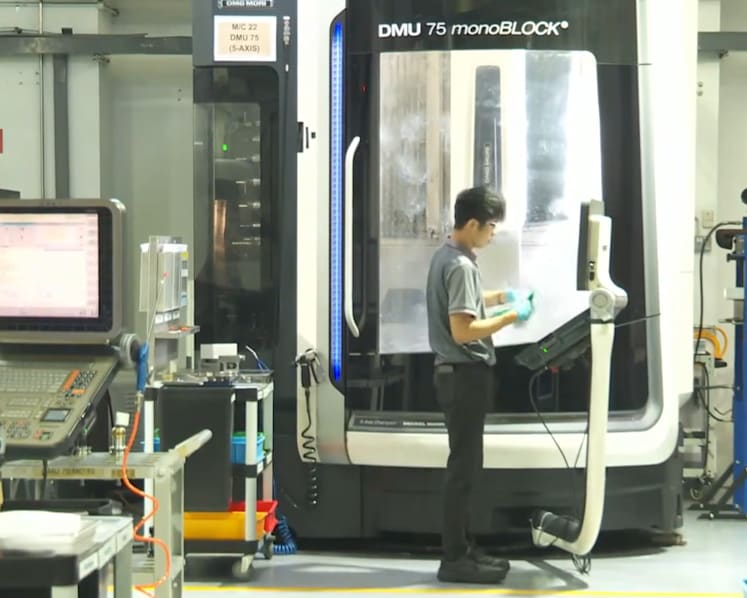
Singapore’s food manufacturing sector comprises over 1,500 companies across a range of categories, including beverages. In 2024, the sector employed around 68,000 workers and contributed S$6.8 billion (US$5.3 billion) to the national economy, or about 1 per cent of GDP.
Food falls outside the advanced manufacturing sectors of semiconductors, biomedical sciences, specialty chemicals and aerospace – engines of growth where Singapore aims to consolidate its global hub status.
“The transition towards advanced manufacturing is not intended to decrease the number of food manufacturing production lines in Singapore. Rather, the aim is to increase the productivity and competitiveness of the sector,” said EnterpriseSG’s Ms Tay.
WHAT IS DRIVING SOME PRODUCTION LINES OUT?
A longer-term structural trend of food production moving out to the region is accelerating, according to Ms Chong Ri Jia, CEO of FoodPlant – a facility for small-batch food producers run by the Singapore Institute of Technology, EnterpriseSG and JTC.
She highlighted structural cost differences, proximity to regional markets and supply chain resilience as the main drivers.
“Singapore’s cost base for labour, industrial space and energy is persistently higher than neighbouring markets. These differences become more pronounced as companies scale, particularly for high-volume, price-sensitive products where margins are tighter,” she said.
With many food firms relying on regional demand, producing closer to those markets reduces logistics costs while improving responsiveness and distribution support. Diversifying production across multiple locations also helps to reduce the risks of disruption.
“Taken together, these factors are prompting companies to reconfigure their production footprint, rather than exit Singapore entirely,” said Ms Chong.
Yeo’s and APB Singapore, which declined to comment for this article, are both relocating production lines overseas while other functions such as logistics and innovation remain in Singapore.
WHY SOME STAY
One reason Tee Yih Jia has stayed is Singapore's extensive network of free trade agreements, which provides advantages in market access and tariff efficiencies – enough to partially offset structurally higher costs, Ms Goi said.
Long-term plans can be made confidently because of the transparent and predictable regulatory environment, she added.
The firm keeps key functions – R&D, product development, quality assurance and regional management – consolidated under one roof in Singapore. The "Made in Singapore" label also carries strong credibility in many markets, particularly for quality, food safety and reliability, she said.
The decision to keep manufacturing in Singapore is typically strategic rather than cost-based, said FoodPlant's Ms Chong, who pointed to Singapore's food safety systems, regulatory capability and ability to deliver consistent quality in tightly controlled environments as key differentiators.
“For firms operating in premium segments, exporting to regulated markets or producing products where consistency is non-negotiable, this ‘trust premium’ can be a decisive differentiator.”
The trade-off is that the higher-cost environment limits competing purely on volume or price. Firms that stay must move up the value curve, she said.
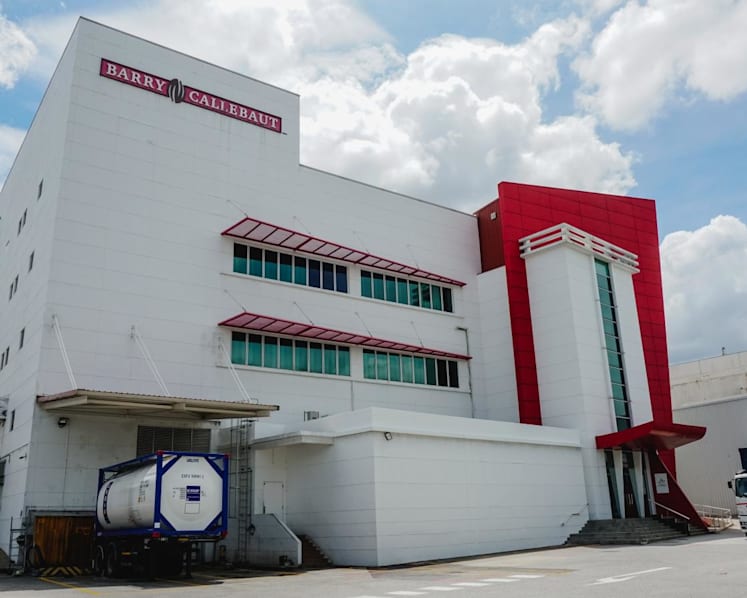
Swiss firm Barry Callebaut, the world's biggest chocolate maker, has more than 300 employees in Singapore across its manufacturing facility, regional headquarters and global innovation centre.
The Singapore plant makes various chocolate products and cacao coatings for food manufacturers and confectioners, as well as packaged chocolate under the Van Houten Professional brand.
Mr Yeting Liu, vice-president of its Cacao Coatings Center of Excellence and R&D for Asia Pacific, Middle East and Africa, acknowledged the higher costs of operating here.
He said these are balanced by advantages in productivity, workforce capability, infrastructure reliability, regulatory clarity and the ease of doing business.
“The trade‑off is a focus on higher‑value activities, efficiency and leveraging Singapore as a platform for regional and global collaboration rather than solely large‑scale volume production.”
Earlier this year, Barry Callebaut opened its first global innovation centre outside Europe at Singapore Science Park, where teams work on innovation, artificial intelligence and cacao coatings – collaborating globally rather than focusing on a single domestic market.
Mr Liu said the firm chose Singapore for the centre because of its strong innovation ecosystem, skilled talent base and connectivity to markets across Asia Pacific.
WHAT THIS MEANS FOR JOBS
At FoodPlant, Ms Chong has observed that food companies often develop and refine products in Singapore before assessing how and where to scale. This positions the country as an innovation and capability hub that is especially important at the pilot stage, even as manufacturing becomes more regionally distributed.
What this means for jobs is that higher-value functions – product development, process design and regional management – are likely to stay in Singapore, she said.
Barry Callebaut’s global innovation centre, for instance, will host more than 30 specialised roles including AI engineers, with plans to double that number. Developing products suited to Asia's climate and consumer preferences – such as chocolate that does not melt as easily in tropical heat – is among its priorities.
EnterpriseSG's Ms Tay pointed to other examples. Kwong Cheong Thye, which has been brewing soy sauce in Singapore for over 130 years, trained two production workers as data control specialists to monitor production data and optimise manufacturing processes. Dim sum maker Lim Kee Food Manufacturing, which makes all its products in Singapore, has trained 11 employees for higher-skilled roles such as in quality assurance to support R&D.
As the firm digitalises, it is shifting from "passive manual" tasks to "reactive real-time" work, said business services head Ang Shu Min.
Customer service jobs have been redesigned as data analytics jobs to clean and push data to relevant departments for better real-time operational planning, for example.
Redesigning jobs also allows the company to attract local and younger talent.
"With the generally tougher working environment and stigma towards manufacturing factories that there is limited room for personal development and career progression, this results in the recruitment of locals to be comparatively challenging," said Ms Ang.
Some companies lag behind on digital adoption, typically due to a lack of in-house capabilities or awareness of available solutions, said EnterpriseSG's Ms Tay. To address this, EnterpriseSG and the Infocomm Media Development Authority are working with trade associations and SME centres on targeted outreach.
An upcoming internship programme will also connect computing and IT students with food manufacturers to support digital integration.
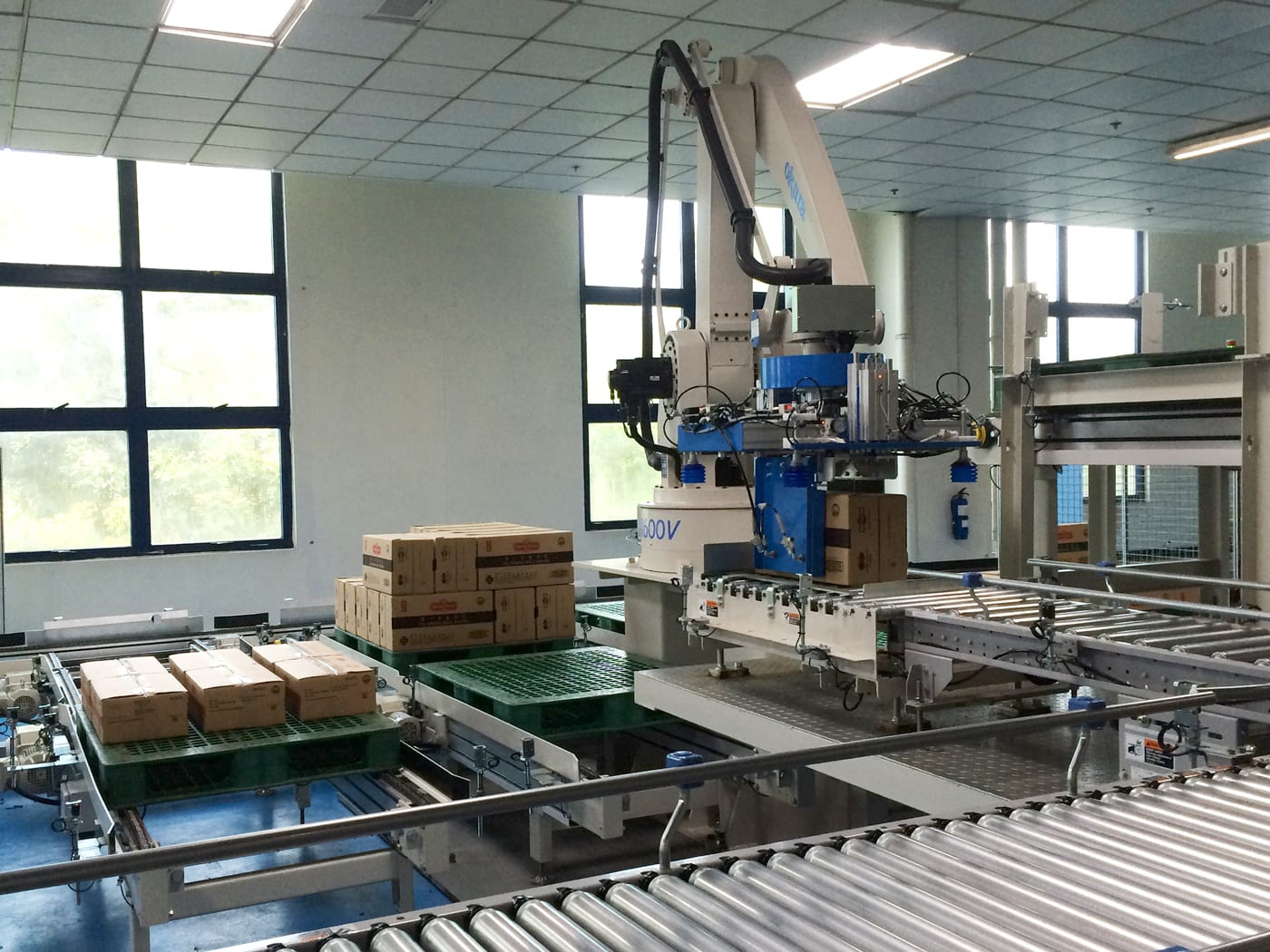
At Tee Yih Jia's two-year-old Senoko facility, operations are highly automated, though labour remains a key constraint.
“There are ongoing challenges in hiring for shift-based roles, as night shift positions tend to be less attractive to the local workforce," said Ms Goi. “Coupled with foreign manpower quota limitations, this has made it difficult to build our production workforce to optimal levels.”
The firm is now expanding roles in areas such as IT, R&D, quality assurance, regulatory and compliance, engineering and regional business development.
“This reflects a broader transition in the industry – while automation reduces reliance on manual labour, it also drives demand for higher-skilled roles that support innovation, governance and growth,” she said.
Ultimately, the firm continues to identify as a Singaporean company.
“We pride ourselves to be part of the food manufacturing landscape in Singapore,” said Ms Goi.





