







Giving voice to the ‘invisible’ HIV-positive community
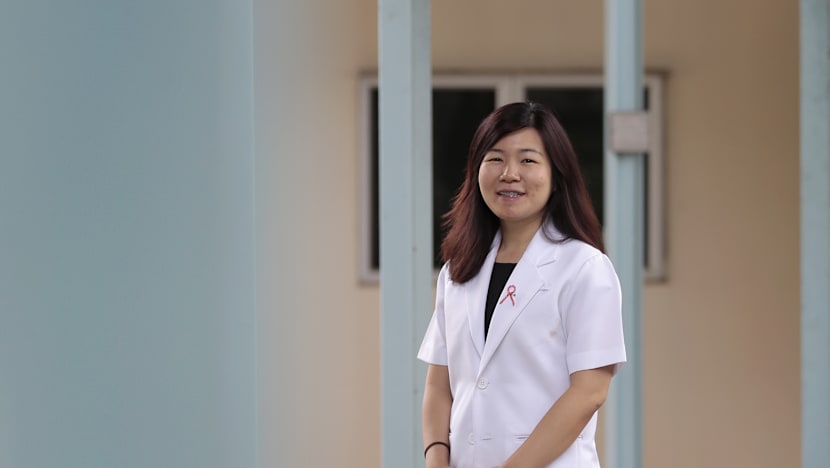
Lin Jingyi, one of the Promising Young Social Award winners. Photo: Jason Quah


SINGAPORE — Having been brought up by a single mother, Ms Lin Jingyi’s experiences of life’s challenges at a young age motivated her to join the “helping profession”.
Said the 30-year-old, one of two recipients of the Promising Social Worker Award this year: “Growing up, my mother was the sole breadwinner and it was financially difficult... I always wanted to join a profession where I can do something meaningful for the society. Life isn’t always smooth for everybody.”
Her work in HIV care at Tan Tock Seng Hospital’s Communicable Disease Centre (CDC) for the last four years saw her nominated for the accolade, which she received from President Tony Tan on Tuesday (Nov 8) afternoon at the Istana.
While Ms Lin had not opted to work with HIV-positive patients, her firsthand experience of the stigma HIV-positive patients face has quietly fuelled her resolve to continue working in this field to forge greater acceptance for them in the community.





She said although there is greater support from the authorities and volunteers, many people, including family members and employers of patients, are still ignorant of how HIV is transmitted.
She said: “I still hear absurd myths like family members not willing to share laundry loads with patients. Some cabbies even avoid picking up or dropping passengers at the CDC.”
Eradicating the stigma, however, will be a long trudge, she said. Her own mother was concerned when she first took up the role as a medical social worker at the CDC.
“It is a vicious cycle, because the misconceptions in the community makes patients unwilling to open up. But the less they open up, the less people will understand. The invisibility perpetuates the silence, and vice versa,” said Ms Lin.
A key part of her work involves reaching out to employers to help them understand that HIV-positive patients are still able to work. “Many patients worry when they get ‘found out’ by their bosses that this will jeopardise their job prospects,” she said.
Not all employers are quick to react negatively, she said, recalling a “heartening encounter” when a patient’s employer devoted time to his own research prior to meeting her.
Ms Lin said: “He had a fairly good understanding of the condition by the time we met. I feel this is what we need more of, employers who listen and understand.”
Asked what keeps her going in such an “emotionally intense” profession, she said it is the reward of being able to journey with and build rapport with patients over the long term – given the chronic nature of HIV – and witnessing their resilience.
For example, she had a patient who remained optimistic despite being diagnosed with both HIV and cancer. She said: “Even during the toughest period as he underwent chemotherapy, he would still smile and assure me that he is okay. He demonstrated the inner strength and spirit that many of our patients have.”
With the S$8,000 personal development grant that comes with her award, Ms Lin hopes to hone her skills in psychosocial support, especially for patients with less-understood conditions like HIV and some forms of mental illnesses.
She said: “I really hope we can bridge the gap and help the society be more accepting and willing to provide psychological, emotional and social support to these people... Differences will always be there, what is important is whether we can accept and still regard each other with empathy.”




