







Greater flexibility with changes to CPF, but MPs call for prudence
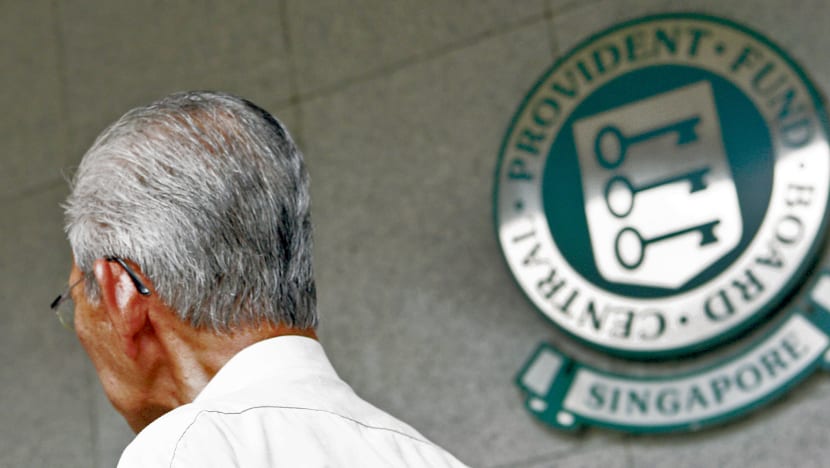
A member of the public walks past the CPF building. File photo


SINGAPORE — Laws were passed on Monday (Oct 11) allowing Central Provident Fund (CPF) members born in 1958 or later to make a lump sum withdrawal to 20 per cent from their Retirement Accounts once they reach the age when they are eligible for payouts, even as Members of Parliament (MPs) remain divided on the implications.
While some lauded the flexibility that this change offers, others were concerned that it will compromise retirement adequacy, especially if members see it as a chance to “withdraw a windfall”.
The move — among several amendments to the CPF Act passed in Parliament on Monday — is among the recommendations proposed by the Government-appointed CPF Advisory Panel in February last year to enhance flexibility of the scheme.
Those who prefer not to make the withdrawal at their Payout Eligibility Age can transfer the lump sums to their Ordinary Accounts after their payout start age. They can also convert them into monthly payouts through CPF LIFE or the Retirement Sum Scheme. Singaporeans turning 65 in 2023 will be the first batch entitled to these options.





Before this, CPF lump sum withdrawals were limited to S$5,000 for those who fall short of the Full Retirement Sum or Basic Retirement Sum (with sufficient property pledge or charge) when they reach age 55, for members born in 1958 or later. Concerns have persisted over how this has hamstrung retirement plans of low-wage earners who struggle to accumulate enough CPF savings to meet the yearly adjustments to the Retirement Sum.
Speaking during the debate on the amendments in Parliament on Monday, Nee Soon GRC MP Lee Bee Wah said the move is “great news” for Singaporeans who need extra cash. For example, some residents want to “downgrade” their residences but do not do so as they do not want proceeds from the sale to be “locked into” their CPF accounts.
Hougang MP Png Eng Huat suggested going further, by allowing lump sum withdrawals once members turn 55. “For those who have set their minds to withdraw 20 per cent from their retirement accounts, what difference does it make for them to withdraw … at age 60, 65, or whatever the Payout Eligibility Age will be in the future?” he asked.
Nominated MPs Thomas Chua and Associate Professor Randolph Tan, however, urged that the amendments be handled with prudence.
Mr Chua said employers will not wish to see their employees use CPF funds to invest so liberally that they suffer losses, thus affecting productivity.
Prof Tan, who researches and teaches in the areas of applied economics, said that CPF savings must not be regarded as a “personal bank account”.
“Too much individual flexibility in handling the CPF accounts compromises its effectiveness in providing adequate retirement adequacy,” he added.
Bishan-Toa Payoh GRC MPs Saktiandi Supaat and Chong Kee Hiong called for more financial education, especially for elderly Singaporeans who are prominent targets of investment scams.
Responding, Manpower Minister Lim Swee Say said the amendment “balances” concerns of both camps by capping the withdrawal and providing the option only when Singaporeans reach 65, when they are in a “better position to make an assessment”.
To communicate the options available to various Singaporeans, from this month, the CPF Board will invite members for one-to-one consultations on retirement planning once they turn 55.
Other amendments passed include provisions to allow Singaporeans on the Retirement Sum Scheme to automatically receive payouts when they turn 70. Currently, members have to apply to start their payouts, and some have not done so because they are not aware of the option, or are receiving adequate support from their jobs or children, said Mr Lim. About one in three members are expected to benefit from this change, he added.
Changes were also passed on Monday to support implementation of the Basic Healthcare Sum introduced in January and to simplify the processes for family members to top-up Medisave accounts for their loved ones by allowing direct transfers from their Ordinary and Special accounts.
CORRECTION: We had previously reported that those who prefer to defer their withdrawals can either transfer the lump sums to their Ordinary Accounts or to convert them into monthly payouts through CPF Life or the Retirement Sum schemes. This is incorrect. Those who want to defer the withdrawal can only do so by transferring the sum to their Ordinary Account. We apologise for the error.




