8 hawksbill turtles under specialist care in Singapore conservation programme
A head-start programme by the Singapore Oceanarium and National Parks Board aims to boost survival rates of the critically endangered species before release into the wild.
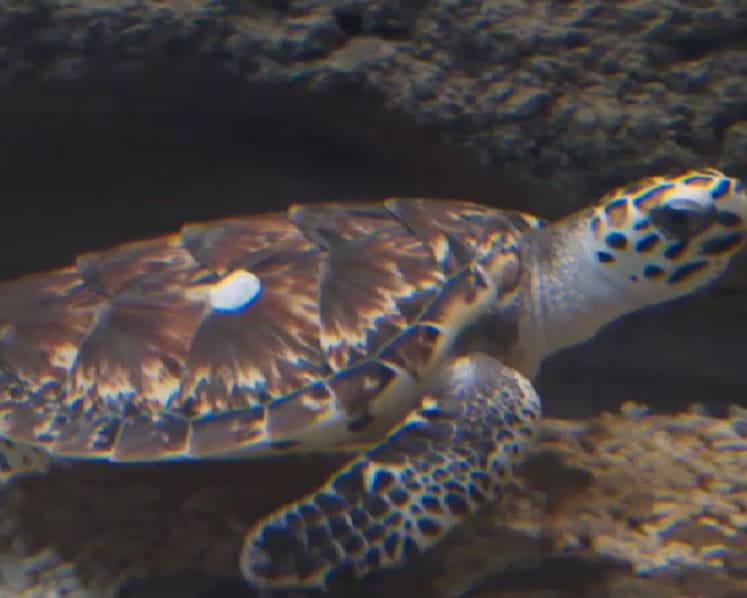
One of eight critically endangered hawksbill turtle juveniles under specialist care at the Singapore Oceanarium.

This audio is generated by an AI tool.




SINGAPORE: For newly hatched hawksbill turtles, life begins as a race few can win.
Faced with predators and the vast, unforgiving ocean, most hatchlings do not survive beyond their first few months. In some cases, as few as one in 10,000 make it to adulthood.
But eight juvenile hawksbill turtles in Singapore are getting help to beat those odds.
They are now under specialist care at the Singapore Oceanarium as part of a conservation programme run with the National Parks Board (NParks).
The aim is to improve their chances of survival before they are released into the wild, possibly next year.
“By getting them to a larger size before releasing them, we can give them a fighting chance, a chance to survive in the wild,” said Mr Tang Yong Jen, an executive in conservation and science at the oceanarium.
“It’s not going to negate the other threats that are out there in the open sea, but it’ll give them just a chance … and hopefully they come back to nest on our beaches in Singapore.”
The turtles are also on public display at the oceanarium to raise awareness about marine conservation.





PROTECTION AT MOST VULNERABLE STAGE
Hawksbill turtles are listed as critically endangered mainly due to threats such as habitat destruction, pollution and accidental capture, also known as bycatch.
In their early life stages, the odds are stacked against them.
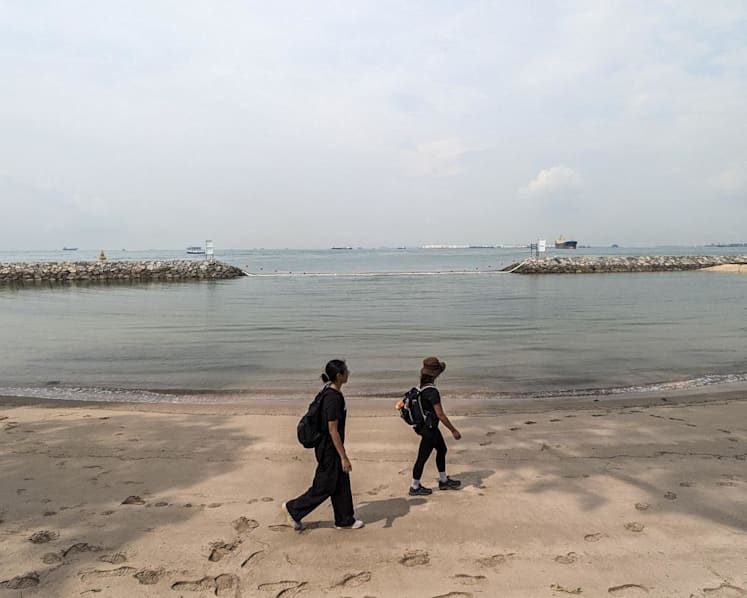
The turtles typically nest on sandy beaches, including parts of Singapore’s southern shores and offshore islands.
But the journey from nest to sea is dangerous for hatchlings, which are vulnerable to predators such as birds and crabs. Once in the water, many are quickly preyed on by larger marine animals.
“When they hatch, less than 1 per cent of the nest will survive,” said Mr Nick Derbyshire, senior director of animal care at the Singapore Oceanarium.
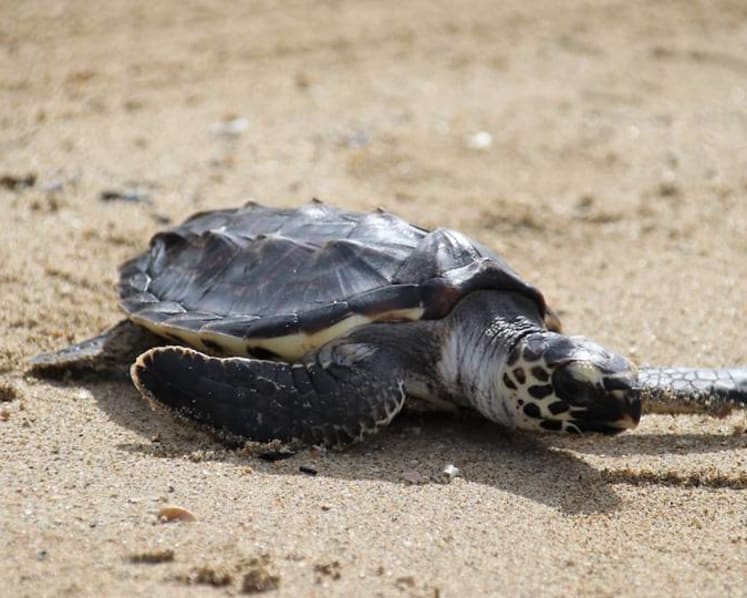
By stepping in early, conservationists aim to help the turtles get past this high-risk period.
NParks said its broader turtle conservation programme began in 2017, initially focusing on protecting nests and ensuring hatchlings safely reach the sea.
Over time, it expanded to include “head-starting” as another way to boost survival rates.
“That’s basically giving turtles enough time for them to grow large enough that they go past the critical phase of their life,” said Dr Karenne Tun, group director of the National Biodiversity Centre at NParks.
Related:
PREPARATION FOR THE WILD
Under the head-start programme, caring for the juveniles is an intensive process.
The turtles are monitored daily and placed on strict diets based on each of their growth and nutritional needs.
“The care that we provide has to be top-notch, five-star,” said Mr Derbyshire.
As they grow, the focus shifts towards preparing them for life in the wild. Before release, the turtles must also meet a set of criteria, including health and behavioural benchmarks.
This includes ensuring they can forage for food, find shelter and behave naturally without relying on humans.
They will also undergo blood tests and X-rays, and be assessed on their ability to swim against strong currents.
Once they reach a suitable size, some of the turtles may be fitted with tracking tags.
This will allow researchers to monitor their movements and survival in the wild, helping them better protect the species beyond nesting areas.
An earlier phase of the programme saw 10 hatchlings raised and released in 2023 and 2024.
Three of them were tagged, offering initial insights into where the turtles travel after release.
NParks’ Dr Tun said head-starting is just one approach in wildlife conservation.
“Conservation is not a single approach. It’s really a toolbox,” she said. “We look at the different strategies that we can deploy, and we need to tailor them to the species we’re looking at.”
This includes working with researchers, industry partners and the public – from reporting turtle nests to conducting beach clean-ups that remove harmful debris like discarded fishing gear.
There is no fixed timeline for when the eight juveniles will be released, said Singapore Oceanarium’s Mr Tang.
Instead, the decision will depend on whether each turtle meets the necessary criteria.
The hope is that with this early intervention, more of these turtles will survive to adulthood.