







Helping foreign workers in S’pore often means having to be a 'bearer of bad news'
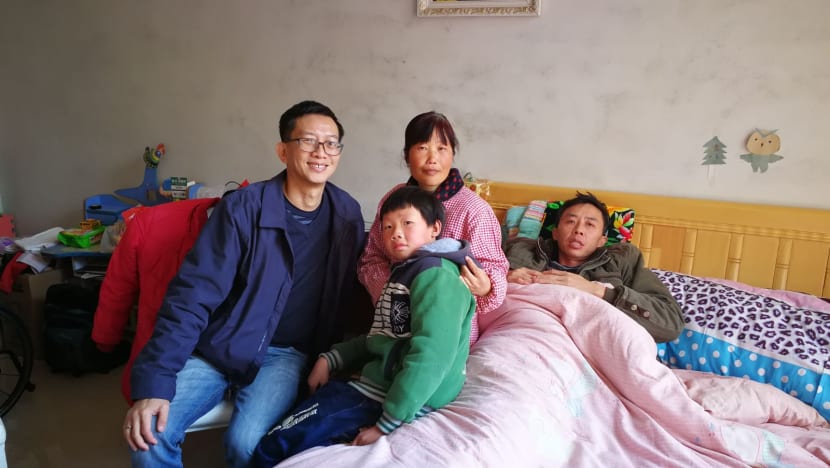
Mr Jeffrey Chua, 51 (left), accompanied Chinese national Meng Xiangbo, back home after Mr Meng sustained a work injury in Singapore. Mr Meng is seen with his wife Yuan Jie and their teenage son. Photo courtesy of: Jeffrey Chua


SINGAPORE — Social worker Jeffrey Chua often has to convey bad news to families of foreign workers who sustained injuries on the job.
Once, he had to explain to the wife of Chinese national Meng Xiangbo, why her husband could never be able to walk again and the extent of his injury after he was hurt while working at a construction site here in 2016.
But that did not stop him from developing close ties with the Meng household, who now refer to him as “a part of family”.
Mr Chua, who works with local non-profit organisation Healthserve, highlighted Mr Meng’s case to the Ministry of Manpower (MOM).





The ministry subsequently helped expedite the compensation claim, and in February this year, Mr Meng received S$327,500 in compensation. This is the highest compensation amount workers can receive under the Work Injury Compensation Act (WICA).
For his work in helping foreign workers in Singapore, Mr Chua was among those honoured at the MOM’s appreciation dinner on Sunday (Nov 26).
About 300 of the ministry’s partners — comprising employers, dormitory operators, NGOs, employment agency representatives and Foreign Worker Ambassadors — were also invited to the event.
Mr Chua, 51, started out as a volunteer with Healthserve, before going on to work as a full-time social worker. He now oversees the case management team, which takes on about 300 to 400 cases a year.
In his six years with Healthserve, he counts meeting Chinese national Wang Qi Ling as one of the most sobering cases he has taken on.
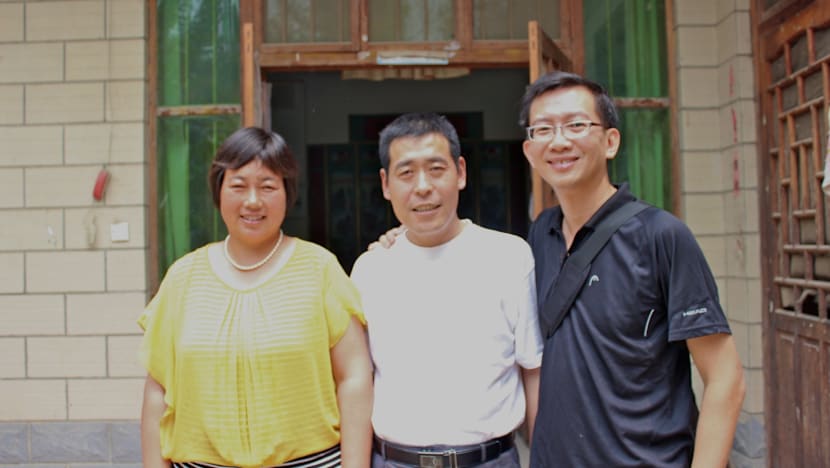
When Mr Chua first met Wang in 2011, Wang had suffered a back injury and with help from Mr Chua, had been in the process of seeking compensation under WICA. He was also due to return home to Henan, China, after being repatriated by his employer.
However, Wang soon developed a “sore throat and a bad cough”, which turned out to be throat cancer.
As the cancer was not related to work injury, Wang was not covered under the WICA.
But that did not stop Mr Chua.
By relating Wang’s story to his circle of friends, Mr Chua managed to raise some S$15,000 for Wang to seek treatment back home, as it was too costly to be treated in Singapore.
He even visited Wang twice in 2012 while he was undergoing treatment in China. Wang eventually succumbed to his illness in 2015. But Mr Chua still keeps in touch with Wang’s wife and teenage daughter.
It was also a sobering reminder for him that more often than not, there will not be “happy endings”.
“It is a (constant) struggle, I have to remind myself that I’m no saviour of the world,” he told TODAY in an interview.
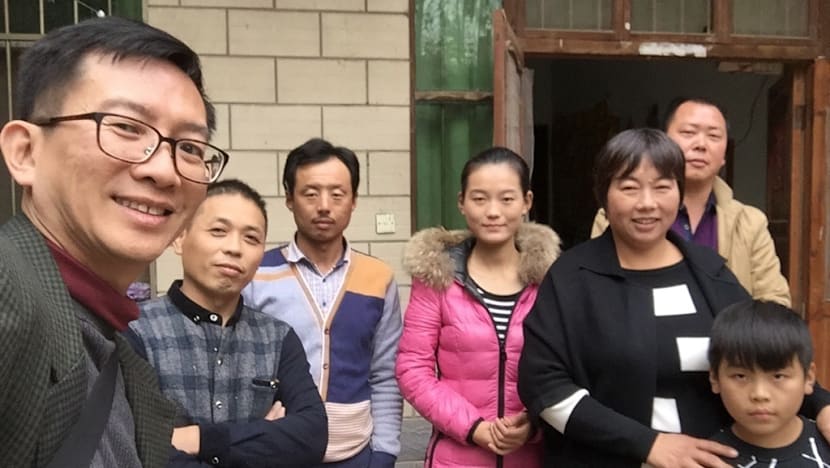
(In this photo taken in October 2016, Mr Jeffrey Chua is with Mrs Wang and Wang household, Wang Qi Ling had passed in 2012, but Mr Chua still keeps in close connection with Wang's family. Photo courtesy of Jeffrey Chua)
“For each person we help, we connect and we build up a friendship… At times, it’s not so much being a practical help, (but rather) coming alongside them in their time of need, encouraging them.”
He said Singaporeans should be more understanding about how many foreign workers come from different cultures.
“A lot of them are farmers, and for them to come here and work in high rise buildings, it’s not easy for them to grasp and develop an understanding of how to work in a place like Singapore. It takes time,” said Mr Chua.
To help new foreign workers understand social norms in Singapore, a new mandatory Settling-in Programme (SIP) for foreign workers will be launched next year.
If workers are unable to resolve disputes with their employers, Mr Chua refers them to the MOM.
In Meng’s case, Mr Chua had highlighted his circumstances to an assistant commissioner from the MOM, Mr Tan Jin Xin, who deals with work injury compensation.
“(Meng’s case) was one of the worst I had seen, and that image of him coming in, in a wheelchair is still vivid in my mind today,” said Mr Tan.
Mr Tan had worked to help Mr Meng receive due compensation. He hopes the compensation was “some form of help and relief” for the family.
Mr Tan said the hardest part is being caught in the middle of employers and employees.
“There are many times where both parties are not even on talking terms, and will not even make eye contact with each other.”
He hopes there would more “open communication” between employers and workers, so that work injuries can be surfaced and that arguments can be settled amicably.




