Progress made on longstanding Singapore-Malaysia issues; water no longer 'contentious' topic, says PM Anwar
Singapore Prime Minister Lawrence Wong noted that even if some issues cannot be resolved completely, they cannot be allowed to undermine the rest of the bilateral relationship and both countries can still cooperate in other areas.
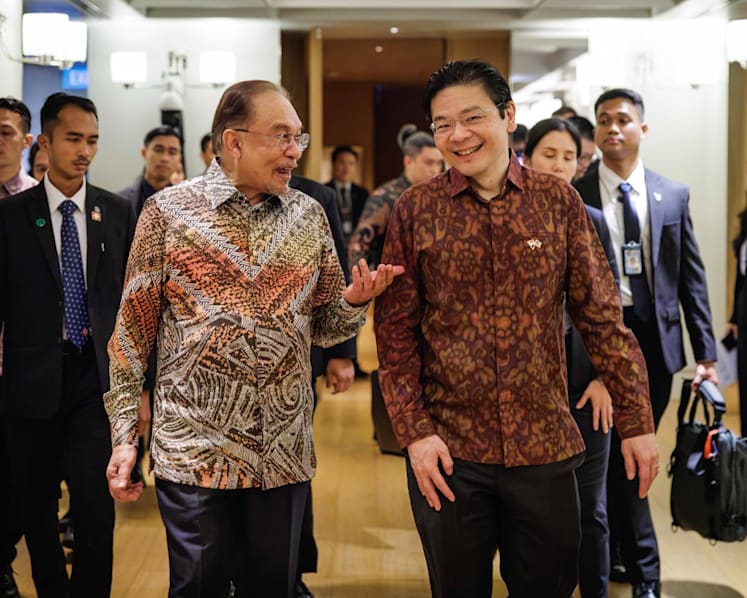
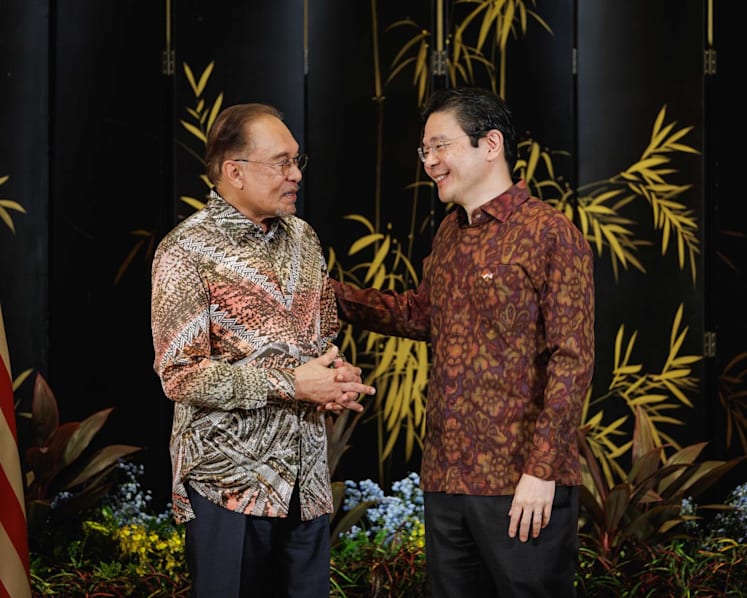
Malaysia Prime Minister Anwar Ibrahim and Singapore Prime Minister Lawrence Wong at the 12th Singapore-Malaysia Leaders' Retreat at The Ritz-Carlton, Millenia Singapore hotel on Dec 4, 2025. (Photo: Ministry of Digital Development and Information)

This audio is generated by an AI tool.


SINGAPORE: Singapore and Malaysia are making progress on longstanding bilateral issues, with Malaysian Prime Minister Anwar Ibrahim on Thursday (Dec 4) saying this is being done constructively as he stated that water is "no longer a contentious issue" for Malaysia.
"There are differences, of course, but there's no hostility. And we don't take action, whether Singapore or Malaysia, to frustrate these movements," said Mr Anwar, during a joint press conference with his Singapore counterpart Mr Lawrence Wong.
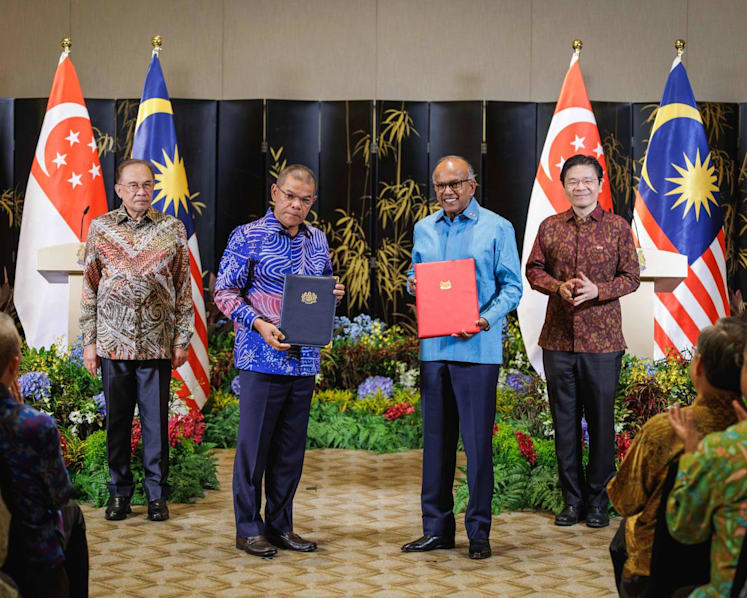
The two prime ministers were addressing questions from reporters about the outstanding complex issues between the two countries after an hour-long meeting at the 12th Singapore-Malaysia Leaders’ Retreat on Thursday at The Ritz-Carlton, Millenia Singapore hotel.
Earlier in his opening remarks, Mr Wong said that several longstanding issues were discussed, such as airspace, water and maritime delimitation.





Mr Anwar later said in response to a journalist’s question that both sides need to agree to facilitate the process of addressing the longstanding issues and to have some clarity and not create issues for the future.
"I think you should at least compliment the present efforts in that interaction," said Mr Anwar.
"I'm not suggesting necessarily that it was never done. This has been the position in the past.
"But at least for now, for the first time, we have got the parameters clear, what is required for Singapore, what is required for Malaysia. Let us find a solution where both would be able to benefit from this, to function effectively, both in the air services and also the maritime."
ON WATER
When asked about the issue of water, Mr Wong said "it’s not a pressing issue", adding that both sides have "a shared interest to increase the yield and safeguard the water quality of the Johor river".
"We want to do this to guard against potential extreme weather changes or disruption scenarios that may happen, so that we can be assured of a resilient supply of water to meet the growing needs in Johor and also to meet Singapore's needs as provided for under the 1962 agreement," said Mr Wong in response to a question from a reporter.
According to a joint statement issued on Thursday, the two leaders encouraged continued discussions on the way forward regarding raw and treated water prices, "without prejudice to each other’s respective long-declared positions on the right to review the prices" under the 1962 Water Agreement.
Mr Wong noted that it is not an immediate issue as there has been "good rainfall in this past year and recent years".
"But we know that demand is growing. Demand in general, for water, is growing with the industries and the investments that it is attracting. And importantly, we know that extreme weather changes can happen," he warned.
For example, there could be dry spells or other completely unanticipated disruption scenarios, said Mr Wong.
Last month, operations at PUB's Johor River Waterworks were temporarily suspended for a day after a water pollution incident affecting the Johor River. In 2019, the water level at Johor's Linggiu Reservoir that provides water to Singapore fell below 50 per cent due to dry weather.
In light of such longer-term considerations, officials on both sides have been looking at possibilities for collaboration, especially in more new infrastructure to strengthen the resilience of water supply for both Johor and Singapore, said Mr Wong.
Mr Anwar said that due to the "effectiveness of our communications and the level of trust" between both sides, the water "is no longer a contentious issue as far as Malaysia is concerned, and Johor particularly".
"Yes, the water from Singapore originates from Johor, but the requirements in Johor is also huge," he said, adding that any discussions on the price mechanism that was initiated in the past will now be more complex due to the negative impact on consumers in Johor.
"That matter is now being deliberated at length," said Mr Anwar of the pricing.
He said what's important is Singapore's proposal to initiate some discussions on possible investments into some infrastructure in terms of water capacity and volume, and also in terms of those affected by the pollution, to ensure the level of capacity and also the quality of water.
"I've also expressed my readiness to positively look at it," said Mr Anwar.
ON AIR TRAFFIC MANAGEMENT
Asked about a timeline for resolving longstanding bilateral issues, Mr Wong stressed the need for both sides to continue working on them.
"The longstanding issues are longstanding for a reason. They are complex, there are differences in views, and therefore we have to continue to engage in one another," he said.
"What's important is how we go about that engagement. And we do so in a constructive spirit, with mutual respect, trying to understand one another's positions."
He added that both sides must try to resolve the issues "in accordance with international law and to achieve durable and mutually beneficial outcomes".
"Not always easy to do that, but we can continue to talk and make progress," said Mr Wong.
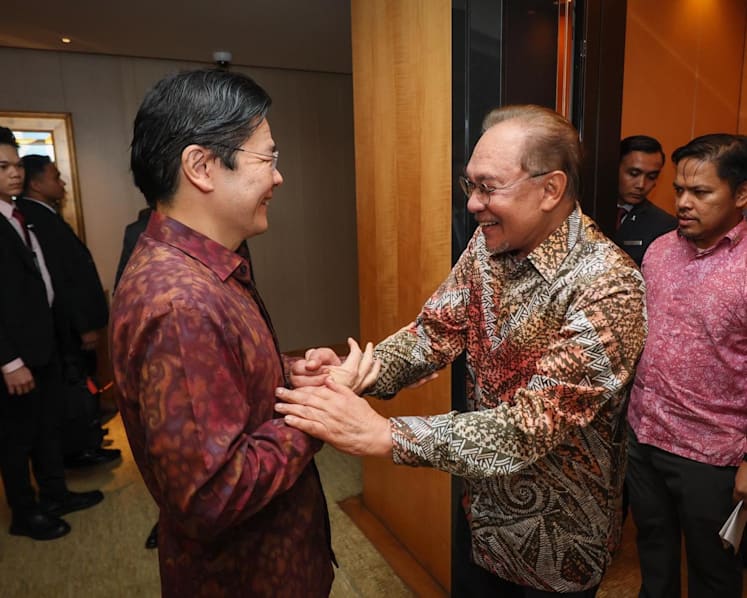
He cited the issue of airspace, sharing that both sides had "a very fruitful discussion" on Thursday.
Both Singapore and Malaysia recognise that airspace management is not about sovereignty, said Mr Wong.
Instead, it concerns the current and future needs of the airports serving both nations – Kuala Lumpur International Airport and Senai Airport in Malaysia, as well as Singapore's Changi and Seletar airports.
"It's about recognising that in the new environment where air traffic volumes have gone up, especially for Malaysia, between East-West traffic, then we will have to look at how best to optimise the air traffic management services," said Mr Wong.
He said that both sides have committed to doing so through a joint study, and have settled the principles and parameters around it.
While the issue is "not completely resolved yet", both countries are "moving forward in a constructive approach, in the spirit of working together and trying to find win-win solutions", said Mr Wong.
"It's in that same spirit that which we will engage with the other outstanding matters. It's not so much to say we have to resolve all this by a certain timeline. We have to be realistic," he noted.
"But so long as we continue engaging one another, making progress, and importantly, even if we cannot resolve the issues completely, we do not allow them to colour or to undermine the rest of our relationship, we can still cooperate in other areas."
This includes the Johor-Singapore Special Economic Zone which both countries are working together on, said Mr Wong.
"That's the approach we have been taking, and that's, I think, a very good approach for two close countries, close friends, close neighbours, to work together in a positive manner."