







Mere months, not years, needed for online radicalisation, warns Shanmugam at youth forum
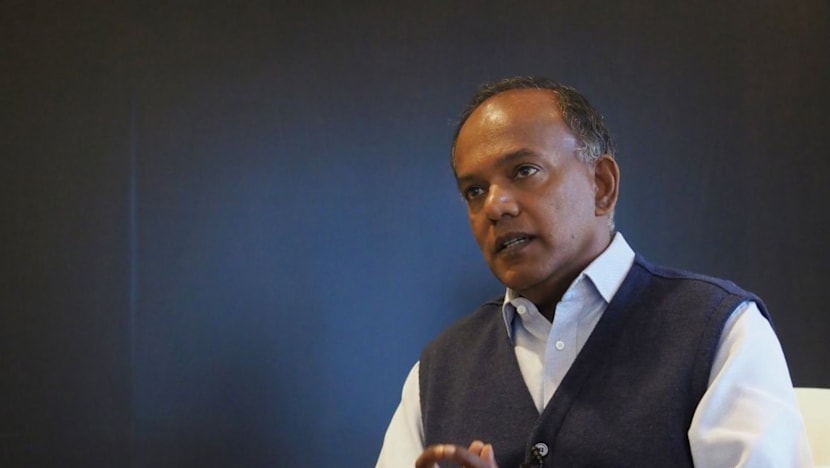
Internationally, the process of online radicalisation could at times take just three or four days, said Law and Home Affairs Minister K Shanmugam.


SINGAPORE — It now takes just a matter of months for a susceptible Singaporean to be radicalised online compared with the past, when the process could take about two years, said Law and Home Affairs Minister K Shanmugam.
Speaking at a youth forum on online extremism and its dangers on Saturday (Aug 11), the minister said that internationally, this process could at times take just three or four days, making detection of such individuals very difficult for the security forces.
In Singapore, troubled individuals could “go online, within two to three months, the family doesn’t know, the teachers don’t know, the ustaz (Malay for religious teacher) doesn’t know, they become radicalised”, Mr Shanmugam added.
While the country has the situation “relatively under control”, the minister warned against complacency, urging his audience of about 300 students to turn to legitimate sources for religious information, such as the mosques, Malay self-help group Yayasan Mendaki or the Islamic Religious Council of Singapore.





He also called on them to help preserve a common space for multi-racialism to flourish.
Over the years, the number of radicalised individuals arrested in Singapore has been on the rise, according to Mr Shanmugam.
In the last three-and-a-half years, for instance, the authorities have arrested 20 such persons, 18 of whom were radicalised online.
This figure is significantly higher than the 11 radicalised Singaporeans the authorities dealt with between 2007 and 2014.
Mr Shanmugam also sketched out the threat landscape in the region and internationally for his audience at the annual youth forum organised by voluntary community group, the Inter-Agency Aftercare Group, at ITE College Central.
While attention has been focused on the Islamic State of Iraq and Syria — which has lost much of its territory — the minister said he was more worried about the older extremist groups: Al Qaeda and Jemaah Islamiyah (JI) .
Active globally, Al Qaeda has a presence in Malaysia and Indonesia in South-east Asia, among other places, and is said to have a bigger presence – with more human resources and a larger footprint – than ever before.
The JI is particularly active in Indonesia, Malaysia, the Philippines and Singapore. A JI plot to bomb key installations in Singapore was foiled in 2001.
The two groups have been “quietly gathering strength, re-grouping, putting out their material, gathering recruits (and) money for major attacks in due course”, said Mr Shanmugam.
And with Al Qaeda bigger than it has ever been, large-scale attacks could occur “fairly soon”, he added.
Mr Shanmugam said terrorists have not been able to mount attacks in Singapore “not because they don’t want to, but so far it’s been difficult”.
Calling it a “very hard battle” that must be fought continuously, he said the Government, security forces and the people have worked together to ward off the threat so far, enabling Singaporeans to enjoy peace and tranquility.
Mr Shanmugam said: “We have the situation relatively under control, but neither you nor I can say we have won, and we have to be on guard and we have to fight back.
"And fighting back doesn’t just mean the Government. Fighting back essentially has to be you."
The minister also stressed the importance of preserving a common space to allow a multiracial and multi-religious society to flourish.
Noting that the peace and harmony, and mutual respect for one another, that Singaporeans enjoy are not present in many places around the world, Mr Shanmugam said: “We want our own space for our religion and language, we also want a common space, a Singaporean identity, where we interact with each other.
“And your duty is to work to build that. And go against radicalisation, go against extremism, go against anything that prevents integration, and strengthen integration.”




