







MHA to unveil security plans involving 'broader S'pore society'
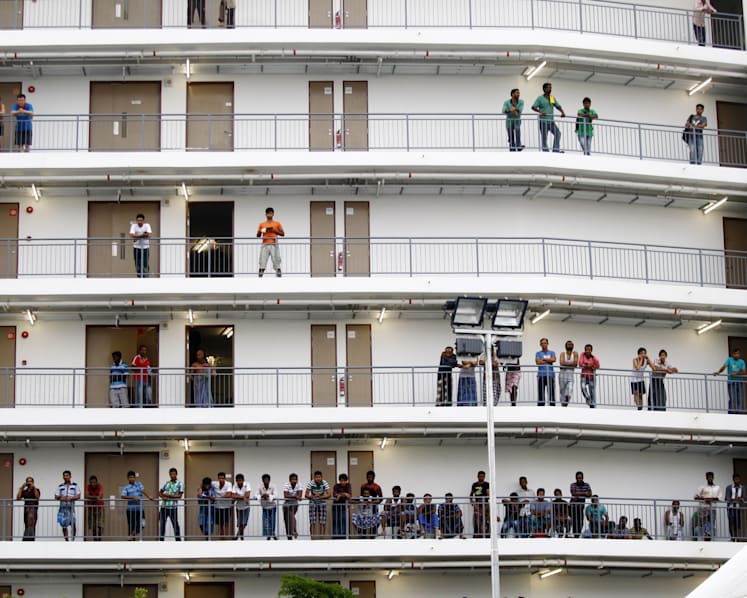
A foreign worker dormitory located at Mandai Estate. TODAY file photo


SINGAPORE – The Ministry of Home Affairs (MHA) will soon unveil plans to involve the "broader Singapore society" in protecting national security, Home Affairs Minister K Shanmugam said in Parliament on Monday (March 14).
Member of Parliament Fatimah Lateef (Marine Parade GRC) had asked if there were specific action plans that the Government could devise regarding foreign-worker dormitory operators to identify signs of radicalisation among migrant workers.
“The issue of overall security is an ongoing conversation, not just with the people who manage foreign workers’ dormitories, but we need to involve the broader Singapore society and my Ministry will be announcing some plans soon,” Mr Shanmugam said, without elaborating.
He pointed out that foreign-worker dormitories are already subject to guidelines in terms of what is or is not allowed. Elements such as the sizing and structure of these dormitories are also subject to clearance from security agencies, Mr Shanmugam added.





Associate Professor Fatimah had earlier asked about the Government’s follow-up efforts and strategies in identifying activities or groups with a high likelihood of radical ideologies in the wake of the arrests of 27 radicalised Bangladeshi construction workers here in November and December last year.
Mr Shanmugam said the Republic’s security agencies would continue monitoring and investigating signs of radicalisation in Singapore, which could stem from within the community or from foreigners. The country also shares intelligence with foreign security partners to address the transnational nature of the threats.
But aside from the security agencies, everyone has a role in strengthening the country’s security and the wider Singaporean society must play its part, the minister said.
“Singaporeans need to help safeguard family (and) friends from becoming radicalised. Employers need to pay attention (to) what’s going on in workers’ dormitories, for example. Workers, too, can play a part in reporting suspicious activities that they may come across,” he said.




