First MOM-owned migrant worker dormitory opens in Jurong; new grant for operators to upgrade facilities
NESST Tukang is one of the first migrant worker dormitories to be developed based on higher standards set during the COVID-19 pandemic.
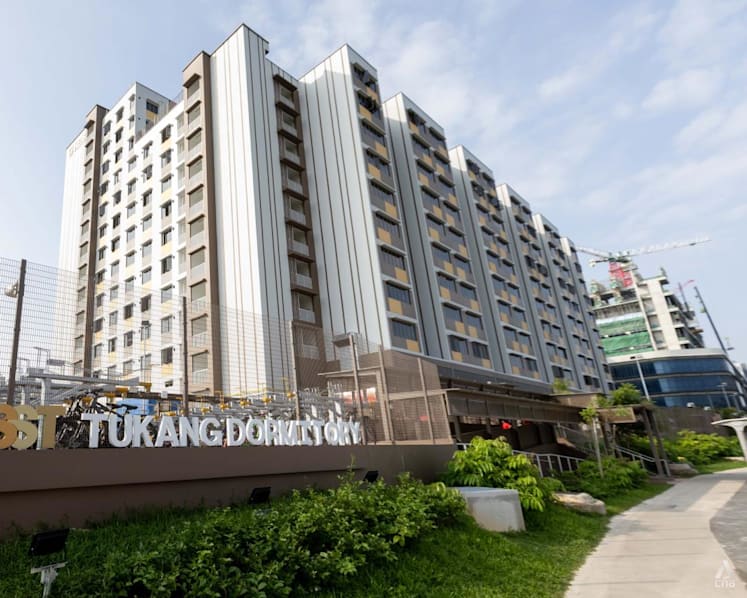
NESST Tukang Dormitory at Tukang Innovation Lane in Jurong on Jan 17, 2026. (Photo: CNA/Ili Mansor)

This audio is generated by an AI tool.


SINGAPORE: The first migrant worker dormitory to be built and owned by the Ministry of Manpower (MOM) opened in Jurong on Saturday (Jan 17).
NESST Tukang dormitory houses up to 2,400 workers in 210 rooms, and was built in line with the higher standards set by MOM during the pandemic in 2021.
Almost all the beds have been taken as of January and it is expected to reach full occupancy by May, MOM said in a press release.
MOM also announced a new grant under its Dormitory Transition Scheme to help existing dormitories upgrade facilities to meet the required standards.





Singapore raised dormitory standards in September 2021, as the rapid spread of COVID-19 across dormitories attracted scrutiny. Tens of thousands of migrant workers contracted infections amid reports of cramped conditions and unhygienic catering.
All new dormitories are already required to meet the higher standards. Existing dormitories must meet interim standards by 2030, and follow the higher standards by 2040.
NESST Tukang is one of the first dormitories to be developed based on these higher dormitory standards, according to MOM.
The facility is run by NESST Singapore, a corporate entity set up by MOM to manage its purpose-built migrant worker dormitories.
Speaking at the launch, Manpower Minister Tan See Leng said this reflected a "collective responsibility" to ensure Singapore's migrant workforce is housed well.
"For many, many years, our approach towards housing migrant workers was focused on meeting basic accommodation needs. However, the pandemic reminded us of the importance of strengthening our dormitory ecosystem," he said.
"It also underscored our belief that when workers are well-housed and well-cared for, they are better able to give their best at work, and our society benefits as a whole."
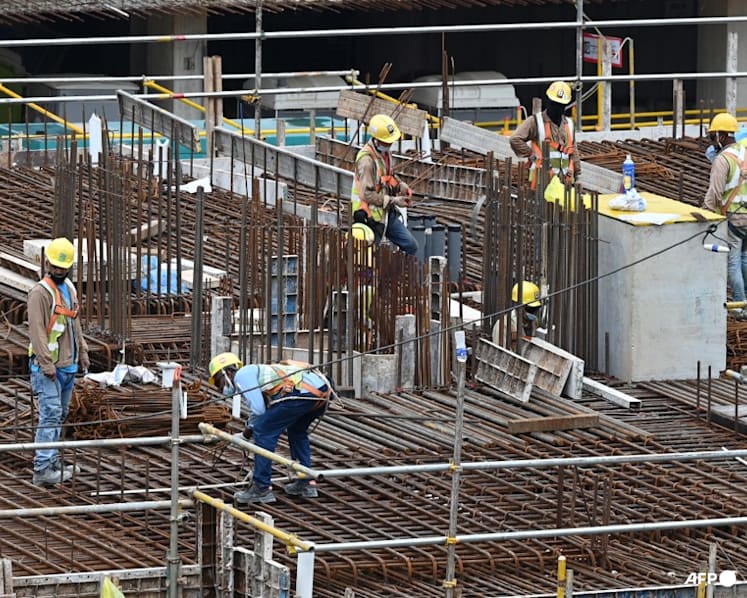
The minister also gave an update that construction on MOM's second dormitory at Sengkang West started this month. It will have 7,200 beds and is expected to begin operations by end-2028.
FUNDING FOR DORMITORY UPGRADES
Under the higher dormitory standards, each room must have a maximum of 12 residents and there must be at least 1m of space between their beds.
There is to be at least one ensuite toilet, shower and wash basin for every six residents. Each resident must have at least 4.2 sq m of living space.
There must also be ensuite toilets for all isolation rooms, and there are requirements for more single-bed isolation rooms and partitions in two-bed isolation rooms.
The interim standards are similar, except for a smaller required living space of at least 3.6 sq m per resident.
Under the new Dormitory Transition Scheme grant, funding will differ based on the retrofitting needed.
From 2026 to 2028, the grant will provide S$4,200 (US$3,300) for building a new room; S$9,800 for building an ensuite toilet; S$7,300 for adding a water closet to a communal toilet; and S$12,300 for building an isolation room with an ensuite toilet.
The grants will then be lowered from 2029 to 2030. MOM said this is to mitigate potential disruption in the supply of beds due to "bunching" of dormitories being retrofitted.
From 2029 to 2030, the grant will provide S$3,000 for building a new room; S$7,000 for building an ensuite toilet; S$5,300 for adding a water closet to a communal toilet; and S$8,800 for building an isolation room with an ensuite toilet.
About 900 dormitories with around 200,000 beds are expected to be eligible for the grant, said Dr Tan.
They must submit their intended retrofitting schedule to MOM for approval, and must commit to completing the works within the approved timeline.
This is to manage the simultaneous works in multiple dormitories and minimise their impact on bed supply and retrofitting costs, said the ministry.
Costs are a major concern for dormitory operators looking at upgrades, and the new grant will help in their considerations, said Mr Mohamed Fuad, president of Dormitory Association Singapore.
Another concern is how retrofitting works would affect bed supply. "There is already a bit of a (supply) crunch going on. So it's a very delicate situation, timing is very important," he said.

FACILITIES AT NESST TUKANG
Dr Tan said MOM pushed itself to do better than the required standards at NESST Tukang because the dormitory is meant to testbed innovations for the industry.
A specialist design advisory panel, migrant workers and industry representatives were consulted for its development.
"NESST Tukang Dormitory provides a living environment that promotes the physical and mental well-being of our migrant workers," he said.
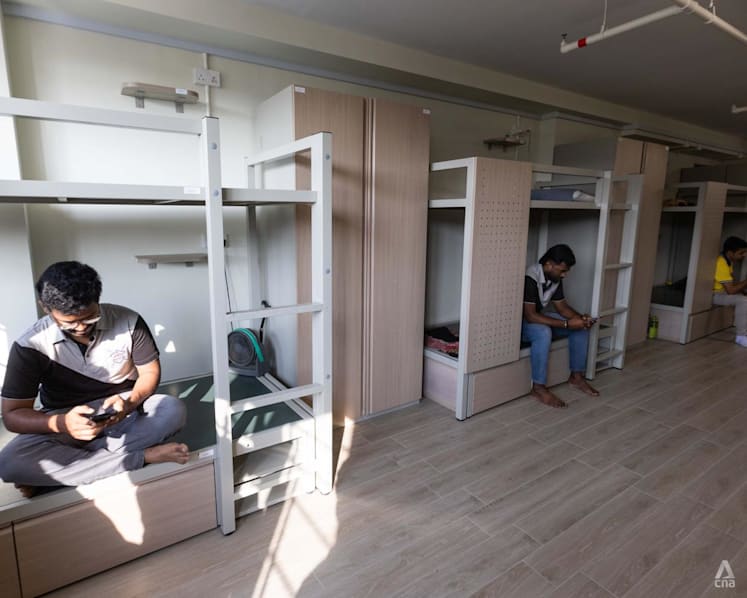
Each room has six single beds. The remaining six beds use a loft bed design with independent bed frames to reduce disturbance to those in the lower bunks.
Rooms are north-south facing and have larger windows for natural airflow and lighting. Rooms will have dedicated social spaces, and each floor has communal dining spaces and privacy nooks.
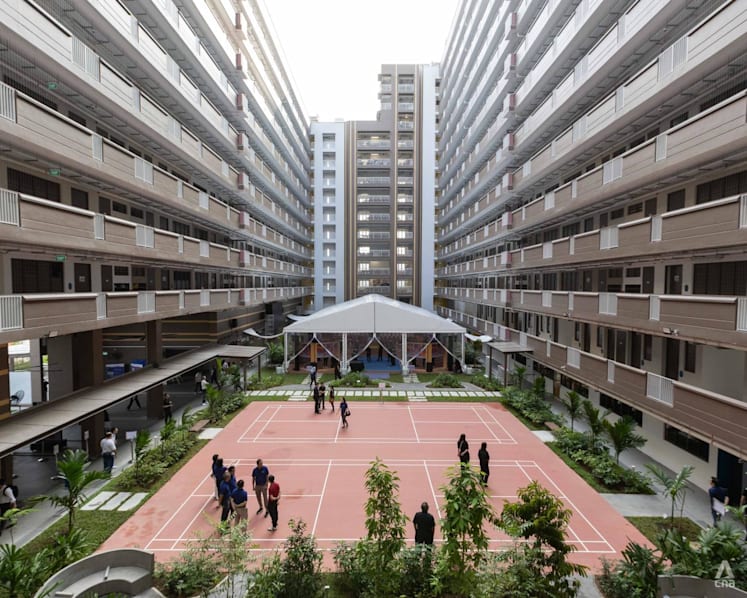
There are also green spaces, cricket practice lanes and a gym for sports and recreation.
Migrant worker Kalai Bilavebdran, 38, has been in Singapore for 10 years. He agreed that NESST Tukang has more and better facilities than other dormitories where he has stayed.
He also enjoyed Tukang's more convenient location compared to Tuas. It takes the residents 30 minutes to 40 minutes to get to Little India by public transport, he said.
Mr Bilavebdran said one feature he and fellow residents missed from their previous dormitories was an ATM, as they still prefer to transact in cash.
Migrant worker Yu Huagang, 43, similarly said the environment at NESST Tukang was airy and bright compared with his previous accommodation.
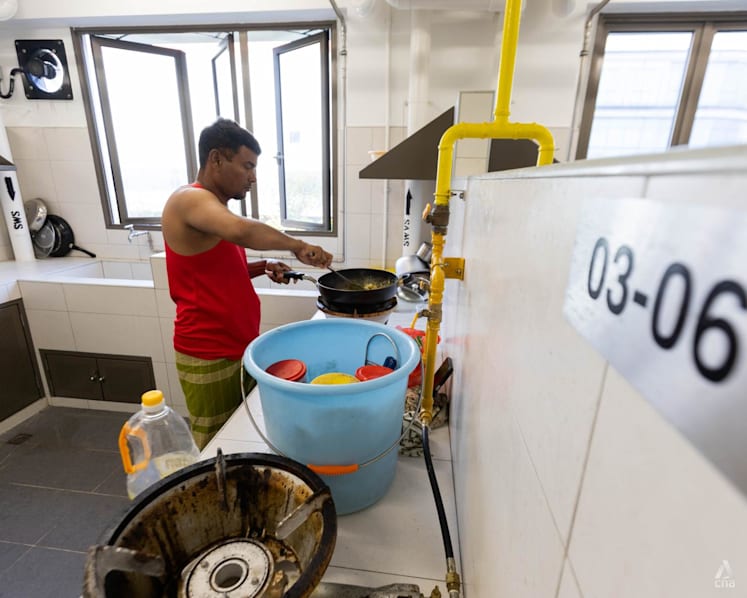
He also appreciated design features like charging points for phones at the beds, and shelves and power points for rice cookers in the kitchen.
Mr Yu, who works at NatSteel, said his pay was not affected by the move to the new dormitory, as accommodation is fully paid for by his employer.
The monthly rent for a bed at NESST Tukang is around S$500, said a NESST spokesperson.
The rate at NESST Tukang is "value for money", said NatSteel assistant vice president for human resources Clarus Chong.
She said they have been able to save on transport costs as Tukang is nearer to NatSteel's worksite.
NatSteel shuttles the workers on chartered buses. The company employs about 560 migrant workers, of whom about 480 have already moved in to NESST Tukang.
PANDEMIC READINESS
Dr Tan added that NESST Tukang was designed with pandemic readiness in mind.
Key public health measures include automated thermal scanners at gantries and wastewater surveillance for early health monitoring.
Multi-purpose recreational spaces can be converted to additional isolation areas, while the central courtyard and car park can also be converted to support healthcare operations in a crisis.
Coloured walls indicate daily routes for residents so that they can more easily transition to safe segregation when needed.
One digital solution being tested at the dormitory is a management system called i-SMART, which integrates temperature scanning and facial recognition at entry gantries to detect "abnormal behaviour" and unwell residents, said MOM.
These are critical health and safety features, said the ministry, adding that residents can also give feedback and book dormitory facilities on the i-SMART app.
Noting that well-being goes beyond physical infrastructure, Dr Tan also pointed to mental wellness and peer leadership programmes to support residents.
These include a partnership with non-governmental organisation HealthServe to raise mental health awareness and encourage health-seeking behaviours.
NESST also worked with the Little India Shop Owners and Heritage Association and food vendor Taste Asia on food options.
Migrant workers can buy familiar household brands and essentials from their home countries at on-site minimarts, and South Indian and Bangladeshi ready-to-eat meals from vending machines.

Despite the innovations and stricter standards, Dr Tan said NESST Tukang was able to offer bed prices below comparable dormitories that meet the improved dormitory standards.
"This has been achieved through careful planning and a clear focus on ensuring that the designs and innovative features, they are all scalable at a sustainable cost," he said.
"Our philosophy is simple: to uplift living standards without raising costs beyond reach, and to demonstrate that quality housing is available and is accessible to all."
To manage costs at Tukang dormitory, NESST ensured that design innovations were integrated into the building upfront, and that they could be scaled up to achieve economies of scale, said NESST Singapore CEO Thng Chee Meng.
There may be further design changes at the NESST Sengkang West dormitory – about 20 per cent of the rooms could be six-bedders and have ensuite kitchens.
This is because market consultations with some sectors of employers indicated there is demand for such features, said Mr Thng.