







More than 96% of NSFs to get WSQ accreditation
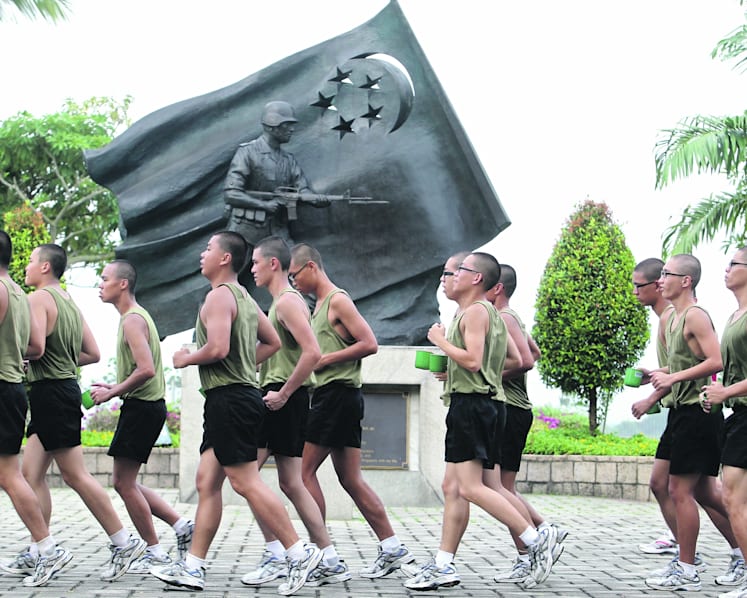
National Service (NS) recruits at SAF Basic Military Training (BMT) camp. TODAY file photo




SINGAPORE — More than nine in 10 full-time national servicemen (NSFs) who enlisted from January will receive Workforce Skills Qualifications (WSQ) accreditation every year.
Second Defence Minister Ong Ye Kung revealed in Parliament on Friday (March 3) that enlistees would be accredited for skills honed during Singapore Armed Forces (SAF) Basic Military Training (BMT), which received WSQ accreditation last December.
The skills include teamwork and effective communications. More than 96 per cent of NSFs are estimated to benefit. This excludes servicemen who do not finish BMT, as well as those who undergo BMT for commandos and naval divers, the syllabuses of which are still in the process of accreditation.
Currently, more than 20 SAF courses — including those for logistics management and leadership — are accredited under WSQ. NSFs could receive accreditation ranging from Statements of Attainment to a WSQ certificate or higher certificate. Commanders would get additional accreditation for leadership skills.





NSFs who earn WSQ accreditation may opt to do extra WSQ courses of their own accord to reach a higher level of certification.
The SAF will continue its work with SkillsFuture Singapore to accredit relevant leadership, technical and specialist skills picked up during NS, “with the vision for all NSFs to achieve WSQ accreditation at the end of their full-time NS”, the Defence Ministry said.
Still, Mr Ong said, while accrediting the skills learnt in NS can help improve the NS experience, it was “neither the main objective nor the key takeaway of NS”.
“NS fulfils the obligation and accords the honour of contributing to the defence of our country. The lasting benefits are the development of character and resilience, and the camaraderie and friendships forged with fellow NSmen,” he added.
To get NSmen to take greater ownership of their roles and responsibilities, Mindef had also launched the Vocation Interest initiative, which allows pre-enlistees to indicate their interest in 33 vocations across the SAF, Singapore Civil Defence Force and the Singapore Police Force since last November.
This will be an additional factor in determining their vocations, along with other considerations such as suitability and manpower requirements.
Giving an update, Mr Ong debunked the perception that enlistees would avoid vocations deemed intense or “siong” such as Infantry and Guards, opting instead for non-combat vocations related to their studies.
Saying that the latest SAF enlistment exercise showed 60 per cent of pre-enlistees had indicated an interest in Infantry and Guards, Mr Ong said: “They know that the training is ‘siong’ (tough) but good for them.”




