







National Day Special 2016: Governance that works
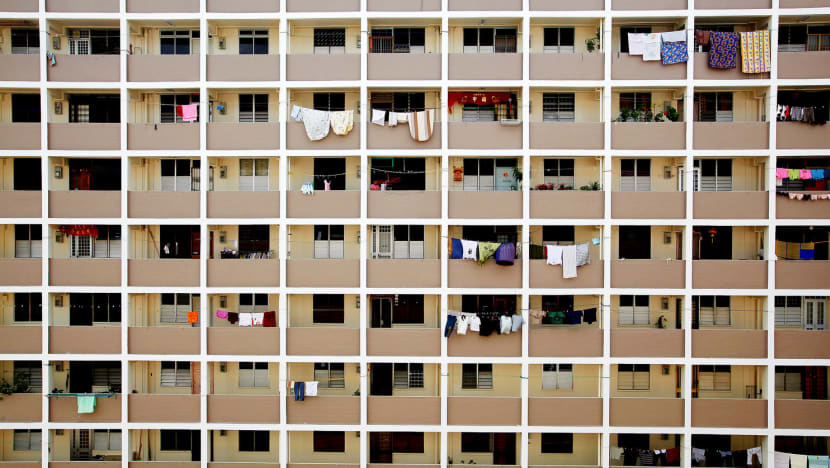
The massive transformation of a nation’s living conditions, coupled with a sustainable financing model, has turned Singapore into a nation of homeowners. Photo: Reuters


Rising inexorably over the landscape, the ubiquitous Housing and Development Board (HDB) flats built all over the island no longer get a second look.
Yet the HDB system, together with other social policies like the Central Provident Fund (CPF), are keenly studied by policymakers worldwide as exemplars of social innovation — providing for citizens’ basic needs in a sustainable manner.
And the Republic’s brand of governance, while widely studied by other countries, can be considered to be unique to this sunny island, say experts.
Rooted in pragmatism and fuelled by the determination of a pioneer generation to help the nation succeed in the early years post-independence, Singapore’s policy successes are distinct in how they blend the strong hand of the Government with individual responsibility.





And they have been sustained by a high level of trust from the citizenry — a trust earned by a government that made good on its promises.
The Government has been responsible for ensuring a basic level of social inclusion by mobilising resources to allow citizens access to life’s essentials, said Institute of Policy Studies deputy director of research Gillian Koh. This supplements — rather than supplants — the market and its workings, she noted.
Assistant Professor Woo Jun Jie, from the Nanyang Technological University’s School of Humanities and Social Sciences, said the strong public support the Government’s policies have broadly garnered reflected a “close social compact between the state and its citizens” and significant public trust in it.
Singapore Management University law don Eugene Tan said the Republic’s model of governance valued “performance legitimacy” — largely making good on its promises and thus engendering legitimacy for the objectives and outcomes of governance.
It also took the long view, while ensuring short-term needs were met.
“It’s bifocal in a sense, recognising that tomorrow’s society and the future is built on the prudent and principled choices made today,” said Associate Professor Tan, adding that while it was not a perfect system, it has worked “relatively well”.
REHOUSING A NATION
In the midst of a national housing crisis in 1960 emerged the HDB, entrusted with instituting sanitary living conditions as the nation sought to rehome people from slums and congested squatter settlements.
Some 21,000 flats went up in less than three years, and by 1965, 54,000 flats were built.
Today, more than eight in 10 of Singapore’s resident population live in an HDB flat, with over one million flats completed in 26 towns and estates nationwide. About 90 per cent of these households own their flats.
The Republic’s public-housing policy is distinctive on various fronts.
First, HDB flats are home to a significantly larger proportion of the population than public housing typically accommodates, said Assistant Professor Ng Kok Hoe from the Lee Kuan Yew School of Public Policy (LKYSPP).
In Hong Kong, for instance, only about 46 per cent of its population lived in public permanent housing in 2014, according to the Hong Kong Housing Authority’s Housing in Figures report for last year.
Public housing in many countries, added Asst Prof Ng, caters primarily to lower-income households, whereas the households in HDB units here cut across social classes. And unlike in other countries, where public housing is often rented out, HDB units are nearly always sold, he said.
The Republic’s success in public housing has been a learning point and the envy of governments overseas.
The Philippine city of Marikina — one of the largest in Metro Manila — has looked to Singapore as a role model, said Dr Belinda Yuen, research director at the Singapore University of Technology and Design’s Lee Kuan Yew Centre for Innovative Cities.
Years ago, the city made efforts to relocate squatters to areas near their workplaces with land titles, electricity and services, upgraded the barangays, or districts, and improved the quality of life and social equity among residents, Dr Yuen said.
LKYSPP’s Asst Prof Ng said the most innovative element here was the policy link between CPF and public housing, allowing many households to afford a property. Agreeing, National University of Singapore (NUS) sociologist Tan Ern Ser said the massive transformation of a nation’s living conditions, coupled with a sustainable financing model, has turned the Republic into a nation of homeowners.
No other country has achieved Singapore’s “practically universal provision of public housing”, added Professor Chua Beng Huat, also an NUS sociologist. “This is possible only because land is nationalised — no country can replicate this unless they have nationalised land, such as China,” he said.
CPF MEETS RANGE OF NEEDS
Another policy regarded as a social innovation is the CPF, the Republic’s compulsory savings scheme which came into effect in 1955, about a decade before independence. Funded by contributions from employers and employees, the CPF is a key element of the Republic’s social-security system, allowing Singaporeans to tap their savings for a range of needs, including retirement, housing and healthcare.
Spanning these domains, the CPF’s scale, said Asst Prof Ng, differentiates it from most public pension schemes worldwide, which cater for retirement.
Prof Chua, the NUS sociologist, noted that China’s Housing Provident Fund (HPF) scheme, introduced countrywide in 1995, drew lessons from Singapore’s practice of using CPF to enable households to buy a home.
However, the HPF, a mandatory home-financing savings scheme to which both employers and employees contribute, was not working, as its rate of savings was too low while housing inflation was spiking too quickly, said Prof Chua.
But the Republic’s CPF system is not without its flaws. Asst Prof Ng said that while the CPF scheme has succeeded in that it avoids putting a strain on public finances, being almost entirely funded by private contributions, it continues to disadvantage Singaporeans who work fewer years or earn lower salaries, including women in general.
“Even for people who have long careers, the diversion of savings towards housing often leaves little cash savings for retirement income,” he said.
Nevertheless, IPS’ Dr Koh said the CPF policy demonstrated the Republic’s shared system of governance, where the Government provides an attractive, basic guaranteed return on CPF savings, but citizens also do their part in contributing through income tax and Goods and Services Tax, among other things. “It is an equation where everyone has to contribute to a system,” Dr Koh said.




