







New guidelines to protect research participants
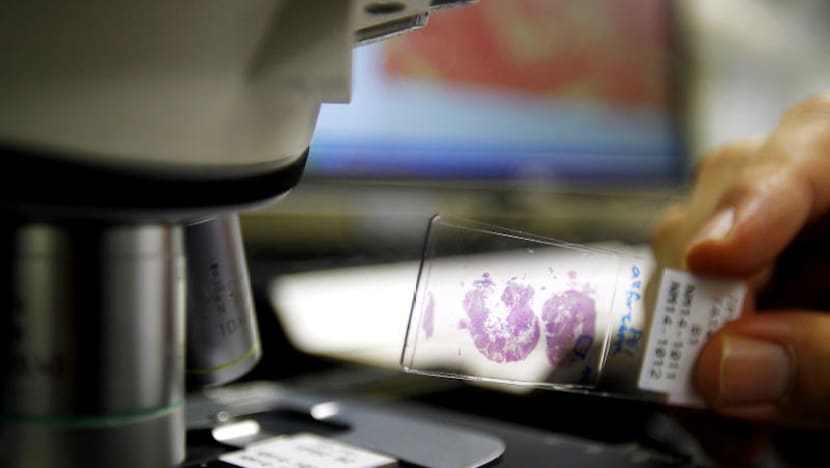
TODAY file photo showing a rapid screening test for gene mutation.


SINGAPORE — When researchers in a human biomedical research project unintentionally come across a finding that suggests potential health risks, they sometimes face a dilemma on whether they should inform the participant about it.
This issue of incidental findings from such research was among several that the Bioethics Advisory Committee (BAC) was trying to address when it was revising its ethics guidelines released today (June 23).
Speaking at a press conference held at the National Research Foundation headquarters, BAC member Kon Oi Lian noted that with the flourishing of genomic science research, questions on giving consent and managing incidental findings had been raised in recent years.
Dr Kon, the head of the division of medical sciences in the National Cancer Centre Singapore, noted that at times the unanticipated findings are either known to cause a disease or associated with a high likelihood of leading to a future disorder. “Many research participants have given their biological materials but they have not, at that time of donation, been specifically asked to make a decision if we find something — as it were by accident, but would we feel is clinically relevant to you — would you or would you not like to be informed of it?”





The revised set of guidelines now recommends that researchers ask participants if they would like to be informed of these “clinically significant” findings during the consent-taking process if there is a possibility that such findings may emerge. Previously, researchers had the option to not share such findings with the participants.
Human biomedical research is conducted to study, diagnose, treat or prevent any disease, injury or disorder of the human mind or body; and involves humans, human tissues or information derived from humans.
Professor Alastair Campbell, also a BAC member, said the scope of defining such research was also expanded to ensure that any research, even if it is done by others, such as social scientists, will be covered by proper ethical research guidelines.
Another revision to the guidelines is to respect the views of minors — individuals under 21 years old — who are capable of making their own decisions. Previously, a parent or guardian’s consent would suffice.
Prof Campbell said there is an increasing view globally that if the young person is able to understand what is involved, he has as much standing as parents who are seeking to protect the welfare of their children. “In other words, a young person, perfectly able to understand the nature of what’s being proposed, should have the right to refuse even if their parents are willing to consent,” said Prof Campbell, a professor of medical ethics at the Yong Loo Lin School of Medicine, National University of Singapore.
Between July and August 2012, the committee had put up the proposed guidelines for public consultation. Two dialogue sessions were also held for researchers, the general public religious groups, among others, that year. BAC chairman Richard Magnus, when asked if the guidelines were legally binding, noted that as the guidelines were a consolidation of past recommendations, some had already been passed as legislation.
Those not hard coded in the law, he noted, becomes “soft law” that represents institutional best practices for human biomedical research.
The set of revised guidelines comes as the Ministry of Health mulls over the draft Human Biomedical Research Bill announced last November, which aims to formalise standards in the area of biomedical research and protect the welfare of research participants. There has also been more long-term research in the area over the years, such as the Growing Up in Singapore Towards healthy Outcomes, or GUSTO, birth cohort study and more recently, a large-scale preconception study that involve 1,000 local couples.




