







Engagement with vets to continue to ensure stricter rules don’t raise costs, say industry players
A new complaint framework could come down too hard on the profession, and prompt some clinics to take extra steps to protect themselves against complaints or disciplinary action, industry players told CNA.
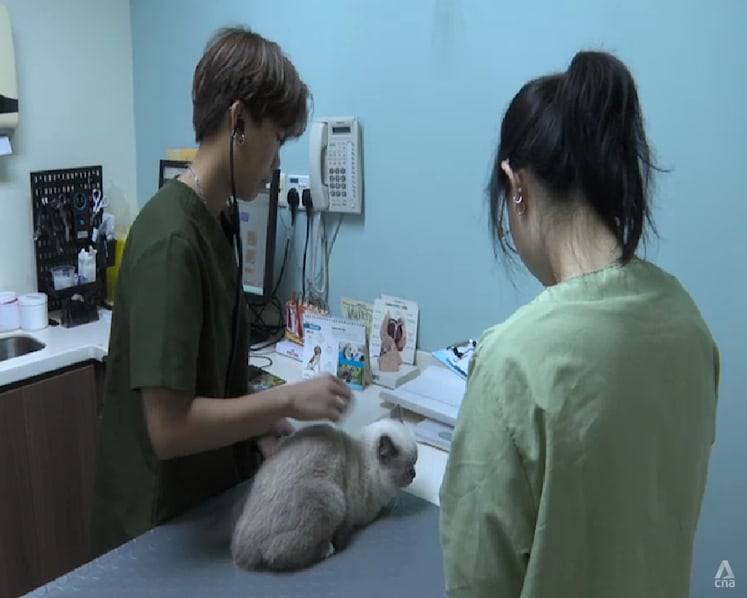
New legislation to regulate Singapore’s veterinary profession is being welcomed as a long-overdue step to raise standards.

This audio is generated by an AI tool.




SINGAPORE: New legislation to regulate Singapore’s veterinary profession is being welcomed by industry players as a long-overdue step to raise standards.
But they also caution that this could drive up costs for pet owners.
A new complaint framework could come down too hard on the profession, and prompt some clinics to take extra steps to protect themselves against complaints or disciplinary action, they told CNA.
This comes as Singapore will establish a Veterinary Council to regulate the profession and raise industry standards under a Bill passed in parliament on Apr 8.
Mr Alvin Tan, Minister of State for National Development, told parliament the number of licensed veterinarians has grown more than fivefold over two decades to nearly 700 as of end-2024.
At the same time, the range and sophistication of services have expanded alongside rising public expectations of professional standards.
RISING COMPLIANCE CONCERNS
The Singapore Veterinary Association (SVA) said that the formation of the Veterinary Council is welcomed, as it signals a major step forward in professional recognition, public trust and sector standards.
But it also warned the complaint framework could lead to vets ordering more tests and procedures before treatment to cover all bases.
Dr Teo Boon Han, the association’s president, said that beyond additional diagnostics, higher compliance and legal costs could also weigh on clinics.
“The business costs will go up because people will want to be covered by lawyers – maybe have lawyers on retainer,” said the veterinarian and pet nutritionist.
“You'll want to practice defensive medicine if regulations are too harsh. Whereas previously, I would only do one or two tests, now to cover all my bases, I might want to do 10 tests before I do a surgery.”
Dr Teo believes this could push up the price of routine procedures for pet owners.
“I think we have to be very cautious. We don’t want the industry to end up being very defensive,” he added.





Dr Teo, who was involved in the consultation process for the formation of the Veterinary Council, said efforts are underway to ensure that this does not happen.
“Many engagements have been, and will continue to be carried out with the industry to ensure practicality, balance, and minimise impact to cost,” he added.
The concern comes amid already rising vet bills, which have become a growing issue for some pet owners.
Ms Kerrine Chan, for instance, now compares fees across clinics and prioritises preventive care for her pet dog, Mochii.
“As much as we can, we try to do prevention now with the vet and then to avoid future, maybe expensive medical bills,” she said.
Ms Chan has become far more cost-conscious after facing hefty vet bills. She was quoted about S$12,000 (US$9,400) on cancer treatment for her previous dog Ruby, and had to forego the treatment.
As lymphoma can often relapse, she said one big factor is not knowing if she was going to have to spend a similar amount again in the future. Ruby died six months later.
“We see it every day, where we are not able to perform a certain standard of care due to cost,” said Dr Teo.
“It's actually one of the unique stressors, where we’re in a profession where we can help, we have been trained to help them, dedicate our lives to help, but we cannot help because of the financial constraints.”
He said many tend to falsely compare animal healthcare with the human healthcare sector, which has the support of robust government subsidies and private insurance plans.
“Insurance is picking up a little bit (for pets), but really, everything else is absent. Most vet clinics are SMEs (small‑ and medium‑sized enterprises), bearing the burden of what people see as a public good,” he said.

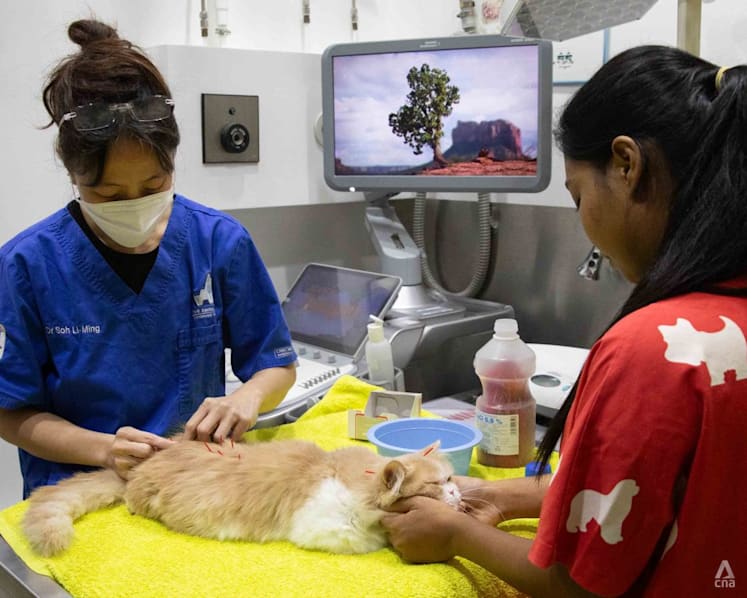
PUSH FOR LOCAL TRAINING
To address cost pressures in the longer term, the industry is renewing calls for local vet training.
Currently, aspiring vets must study overseas – a path that can cost between S$600,000 and S$1 million, according to Dr Teo.
“It's one of the professions in Singapore where it's not truly meritocratic, because I know there's not a profession that costs so much,” he said, noting the high barrier to entry.
“A lot of vets go into this with a lot of personal debt.”
Manpower costs make up 40 to 50 per cent of operating expenses at most vet clinics, said Dr Teo. This includes manpower costs for vet nurses.
The hope is that local training could lower education costs and boost the supply of vets, helping to ease manpower-driven expenses and, in turn, reduce fees over time.
Some animal welfare groups say a local training pathway could also help with staffing challenges, especially in shelters.
Mr Walter Leong, executive director of the Society for the Prevention of Cruelty to Animals (SPCA), said finding vets willing to work in such settings remains difficult.
Most vets make "a huge investment" to obtain their qualifications overseas, so working in a shelter environment may not be their preferred career path when they return to Singapore, he said.
“Having a local school allows us to tap local talent and maybe even have a syllabus that is more relevant to the local climate, the local environment,” he added.
However, Dr Teo acknowledges that setting up a veterinary school would be costly and complex, given the limited number of farm animals available for clinical practice.
This is often a key requirement for vet courses to receive international accreditation. Cohort sizes also have to be large enough to even out the high costs of setting up a vet school.
Meanwhile, authorities have said they will work to strengthen local vet-related training, including pathways for mid-career entrants.




