Singapore to ease Nipah virus measures, stop airport temperature screening as India outbreak stabilises
No cases of the Nipah virus infection have been reported in Singapore in connection with the outbreak in West Bengal or the case in Bangladesh.
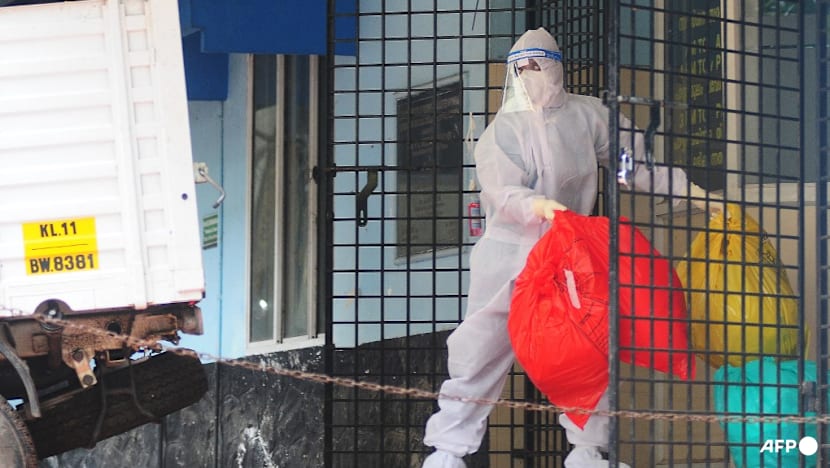
A health worker wearing protective gear disposes of biohazardous waste from a Nipah virus isolation centre at a government hospital in Kozikode, in India's southern state of Kerala, on Sep 16, 2023. (File photo: AFP)

This audio is generated by an AI tool.
SINGAPORE: Singapore will cease Nipah virus temperature screenings at the airport and seaports from Monday (Feb 23), progressively easing some measures as the outbreak in India stabilises.
No cases of the Nipah virus have been reported in Singapore in connection with the outbreak in West Bengal or the case in Bangladesh, the Communicable Diseases Agency (CDA) said on Friday.
“The Nipah virus situation in West Bengal has stabilised, with no new cases reported. No human-to-human Nipah virus transmission has been detected in Bangladesh,” CDA said, adding that it will remain vigilant against the virus even as Singapore returns to baseline surveillance levels.
Authorities will also stop disseminating Nipah virus health advisories for travellers at Singapore’s points of entry.
Measures are being eased less than a month after heightened measures were announced, including temperature screening for travellers arriving on flights from areas where Nipah virus outbreaks have been reported.
To maintain surveillance levels, however, the virus will continue to be covered by the SG Arrival health declarations and the Maritime Declaration of Health.
The Ministry of Manpower will maintain the current surveillance measures at the onboard centre for newly arrived migrant workers.
“Workers are consistently reminded to adopt precautionary measures against Nipah virus, practise good hygiene, and to seek care when unwell,” said CDA.
Doctors will be reminded to continue to be vigilant for Nipah virus infections in patients with compatible symptoms and recent travel history to affected areas. Medical practitioners and laboratories are required to notify CDA immediately of all confirmed and suspect cases.
"CDA will closely monitor the global NiV (Nipah virus infection) situation and stands ready to adjust public health measures should new information indicate an increased public health risk to Singapore," the agency added.
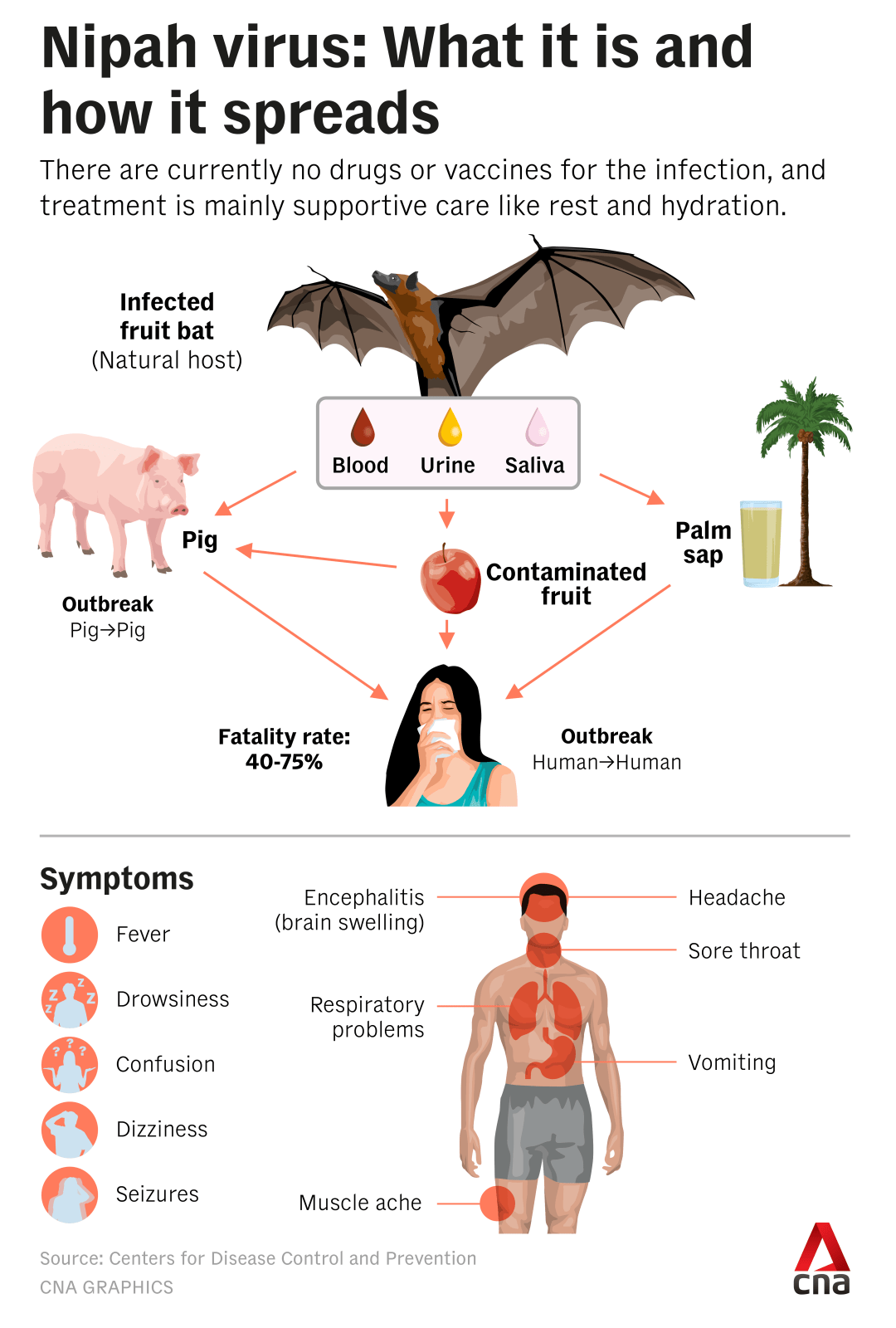
The Nipah virus is transmitted mainly through exposure to bats and consumption of date palm sap or fruits contaminated by bats.
The virus has an estimated fatality rate of 40 to 75 per cent, and can cause illnesses ranging from respiratory distress to brain inflammation.
Symptoms usually begin with a sudden flu-like illness, headache or fever. People may experience sore throat, muscle ache, vomiting, dizziness and drowsiness.
Pneumonia and other respiratory problems may also develop.