







Obstacles remain, but S’pore women pushing the boundaries: Grace Fu
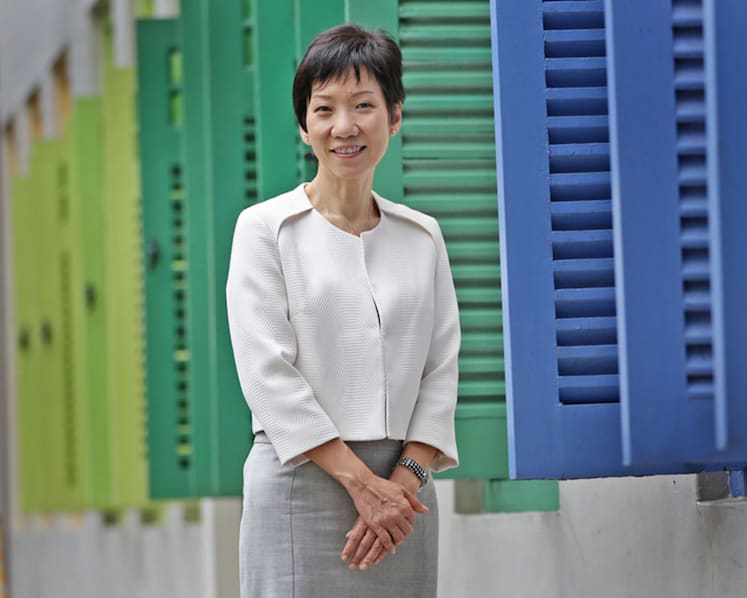
Ms Grace Fu, Minister for Community, Culture and Youth. Photo: Raj Nadarajan/TODAY


SINGAPORE — When she was chief executive officer at PSA South East Asia and Japan, many clients would look past her to her male counterparts, assuming the CEO would be a man. And sometimes, they would appear uneasy dealing with her.
But despite having to deal with gender stereotyping as she climbed the corporate ladder, Ms Grace Fu (picture) did not see what “the big deal” was, until she was appointed Singapore’s first female full minister to helm a ministry — of Culture, Community and Youth — last year.
The appointment, she said, made her realise she was “pushing the boundary” a little. Ms Fu, who is also the first woman to serve as Leader of the House, said notching up these firsts had not been her target nor life goal.
“When you are personally involved in it, you tend not to see what’s the big deal about it,” she said. “Then you have people coming to you saying, ‘Oh, you’re an inspiration for my daughter. She now wants to be the first female President of Singapore’.”





She noted that she was pushing at boundaries already pushed back by women who had made strides before her. Mrs Lim Hwee Hua was the first full female Cabinet minister in 2009, and Mdm Halimah Yacob is the first female Speaker of Parliament.
“I think each of us, the few people I’ve mentioned, are just pushing the boundary for women. And we can do that so that women after us see that, ‘hey, there is no big deal…’ I think that’s really positive signal to women,” said Ms Fu.
She added: “I’m glad to be part of that movement, to push the boundary and really be that role model if they see this as a positive role modelling.”
Although some groups advocating women’s rights felt that progress in female representation in Parliament has been made at a rather “leisurely pace”, Ms Fu noted this was in line with the proportion of women in leadership positions in the society in general. “And I don’t mean boards, I mean also the C-suites — the CEOs, the CFOs and so on,” she said, adding it was probably “the right ballpark”.
But women continue to face obstacles at work or at home, which need to be removed so that they can perform at their fullest potential, she said.
Human resources personnel at workplaces may be “blind to the needs of the genders”, by expecting their employees to reach a certain level in their career by a certain age to be considered for talent development for instance, which sometimes disadvantages women who want to take a few years off early adulthood for family.
They can also be blind to the positive attributes in women when they favour certain “male” attributes. “You don’t need all macho, aggressiveness at the top,” she added, noting that a top team needs a full range of attributes to deal with different crises, challenges, among other things.
But she noted that even without obstacles, not all sectors will see equal participation since some sectors will see more of one gender than the other. “There is no reason to really make it equal, equal,” she said.
And while she does not rule out the possibility of more women in the Cabinet, or even a female Prime Minister someday, this should happen naturally, not in an orchestrated way, she added.
Recounting her own experience, the mother of three sons, aged 24, 22 and 19, said she has been “very, very lucky” to have a supportive family. And at work, she was fortunate that her bosses gave her “breaks”.
She was made chief financial officer — in a male-dominated work environment — before she became PSA’s CEO for South East Asia and Japan, prior to joining politics in 2006.
When offered the CEO post, Ms Fu said she could have rejected it as her children — then eight, six and three years old — were still young, and she did not have much operational experience.
But she wanted to step up and give it a try. Said Ms Fu: “That’s an important message to many of the women — that when you’re given the opportunity, (you) should step up.
“Because you owe it to other women. If your boss offers to you and you said no, it just rein-forces a perception in the employers’ mind that women are not prepared.”




