







Opposition parties looking to more political collaboration with new WP chief
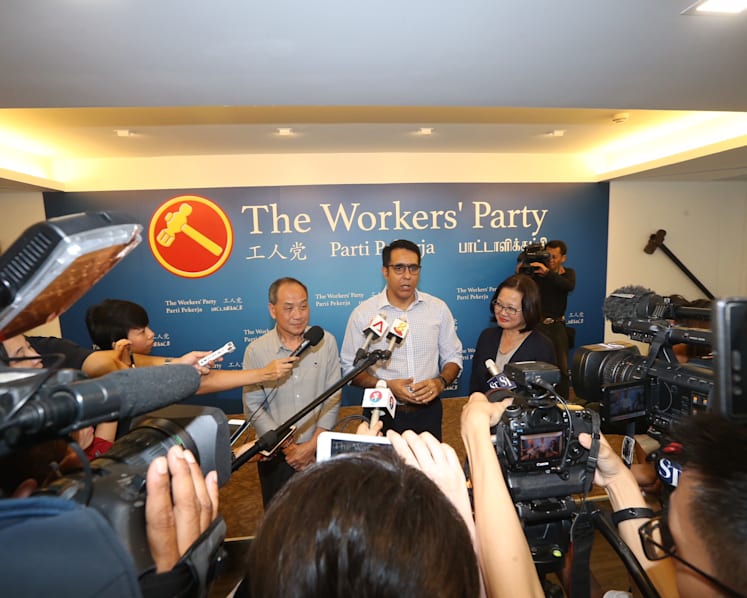
TODAY file photo


SINGAPORE — Following the election of Mr Pritam Singh, 41, as the new secretary-general of the Workers’ Party (WP), a number of opposition parties are hoping for greater collaboration with the country’s biggest challenger to the ruling People’s Action Party.
However, analysts believe that WP will not have a change of heart when it comes to forming an alliance with other opposition teams.
On Sunday (April 8), former party chief Low Thia Khiang, 61, stepped down after 17 years and is now a member of its central executive council (CEC), with party chairman Sylvia Lim, 53, re-elected unopposed.
Responding to the change in leadership, Mr Tan Jee Say, secretary-general of opposition party Singaporeans First, said: “We hope for more collaboration. Since (Mr Singh) is new, he might have a new approach, a different vision on how to bring the party forward.”





Mr Tan, a former presidential candidate, said that he and Mr Singh “briefly talked about” the subject of “possible collaboration” about two years ago during a chance encounter. “(We) did not go into details, because it was premature to discuss co-operation then. Now that he has been selected as the new leader of WP, it will be timely to revisit the issue.”
Other opposition parties are also expectant, with Singapore People’s Party’s chairman Lina Chiam congratulating Mr Singh in a Facebook post on Monday, and speaking of the “continuous opportunities for political collaboration between our parties”.
Mr Spencer Ng, organising secretary of the National Solidarity Party, and Mr Desmond Lim, chairman of the Singapore Democratic Alliance, also said that they have always been open to working with other opposition parties.
The renewed interest is not surprising, given that in 2013, Mr Low famously declared that opposition unity is “an impossible goal”.
“WP has taken its own path and I believe that is the path on which we can build a credible party to offer Singaporeans a credible choice,” he had said.
While Mr Low is no longer in charge, not everyone is optimistic that the WP will change its stance on non-collaboration.
Mr Goh Meng Seng, secretary-general of the People’s Power Party, said: “As much as we wish that the opposition should have more collaboration, it is wishful thinking... I do not think there will be much changes in that sense, unless Pritam has the guts to review the status quo and the direction that Low had set for the party. It is unlikely that he will do so, given that Sylvia Lim is still the chairman and furthermore, that Low is still in the CEC.”
When contacted, Singapore Democratic Party did not want to signal their intention on collaboration, saying it may not be in a position to talk about other opposition parties’ modus operandi.
Its chairman, Dr Paul Tambyah, said: “We can’t make any comments about the way we work together, but we want to congratulate Pritam. Obviously, anyone working for a free and more democratic Singapore will be great.”
THE NEED TO STAND APART
Mr Singh could not be reached for his views on collaboration, but he had said at the post-election press conference on Sunday that his immediate plans are to reach out to WP members for their “views, wishes and vision” for the party.
He also stated that the process of setting a broad direction ahead for the party will be a “consultative” one.
Political analysts told TODAY that it is unlikely the WP will deviate from its path, given that it sees a need to differentiate itself from other opposition parties.
Law professor Eugene Tan from the Singapore Management University (SMU) said: “I doubt there will be any significant change in the approach towards other opposition members in the foreseeable future, certainly not in the lead-up to the next General Election.”
He added that it does not matter who is at the helm, because the need to differentiate itself from other opposition parties is not a one-person stance. “It is a considered decision by WP’s leadership, that while they regard themselves to be a part of the opposition, they are also better off apart from it, given the different levels of developments within the opposition camp.
“The WP is mindful that they are likely to do more for other parties than they can do for them.”
WP’s reluctance to co-operate with other parties is not due to political aloofness or arrogance, Associate Professor Tan said.
“The party takes the view that its non-confrontational approach to politics and its self-ascribed role as a loyal opposition make collaboration challenging. It is also keen to avoid being embroiled in petty politics of personalities within the opposition camp as well.
“It is alive to the possibility of working with others, if other opposition parties raise their game significantly, but that would still take some time.”
Dr Bilveer Singh, a political scientist with the National University of Singapore, agreed that it is unlikely the new WP leader will go in the opposite direction to his predecessor. “Continuity rather than change will be the mantra,” he said.
However, Dr Singh stressed that the opposition, including the WP, must learn to collaborate and establish electoral pacts more than simply agreeing on where not to compete with regards to electoral wards. “(This is) something they have been doing rather effectively among themselves, but without much effect on national politics, what more on weakening the one-party dominant state in Singapore.
“So, if Mr Singh wants to be different and leave his imprimatur, one area (he can work towards) is more effective electioneering politics among the opposition parties, something that (was not seen in) Low’s WP.”




