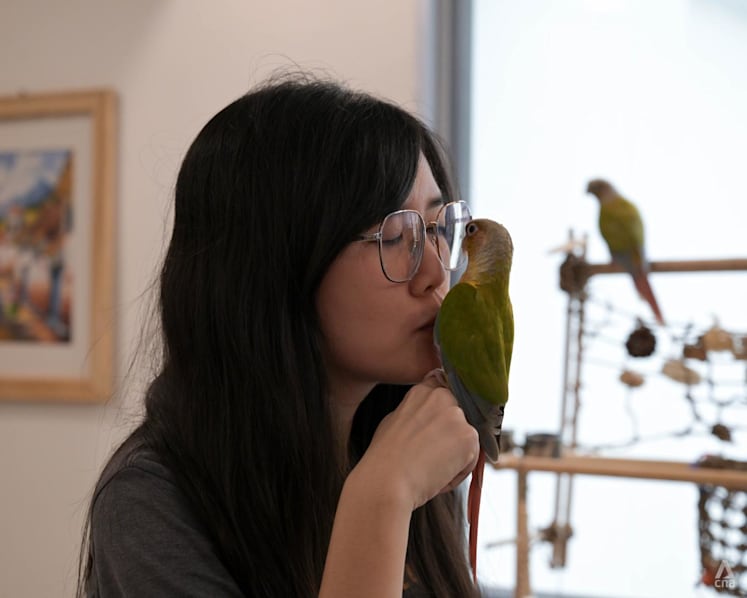
Pet parrots bring companionship to owners, but can ruffle neighbours' feathers
Complaints ranged from excessive noise to concerns about animal welfare.
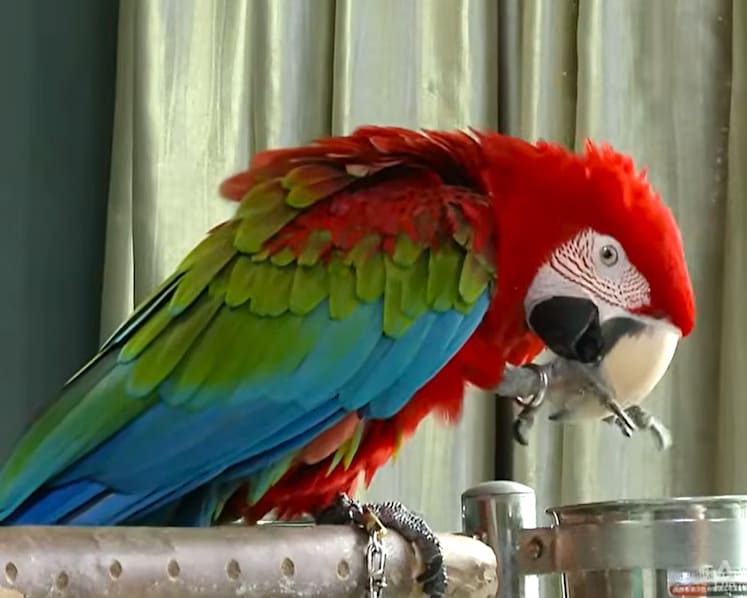
The National Parks Board (NParks) received an average of more than 800 feedback cases involving pet parrots each year between 2021 and 2025.

This audio is generated by an AI tool.






SINGAPORE: Pet parrots may bring colour and chatter into homes, but they are also a source of disputes between neighbours.
The National Parks Board (NParks) received an average of more than 800 feedback cases involving pet parrots each year between 2021 and 2025, with complaints ranging from excessive noise to animal welfare concerns.
In some cases, disagreements have strained neighbourly relations, with some owners eventually giving up their birds.
NOT FOR EVERYONE
For some residents, parrots add life and vibrancy to their surroundings.
“If (owners) have good control over their pets and don't let them fly around (or create a mess), then I think that's okay,” said one Sengkang resident.
Others, however, are less enthusiastic.
“The bird droppings and the feathers could actually affect young children,” said another resident in the same neighbourhood.
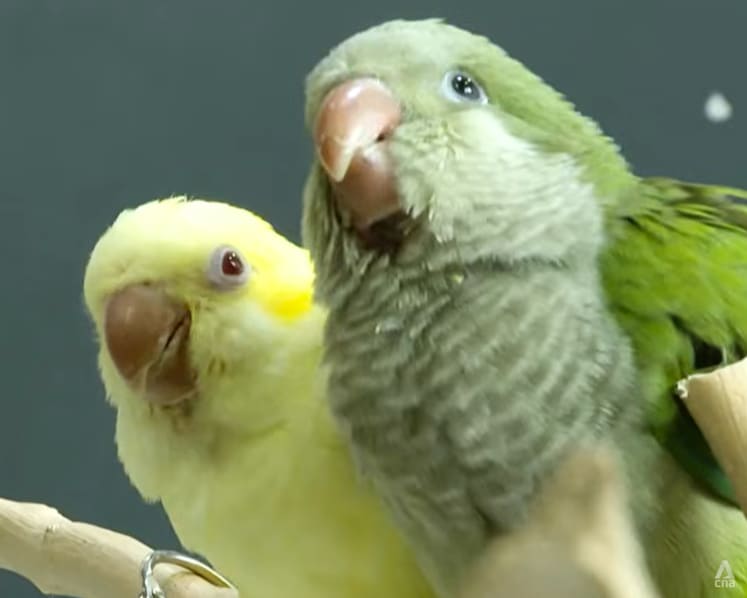
According to the Parrot Society (Singapore), such differing views are not uncommon.
“Parrots naturally communicate in the wild, especially when they are flock calling, which helps them stay connected with one another,” said Ms Sua Yun Shan, vice-president and welfare team leader of the society.
“But in urban environments like in Singapore, where neighbours live very closely together, owners should be mindful of the impact of their bird vocalisations,” she added.
“This is very important, especially during late nights or early morning hours, when people are resting. Being considerate of neighbours, while still meeting a parrot's welfare needs, is important for responsible ownership.”
Ms Sua said the increase in frequency or volume of a parrot’s vocalisations can be linked to factors such as “boredom, insufficient enrichment, changes in routine, separation from a preferred companion – like their owners, or learning of behaviours where the bird associates vocalising with receiving attention”.
While some owners have installed soundproof windows or curtains, these measures can only mitigate the noise to a limited extent, she noted.
“Ultimately, we feel having a good husbandry and understanding the birds’ needs are the most effective long-term solutions.”
MORE THAN A PET
Bird owners know firsthand how neighbour complaints can escalate.
Parrot keeper Felin Seah said authorities have visited her home several times to investigate reports about noise and cleanliness linked to her birds.
“(The officer) asked us to keep our door and windows closed,” said the 45-year-old, whose family subsequently followed the advice.
“But sometimes in the afternoon, I will open the window and the door after I feed them because I need to ventilate the house.”
Ms Seah regularly brings her eight birds outdoors two to three times a week to help them expend energy. She also provides enrichment toys to keep them mentally stimulated.
While some neighbours have complained, she said others enjoy seeing the birds around.
Listen:
The Parrot Society has seen welfare-related enquiries triple since it was established three years ago and hopes to step up education and outreach efforts.
Among Singapore's most popular pet parrots are lovebirds, conures, cockatiels and budgies.
More serious hobbyists even go for larger parrots like African greys, and various types of macaws and cockatoos.
Dr Jessica Lee, head of avian species programmes and partnerships at Mandai Nature, the conservation arm of Mandai Wildlife Group, said parrots possess traits that many people find appealing.
“They display certain behaviours of affection that you don’t really get from other pets,” said Dr Lee, who is also vice-chair for Asia at the International Union for Conservation of Nature Species Survival Commission's Wild Parrot Specialist Group.
“Parrots belong to a group of birds that are naturally tactile. They like to be touched, they like to cuddle,” she added.
“All these are traits that humans like in the animal that they want to keep as a pet, and so parrots become very popular. On top of the plumage, the ability to vocalise and the tactile behaviour, it also comes to some degree with rising affluence.”
THE REAL COST
However, ownership comes with significant responsibilities and costs.
While smaller parrots may cost tens to hundreds of dollars, larger species can fetch thousands – or even tens of thousands – of dollars.
Experts say parrots have intelligence and emotional capacities comparable to those of a two- to five-year-old child, depending on the species.
They require spacious enclosures, constant enrichment through toys and activities, specialised diets that include fruits, vegetables and seeds, as well as regular veterinary care.
Many also engage groomers to keep their birds’ beaks and nails from overgrowing.
Monthly expenses can easily run into the hundreds of dollars, while treatment at specialised avian veterinary clinics may cost more than S$1,000 at a time, according to the Parrot Society.
The popularity of pet birds has also raised concerns about their impact on local ecosystems.
Some species are subject to international trade controls because their wild populations are declining rapidly.
Experts warn owners to take precautions to prevent their birds from escaping.
“We have native species that can be threatened by the impact of non-native species coming into the environment. This is essentially through competition,” said Mr Richard White, chairman of the Bird Society of Singapore's records committee.
“It can be competition for food, it can be competition for nest sites, it can also be the introduction of disease,” he added.
“So when birds escape from captivity, are released from captivity or an intentional release, these then have an impact on the native species that may already be struggling in Singapore for various reasons.”