







Asian philanthropy urged to play bigger role in education, development funding
Speakers at the Philanthropy Asia Summit in Singapore said philanthropic organisations can help bridge funding gaps and attract investment into long-term projects.
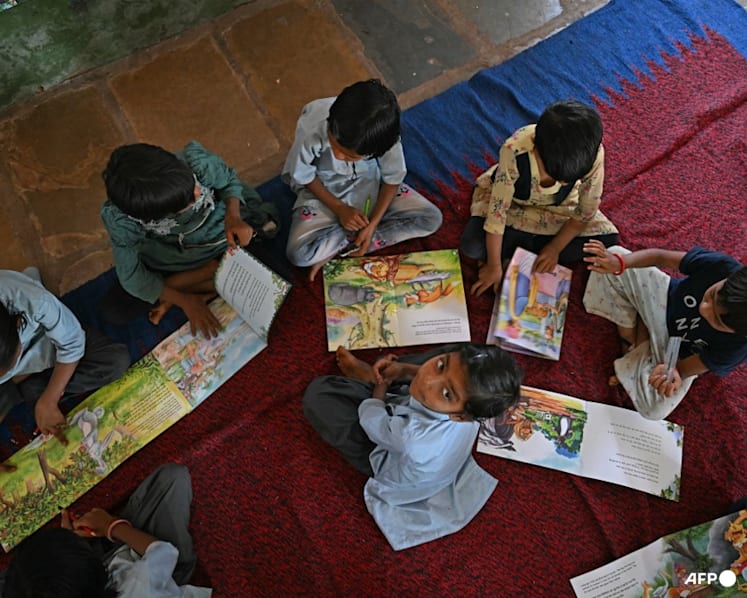
In this photograph taken on April 8, 2025, students read books as part of an activity inside the classroom of a government primary school at Nichla Fala village in India's Rajasthan state. (Photo: AFP/Money Sharma)

This audio is generated by an AI tool.


SINGAPORE: Philanthropic organisations in Asia can play a bigger role in financing education and development projects, amid funding pressures and a decline in traditional sources of aid, said speakers at the Philanthropy Asia Summit on Monday (May 18).
The philanthropic sector could also help attract private investment into long-term initiatives, they told CNA on the sidelines of the event.
Currently in its sixth edition, the summit brings together leaders from philanthropy, business, government and civil society to discuss issues including climate change, healthcare and inclusive development.
TEACHERS “THE BEATING HEART OF EDUCATION”
Pia Rebello Britto, global director of education and adolescent development at UNICEF – the United Nations children’s agency – said philanthropic organisations are uniquely positioned to take more risks in educational innovation.
“Globally, we are seeing a lot of shift in traditional official development assistance. So, there is a moment now for philanthropy to make a big catalytic change,” she said.
Catalytic financing refers to early-stage funding that absorbs the risks of unproven projects, helping attract larger investors later on.
Such financing can “enable the sort of innovation aspect in really testing out models, taking some risks, that then the public sector and domestic resources can scale up”, Britto added.





But major funding gaps remain. Globally, there is a US$97 billion funding shortfall for education, she noted.
Britto said the focus should be on strengthening education systems.
“Teachers are there ready to work, but are we providing them the right training, the right support, the right empowerment, so that they can have the effect that's needed? They’re the beating heart of education,” she said.
“When you support one teacher, you support many children.”
She added that while governments typically fund teacher salaries, philanthropy could help uplift the teaching profession through training, upskilling and support systems.
AI TOOLS MUST NOT DEEPEN DIGITAL DIVIDES
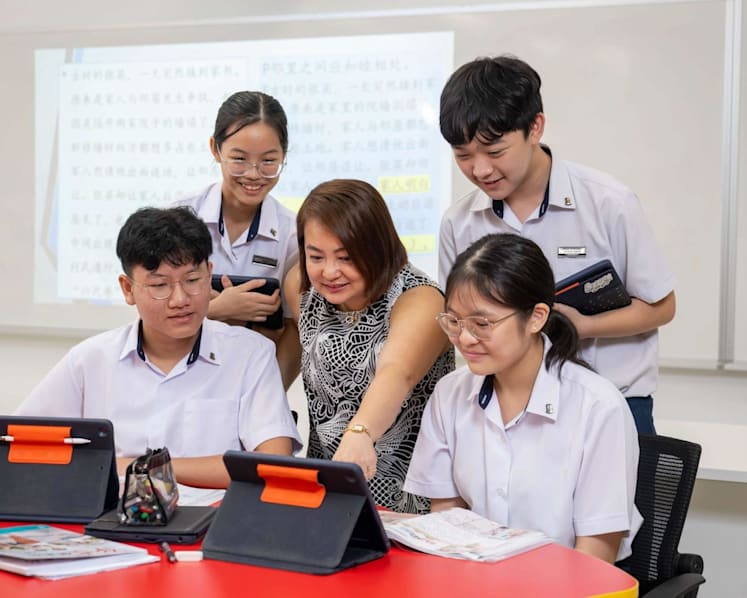
Britto also cautioned against the rapid rollout of artificial intelligence tools in classrooms without sufficient safeguards for children and vulnerable learners.
“When AI is at the doorstep, the critical question you need to ask is, is this solution really tailored for education?” she said.
She added that governments and philanthropists should ensure AI systems are designed with the needs of the Global South in mind, including linguistic diversity and equitable access.
The Global South generally refers to developing and lower-income countries across regions including Asia, Africa and Latin America, where access to technology and education can be more uneven.
Britto said AI systems should include safeguards to protect children’s rights and be designed with equity in mind so they do not deepen digital divides.
She added that technology should strengthen, rather than replace, the human connections at the core of learning.
Her comments on education funding and AI came amid broader discussions at the summit over how philanthropy can support development projects as traditional financial assistance shifts and governments face funding pressures.

DEVELOPMENT FINANCE ENTERING “NEW PHASE”: ADBI
Bambang Brodjonegoro, dean and CEO of the Asian Development Bank Institute (ADBI), said development finance had historically helped many Asian economies move from low-income to middle-income status.
However, he noted that Asia has entered a “new phase” of development financing following the COVID-19 pandemic and the withdrawal of some major donors.
Hence, “development finance has to be more innovative”, he added.
Brodjonegoro said such finance had traditionally centred on direct lending, but now needs to focus more on catalytic financing and increasingly be used to mobilise private capital, rather than simply fund projects directly.
His comments echoed themes from a report released during the summit by the Philanthropy Asia Alliance and the Centre for Asian Philanthropy and Society, which examined how philanthropic funding across Asia has been used as “risk capital” to support early-stage innovations.
The report analysed 10 case studies across climate, healthcare, housing, water, waste and digital inclusion, arguing that philanthropic capital can help back unproven solutions before governments or private investors are prepared to step in.
Among the projects highlighted were sustainable housing initiatives, dengue-control programmes and digital welfare platforms that later attracted government support or follow-on investment.

The report also found that philanthropists across Asia are increasingly experimenting beyond traditional grants, including concessional debt and equity financing, while working closely with governments and local communities to scale projects.
Brodjonegoro said philanthropic organisations increasingly recognise they cannot solve development problems alone and must work alongside governments, development banks and the private sector.
“Development issues, especially in Asia, (are) just simply too complicated to be solved by a single or a few sources of financing,” he said.
“We need everyone to work together.”
The Philanthropy Asia Summit runs until Wednesday at the Sands Expo and Convention Centre.




