







PM Lee says it's his 'responsibility' to carry through proposed changes to the Elected Presidency scheme
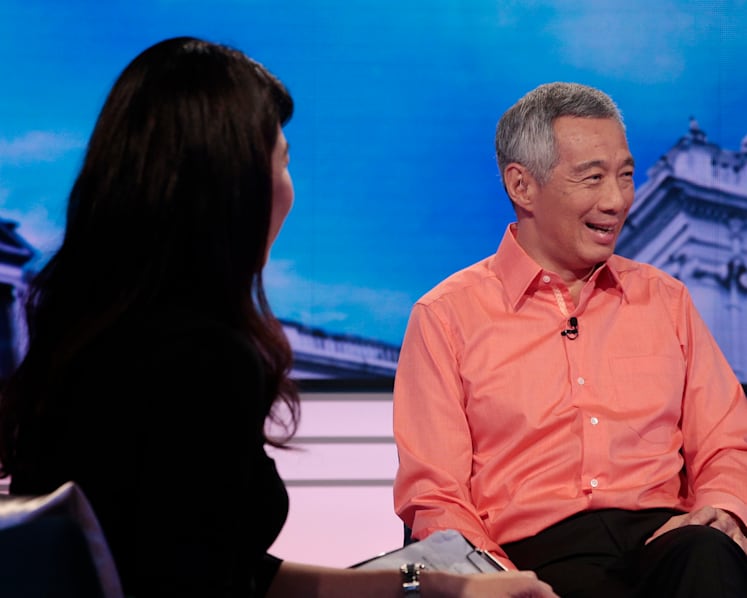
Prime Minister Lee Hsien Loong (right) at the interview. Photo: Jason Quah.


SINGAPORE — Explaining why changes have to be made to the Elected Presidency (EP) scheme now, Prime Minister Lee Hsien Loong reiterated that the Government had recognised from the start that it could lead to a lack of minority presidents, but had put off addressing the issue because it was “not an immediate problem”.
However, Mr Lee, 64 — who had said previously that he would not want to be in office beyond 70 — said it is his responsibility to straighten things out.
“It’s something I feel I ought to do and I ought not to pass this on, kick the can down the road and leave it to my successor,” said Mr Lee in an interview with Mediacorp which was aired on Sunday (Sept 4).
Ensuring a minority president was not the Republic’s foremost concern when the system was first put in place, said Mr Lee, who was Deputy Prime Minister when the legislation for an Elected President came into effect in November 1991.





“At the beginning, we felt that we had time. It was a problem (but) not an immediate problem because ... we were not having fierce elections. We were looking for candidates to become president and looking very hard, and so we had the luxury of time to see how things would unfold,” he added.
After seeing how things have changed over 25 years, Mr Lee now sees it as his “responsibility” to carry through proposed changes to the EP scheme.
Noting that during this period, Singapore has seen one minority president who was elected unopposed, Mr Lee said: “I think (the late Mr S R Nathan) won hearts of Singaporeans but when he first came out, without Singaporeans knowing him well, I’m not sure how an election would have turned out.”
Minority candidates may not stand a fair chance in “hard-fought” presidential contests, like the last one in 2011, he said.
“There will be future presidential elections which will be as hard fought, as tense, and I think that will make the problem more acute.”
Mr Lee also stressed that Singapore should not revert to the old practice of the Government appointing a president — which saw four presidents of different races being appointed between 1965 and 1991 — because the head of state must have the people’s mandate to wield his constitutional powers.
Besides its symbolic, multi-racial representation, the Elected Presidency serves as a safeguard against the elected Government.
“You have a balancing system to stabilise the political system, to make sure you don’t have one mishap and the whole boat flips over. I think that for the long term, we need these stabilisers,” said Mr Lee, pointing to similar safeguards in other countries, such as having an Upper House in Parliament.
Citing how “elections became auctions” during Australia’s commodities boom in the 2000s, where political parties made grand promises to woo voters, Mr Lee said: “We have been accumulating reserves over many, many years now. I believe over the last 25 years, if we had not had this elected president, we would have been pushed towards auctions.”
By having an Elected President as a “safeguard”, he added: “Even the Opposition knows that if they come in and they want to spend the money, they have to persuade the President and the President can say, ‘No’.”




