







Prosecution seeks stiff jail term for Yang Yin, saying he spun web of lies



SINGAPORE — Pressing for a deterrent sentence of 10 to 12 years’ jail for his two convictions of criminal breach of trust, the prosecution on Friday (Sept 9) charged that former tour guide Yang Yin spun lie after lie to “coat the audacity of his actions with a veneer of legitimacy”, to cover up the criminal misappropriation of S$1.1 million that belonged to aged Singaporean widow Chung Khin Chun.
Yang’s defence lawyer Irving Choh, however, asked for a sentence of not more than three years’ jail for the 42-year-old, saying that he was not an “emotionally manipulative” person and that his offences were a “misguided attempt to lift a financial burden which was taking a toll on his family”.
Yang, who is from China, was convicted on Aug 16, after 11 days of trial that saw him changing his mind a few times between pleading guilty and disputing his charges.
The prosecution, led by Deputy Public Prosecutor (DPP) Sanjiv Vaswani, charged that the offences — committed in February 2010 and January 2012 — were “extensively planned and premeditated”, and his “fraudulent conduct” continued during and after the course of investigations, when he came up with “numerous cunning deceptions” to avoid detection.





In February 2010, for instance, Yang came up with a “convincing backstory” for Madam Chung to buy a fake painting from his friend so that the 89-year-old would remit S$500,000 to China. He did so because he wanted to avoid the red flags that would be raised if he were to remit such a large sum from his bank account, given that he was unemployed and had no source of income in Singapore.
When investigations were launched against him, Yang falsified receipts and lied to the authorities — aggravating factors that justify a higher sentence, the prosecution said.
“The lies and cover-ups pursued by the accused at length, years after the actual act of misappropriation was executed, demonstrate the depth of his commitment to deceit and fraud,” DPP Sanjiv said.
To achieve his own ends, Yang — who first got to know Madam Chung in 2006 through her friend, served as her tour guide in Beijing two years later and then moved in to live with her in Singapore — had “brazenly and manipulatively” betrayed the woman’s trust in him, he added.
Over the years, Madam Chung granted Yang the mandate to operate her bank account, named him as a beneficiary in her will, and granted him full control of her assets through a Lasting Power of Attorney.
With Singapore facing an ageing population, there is a danger that “nefarious individuals or groups” may seize the opportunity to take advantage of older people, the DPP said. He called for a deterrent sentence to convey a clear message that those entrusted with stewardship of funds by vulnerable persons will be held to higher account.
The prosecution also called out Yang’s “flippant” conduct at trial, when he made several unusual requests that had to be turned down, such as to “change the DPP” and speak to the Deputy Presiding Judge, which showed a “total lack of respect for the judicial process”.
In mitigation, defence lawyer Choh said that Yang was a first-time offender, was the sole breadwinner of his family and had financial burdens due to his late grandmother’s illness.
He is not the “emotionally manipulative” person that the prosecution paints him to be, Mr Choh added.
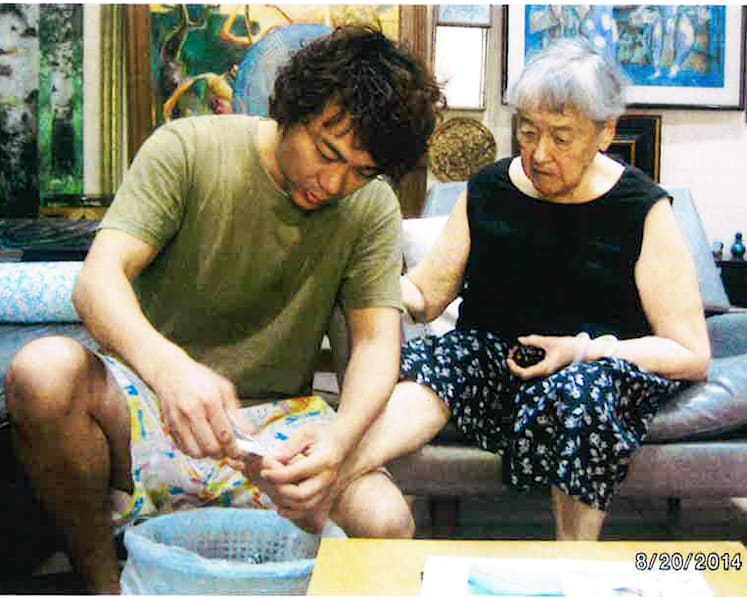
He took care of Madam Chung while he was in Singapore and they shared a “warm relationship”, the lawyer said, presenting pictures of the two in happier times.
“Madam Chung treated my client like the grandson she never had ... His desire to pay off his family debts got the better of him and landed him in this situation,” he said.
DPP Sanjiv said that most of the pictures shown were taken in August 2014, after Madam Chung’s niece Hedy Mok had initiated a series of civil actions against Yang, and after Yang learnt that Madam Chung had dementia.
For each charge of criminal breach of trust, Yang could be jailed up to seven years and/or fined.
His case will be heard again on Sept 21, and sentencing will take place at a later date.




