







Silver Support criteria should exclude housing type: MPs
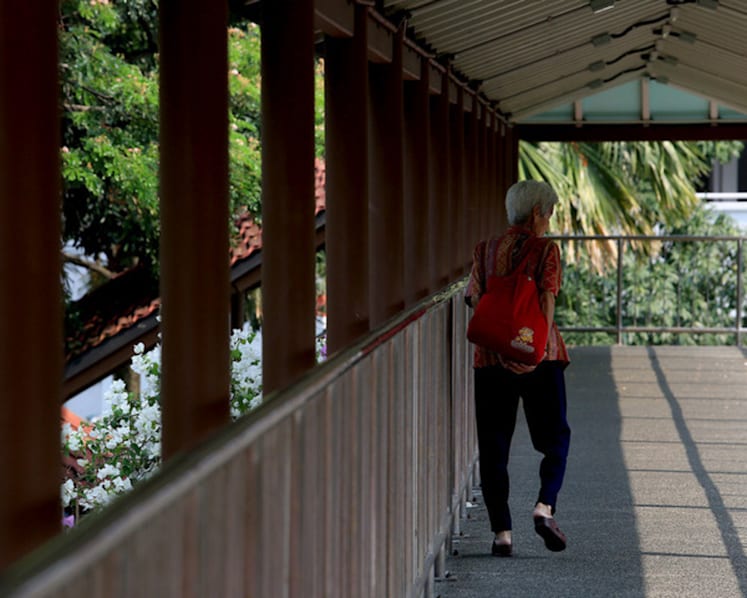
Some MPs urged the Government to scrap the housing-type eligibility criterion for the Silver Support Scheme. TODAY file photo.


SINGAPORE — Pointing out that the house that one lives in is no longer an accurate reflection of one’s income and wealth, some Members of Parliament (MPs) yesterday urged the Government to scrap the housing-type eligibility criterion, which excludes seniors living in bigger homes from receiving quarterly payouts, for the Silver Support Scheme.
Under the scheme — described as a major new feature in Singapore’s social security system — more than 140,000 lower-income seniors will receive about S$300 to S$750 every three months. The payout is meant as a “modest but meaningful” supplement to their retirement incomes, Finance Minister Heng Swee Keat said in his Budget speech last month.
To qualify, citizens aged 65 and above must meet all of the following criteria: Have total Central Provident Fund contributions of not more than S$70,000 by age 55, while self-employed persons should have an average annual net trade income of not more than S$22,800 when they were between the ages of 45 and 54; live in a five-room flat or smaller; do not own a five-room flat or private property or multiple properties, or have a spouse who does so; and live in a household with a monthly income of not more than S$1,100 per person.
MP Zaqy Mohamad (Chua Chu Kang GRC) acknowledged that the principles of means-testing would deliver more help to targeted segments who need it the most. However, he noted the “possibility that all our policies could be … skewed too much for the lower-income, with little going in the way to help the middle-income groups”.





The Silver Support Scheme, he said, leaves many retirees who were middle-income earners without support.
Citing an example of a resident living in a five-room Chua Chu Kang flat with his son’s family, Mr Zaqy said such means-testing is a disincentive for seniors who want to live with their children as they will always lose out on government benefits and rebates.
Urging Mr Heng to exclude the housing-type criterion, Mr Lim Biow Chuan (Mountbatten) noted that some of his senior residents live in bigger homes because they have inherited them, or are living on the charity of relatives who are not their children.
“Is it the intent of the Government to ... uproot (such senior residents) from their neighbours and a familiar environment just to qualify for government support and for a better quality of life? I’m quite sure that is not the intent,” he said.
While reflecting similar concerns from residents in her constituency who are living in bigger flats or private property, MP Lee Bee Wah (Nee Soon GRC), however, noted that the scheme is intended to support the bottom 20 to 30 per cent of the seniors.
“If everyone asks the Government for subsidies, then the Government will not be able to help those who are truly needy. I hope this ‘Why he has, I don’t have’ mindset will not become characteristic of Singaporeans,” she said in Mandarin.
Nominated MP Kuik Shiao-Yin also called for more help for the lower-income, even if they had previously made poor choices.
The more social and financial capital people have, the easier it is for them to recover and learn from their “stupidity”, she said.
“But for many who are poor, bad choices are more difficult to recover from, and good choices are not always available or easy to take.
“When we show our strong support to the uplifting of parents who made poor choices, we teach not just them but their children and ours, too, the power of grace,” added Ms Kuik.




