







Singapore ‘must learn to live with new normal — a troubled peace’
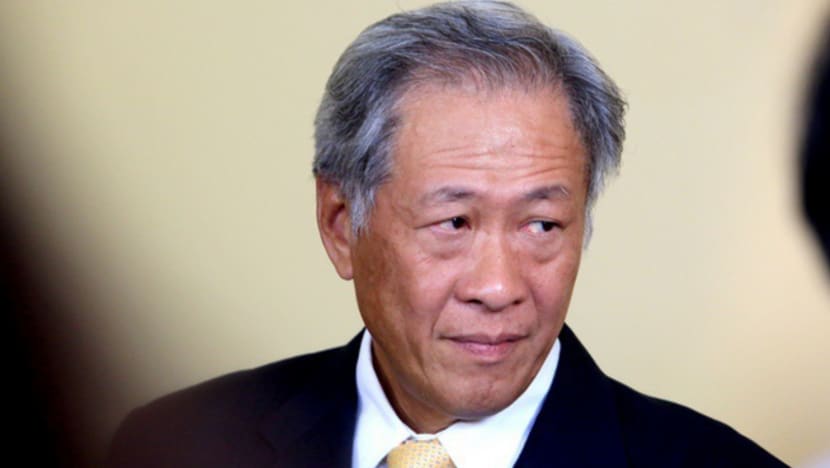
Singapore must gear up for an era of “troubled peace”, said Defence Minister Ng Eng Hen. Photo: Koh Mui Fong/TODAY


SINGAPORE — Warning that Singapore must gear up for an era of “troubled peace”, Defence Minister Ng Eng Hen yesterday laid out the increasingly volatile and borderless environment the Republic faces, where terrorism is the “clear and present” threat.
Unlike in the past where wars were fought in specific localities, conflicts today know no borders and occur wave after wave, said Dr Ng, citing terrorist groups as an example.
“Ground Zero can be anywhere and (conflicts) spread far very quickly …This troubled peace is the new normal in our globalised world,” he said.
Apart from terrorism, Asia’s security is also in flux, with territorial disputes in the South China Sea fuelled by rising nationalism.





“Even as we ask Singaporeans to prepare ourselves to deal with extremist threats, we must be mindful, at the same time, of the trajectory of state-to-state relations surrounding us,” said Dr Ng, as he stressed the need to maintain defence spending.
In this new era of “troubled peace”, the face of “war” has changed, where the enemy — which can be in the form of cyberattacks and biological pandemics — can arise from anywhere and spread quickly, said Dr Ng.
Where extremism is concerned, the Islamic State of Iraq and Syria (ISIS) emerged after Al-Qaeda, and even if ISIS was defeated, another group will likely rise and take its place, said Dr Ng.
ISIS has attracted a larger number of “sympathisers and operatives” over the last three years than Al-Qaeda had in the last decade, and almost all cities, including Singapore, are likely targets.
Last year, an English-language newsletter published by ISIS named the Republic among the “enemies of the Islamic State”, noted Dr Ng.
Meanwhile, disputes in the South China Sea and East Asia Sea are symptomatic of a “powerful dynamic” of strategic rivalry, rising nationalism and tension.
“This dynamic will stress existing military cooperation and alliances, it will stress international agreements or laws, even UNCLOS (United Nations Convention on the Law of the Sea),” he said.
Noting that rising nationalism and improving economies have driven many Asian countries to spend larger sums to modernise their militaries, Dr Ng said: “In itself, (this) is not wrong. But with more capable militaries, miscalculations or missteps can precipitate serious tensions, even physical conflicts.”
This state of affairs reaffirms the Republic’s policy on steady defence spending, which Dr Ng said must be maintained even as Singapore’s population ages and social spending increases in the next few decades.
While the Republic could have gone down the path of European countries to reap (its) own ‘peace dividend’” after the Communist threat had waned, it continued to build up defence capabilities and did not take short periods of peace for granted, said Dr Ng.
Steady and prudent spending will allow Singapore to plan for the long term and avoid disruptive changes, said Dr Ng, assuring the House that the Singapore Armed Forces’ first preference is to upgrade existing platforms, and will only buy what it needs after a “robust and stringent” evaluation process.




