







SMRT to hire 200 more engineers by 2020
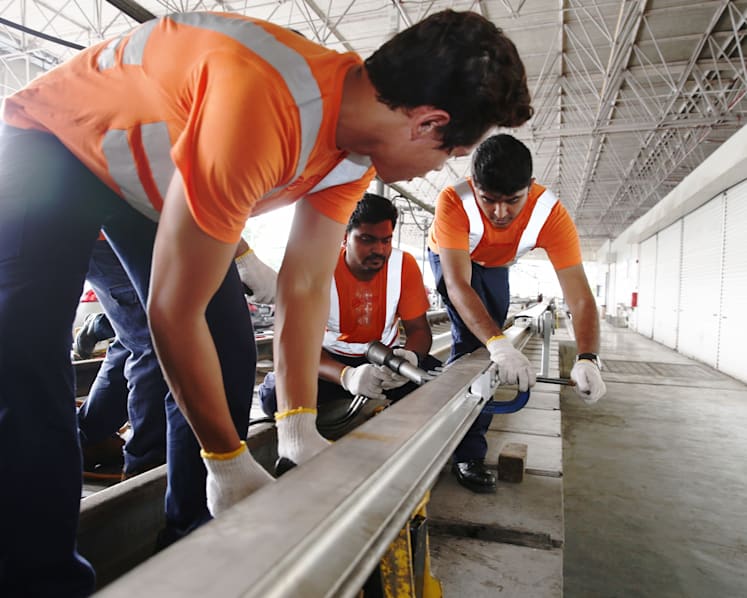
TODAY file photo


SINGAPORE — Public transport operator SMRT will increase its pool of rail engineers to 700 by 2020, up from 500 currently, in its latest move to boost rail reliability.
Speaking at a post-graduate certificate programme on urban rail engineering on Monday afternoon (Oct 23), SMRT’s chief corporate officer Gerard Koh said the company will continue to strengthen its engineering team “so that SMRT will be better poised to raise reliability even as our MRT network expands”.
The firm had identified the need to boost its engineering bench strength as a “critical task” in 2012, said Mr Koh.
The post-graduate certificate programme is a collaboration between SMRT Institute and the University of Birmingham. Monday’s event was attended by 251 rail engineers from SMRT and Singapore Rail Engineering.





SMRT chairman Seah Moon Ming, who was speaking at the same event, said the company will also set up teams to audit maintenance.
These teams will report independently to the SMRT Board’s Audit and Risk Committee.
The company will also work with the Land Transport Authority in improving maintenance, such as accelerating the replacement of older systems and components, said Mr Seah.
He added that the company must also “work harder to attract and retain the best graduates and mid-career professionals” in the industry.
“At the same time, long-serving engineering staff must be developed to their fullest potential. I am pleased to note that SMRT’s multi-pronged efforts to raise and sustain its pipeline of engineering talents has succeeded in deepening our engineering bench strength,” said Mr Seah.
Engineering expertise will be called upon to enhance resilience in the rail network here with more “fail-safe and fail-soft features”, Mr Seah added.
SMRT manages most of the MRT services in Singapore, including the North-South Line, the East-West Line, the Circle Line and the Bukit Panjang Light Rail Transit. It will also operate the upcoming Thomson-East Coast Line, which will commence service in stages from 2019.




