







Some S’porean undergrads face financial loss, study disruption, after HK exchange programmes cancelled
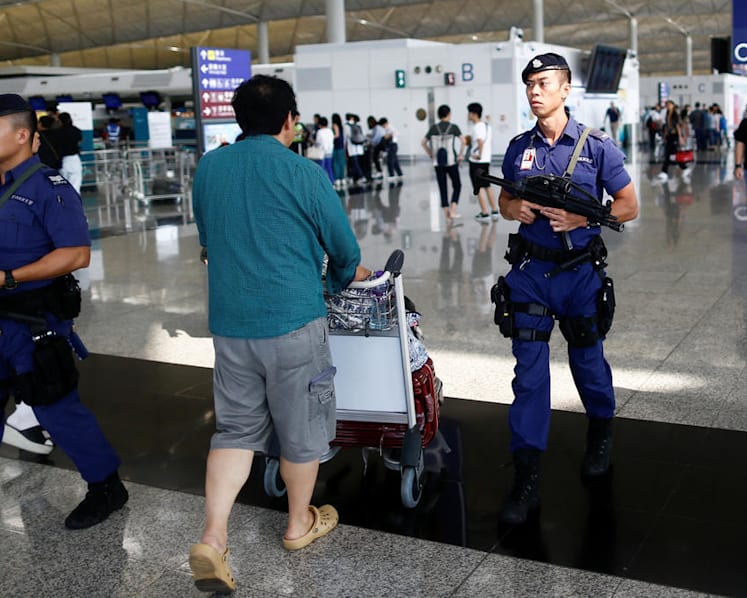
Some Singaporean undergraduates, whose exchange programmes in Hong Kong were cancelled, are feeling the indirect fallout from the ongoing protests in the city.




SINGAPORE — A week after Singapore universities pulled the plug on student exchange programmes in protest-hit Hong Kong, some affected Singaporean undergraduates face potential financial loss and disrupted study programmes.
Some have had difficulties in securing modules for the new term, given that they had little time to bid for courses, though others have had an easier time with help from their professors.
On the financial front, most of the students interviewed by TODAY are still trying to sort out insurance claims and refunds. Some are pessimistic about getting back their money — amounting to several thousand dollars in some cases.
In emailed responses, the universities told TODAY that they are assisting students with enrolment in course modules, and refunds on their airfare and accommodation fees.





More than 100 students were affected by the cancellation — including 56 from the National University of Singapore (NUS), 41 from Nanyang Technological University (NTU) and 17 from the Singapore Management University (SMU). They were due to study at various Hong Kong universities for the first semester of the 2019/2020 academic year.
'REALLY DISRUPTIVE'
NTU student Mr Samuel Lee, 23, said having his stint at the University of Hong Kong cancelled was “really disruptive”.
He fears he could lose some S$3,600 which he has forked out for his air tickets, rent and a student visa. The insurer is “currently reviewing” his case, but he is pessimistic about getting his money back, especially the cost of flight tickets and the student visa, he added.
He bought his air tickets only after July 26 — when a travel advisory was issued by Singaporean authorities to defer non-essential travel.
In terms of rearranging his course here, Mr Lee, who is studying Public Policy and Global Affairs, said: “I did not face much trouble with my major prescribed electives, but it was really hard to find unrestricted electives or general requirement electives.”
Prescribed electives are courses for specialisation in a particular degree programme, while unrestricted and general electives are courses chosen by students to broaden their learning experience, usually offered by other faculties than a student’s own.
Mr Lee felt that the university could have been more “proactive” in helping with insurance claims and securing unrestricted and general electives. “As we have missed out nearly the entire process (of bidding for modules), we had to resort to taking modules we weren’t familiar (with) at all,” he said.
Another undergraduate in the same course, Mr Benedict Chen, said he has yet to make insurance claims due to further penalty charges being imposed by landlords in Hong Kong as a result of the cancellation.
“We were issued the official suspension of exchange by NTU a few days ago. Due to a shortage of on-campus accommodations at Hong Kong University, we arranged to stay at a serviced apartment instead. Due to the cancellation of exchange, we had to forfeit our deposit and we’re liable for an additional month of rent and service charges,” he said.
“We are waiting on them to send us the receipts so that we can make the claims all at once,” said the 23-year-old.
He has had an easier time applying for courses for the new term. “Our school's course coordinator and professors were more than helpful in assisting us to get the mods we requested,” he said.
NUS architecture student Alvin Soh said he has yet to get word on whether he will get a refund on his airfare and accommodation, among other costs he paid for in advance.
The 24-year-old, who was supposed to spend a semester at the Chinese University of Hong Kong said: “NUS is in contact with the (host university) to negotiate a refund of the deposits we placed. We have been instructed to claim the other costs from insurance that NUS purchases for all students heading on NUS-related trips.”
Mr Soh has forked out about S$2,000 for a student visa, deposit for campus accommodation, courier services and flight tickets.
“For those (costs) like personal insurance, that's definitely wasted… For the administrative fees like courier charges spent on mailing documents to Hong Kong, those are unlikely to be recovered as well. For the others, I'm not confident because the fine print of insurance plans may not cover deposits paid,” he said.
He has had no problems in securing courses for the new school term. “Due to the nature of my course having a pretty fixed curriculum, all the courses that I have to take this semester are fixed, so my department just allocated the modules to me without hassle,” he said.
The only downside was in terms of tutorial slots, though that is a much more minor problem compared to what those from other faculties are facing, he added.
NTU HOLDING ONE-ON-ONE SESSIONS TO ADDRESS CONCERNS
In response to queries by TODAY, NUS said that all 56 of its students affected by the cancellation have been informed, and it is helping these students enrol in NUS modules for the current semester, as well as offering options to study abroad in the second semester.
It said that NUS students who applied for student exchange programmes did not incur any additional tuition fees to study at the host universities.
NUS’ spokesperson said the university is also assisting these students to seek refunds for their airfare and accommodation fees, adding that the home faculties and schools of the affected students are in discussions with them on their individual study plans.
“In the event that our students are unable to get a full refund from their service providers and have made travel and accommodation bookings prior to the Ministry of Foreign Affairs’ travel advisory on July 26, they can tap the NUS Student Travel Insurance to recover some of the expenses involved,” said the spokesperson.
At NTU, a spokesperson said that the university will assist the 41 affected students to secure exchange spots for subsequent semesters. It will also “arrange one-to-one consultations with the students to address their concerns, including advice on insurance claims”.
SMU said it has reached out to partner universities in Hong Kong to assist the relatively small number of its students affected with refunds for on-campus accommodation fees which have been paid.
“For expenses that are not recoverable, the university has briefed the students on the claims process with SMU’s travel insurer, and the affected students are in the process of making their claims,” said an SMU spokesperson.
SMU is also assisting students in enrolling for courses to meet their curriculum requirements so that their degree progression will not be affected.
While the move to cancel the exchange programmes may have quelled safety concerns among parents and students alike, Mr Chen felt like it was a “wasted opportunity” for learning.
“I feel… immense disappointment in the waste of an opportunity to observe the effects of social division on society and perhaps gain some intellectual maturity. As a social science student, this would have been a beneficial experience to value-add to my course of study. Despite the concerns about safety, I think more trust should have been given to us to take precautionary measures to avoid the violence and protests,” he added.




