Negotiating safe passage through Hormuz Strait a 'slippery slope', says Zhulkarnain
The moment you put a price on safe passage, your principles can be bought, says the minister of state for foreign affairs.
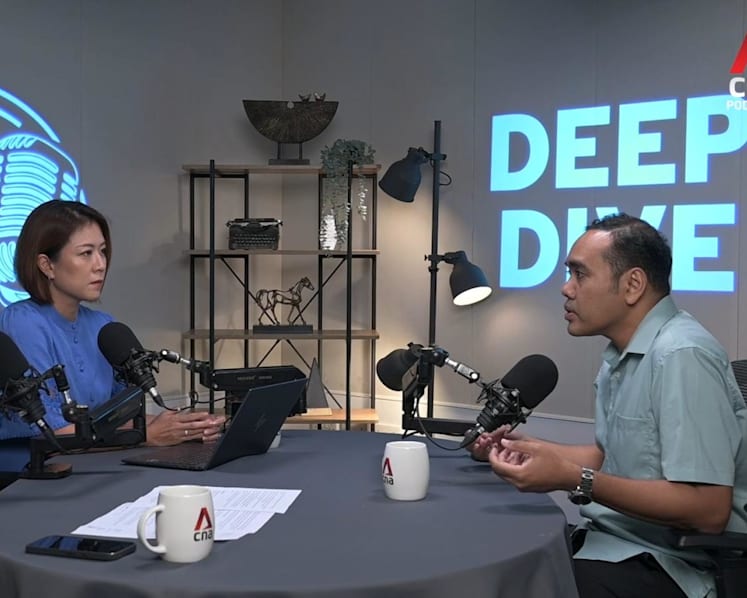
Minister of State for Foreign Affairs Zhulkarnain Abdul Rahim speaking on CNA's Deep Dive podcast.

This audio is generated by an AI tool.


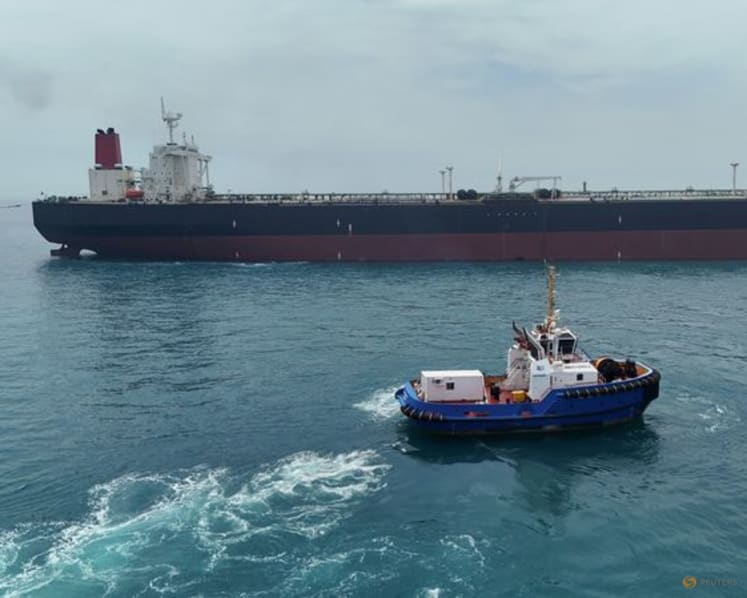
SINGAPORE: Negotiating a safe passage through the Strait of Hormuz would be a slippery slope, said Minister of State for Foreign Affairs Zhulkarnain Abdul Rahim on Thursday (May 14).
Speaking on CNA’s Deep Dive podcast, he stressed that no one can guarantee such passage anyway.
“The slippery slope that we are on is that the moment you negotiate, the moment you trade away, the moment you put a price tag on it, it means that your principles can be bought, can be traded, can be paid off,” said Mr Zhulkarnain, who used to handle maritime issues as a lawyer.
“The moment that we do that … we are not going to have a position of strength to start from.”





The Straits of Malacca and Singapore carries almost triple the vessel traffic of the Strait of Hormuz, making it the busiest shipping lane in the world, and all kinds of goods – not just oil – move through it.
“Anything that we take vis-a-vis the Strait of Hormuz issue will have to be seen in light of what we feel is important for us, in terms of our sovereignty, in terms of our security, in terms of our livelihood here,” he added.
If the same situation arose in the Straits of Malacca and Singapore, Singapore would want the waterway kept open, he added.
“We don’t want to be blockaded. We don’t want to depend on the highest bidder and pay through our noses in order to get supplies to Singaporeans,” he said.
“We want the world to understand that. And we want the world to stand with us if that happens to us.”
This is what makes the issue an existential one, he said.
FUNDAMENTAL PRINCIPLES
Foreign Affairs Minister Vivian Balakrishnan said in April that Singapore would not negotiate for safe passage through the Strait of Hormuz, as doing so would undermine fundamental principles of international law.
Transit through such waterways is a right, not a privilege, he said at the time.
Iran has said it has allowed ships from several countries – including China, India, Pakistan, Japan, Thailand, Malaysia and the Philippines – to cross the strait since its forces effectively slowed traffic through the narrow sea lane after a conflict began in late February.
In deciding the list, Iran assesses whether a country is directly hostile or supportive of the US-Israel position in the conflict, observers told CNA.
Tehran’s selective approach might push other members of the Association of Southeast Asian Nations (ASEAN) facing domestic fuel shortages to negotiate for access in the Strait of Hormuz, they said.
Singapore regards the right of transit as part of international customary law enshrined in the United Nations Convention on the Law of the Sea (UNCLOS), to which Singapore is a signatory.
That right is binding on all states, Mr Zhulkarnain said, whether or not they have signed the convention.
Asked whether Singapore might have to reconsider its position if national survival were at stake, Mr Zhulkarnain was firm.
“There are certain things that you cannot trade away – your right to survival, your sovereignty, things that impact our livelihoods, our Singaporeans," he said.
“I cannot put that at stake. There’s no price to that. You cannot put a price to that.”
Stressing that he would not accept trading away the lives and future of Singaporeans, Mr Zhulkarnain said the only way around this would be to find like-minded countries, live with each other and respect the norms that were set up more than 40 years ago, making sure everyone plays by the rules.
“As neighbours, we build fences, but not to keep people out. But actually to show where we stand and where they stand.”
Even if the conflict drags on, the world would not be drained of supplies, said Mr Zhulkarnain. "The supply will come, whether it is from the West, whether it's from another route – it's just the price point."
The government wants more affordable resources for Singaporeans, he added, noting that the country has diversified energy resilience agreements with other countries.
"We are not just getting energy from the Middle East. We're getting it from Mozambique, from Australia and all that. So we are getting there."