







Singapore wary of treating navigational rights in global straits as paid privileges: Shanmugam
No one can impose tolls or selectively decide whose ships get access to such straits, said Coordinating Minister for National Security K Shanmugam.
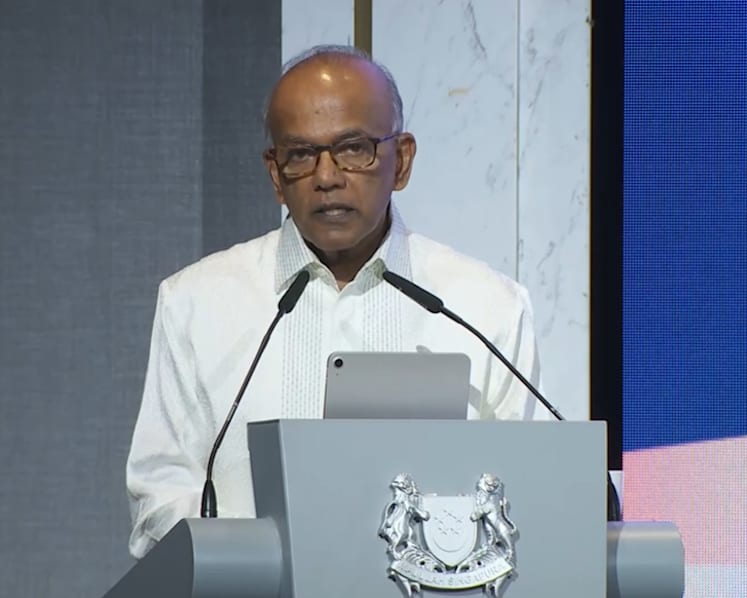
Minister for Home Affairs K Shanmugam speaks at the Home Team Promotion Ceremony on Monday (Apr 13, 2026).

This audio is generated by an AI tool.
SINGAPORE: Singapore is "very wary" when other countries treat navigational rights and freedoms as discretionary privileges to be negotiated or paid for, Coordinating Minister for National Security K Shanmugam said on Monday (Apr 13).
“Our position is - under the United Nations Convention on the Law of Sea, and customary international law, there is free right to transit passage across such straits, and that no one can impose tolls or selectively decide whose ships get access to these waters,” said Mr Shanmugam.
He added that the implications of a blockade on the Strait of Hormuz or straits used in other parts of the world for international navigation were "particularly concerning".
The US military said it would begin a blockade of all Iranian ports on Monday, after talks between the warring sides in Pakistan collapsed, with US President Donald Trump blaming the Islamic Republic's refusal to abandon its nuclear ambitions.
Trump had announced on social media that he would blockade the strategic Strait of Hormuz trading route that he has been demanding Tehran fully reopen, after Vice President JD Vance left negotiations with an Iranian delegation in Islamabad on Sunday.
Mr Shanmugam, who is also Home Affairs Minister, was speaking at the Home Team promotion ceremony at Orchard Hotel Singapore.
In his speech, the minister touched on the conflict in the Middle East and drew a comparison to the Strait of Malacca, which connects the Indian Ocean to the west and the Singapore Strait leading to the South China Sea in the east.
He noted that 30 per cent of the world’s global trade flows through it, and it sustains the maritime sector in Singapore, which accounts for 7 per cent of the country’s annual gross domestic product and employs more than 170,000 people.
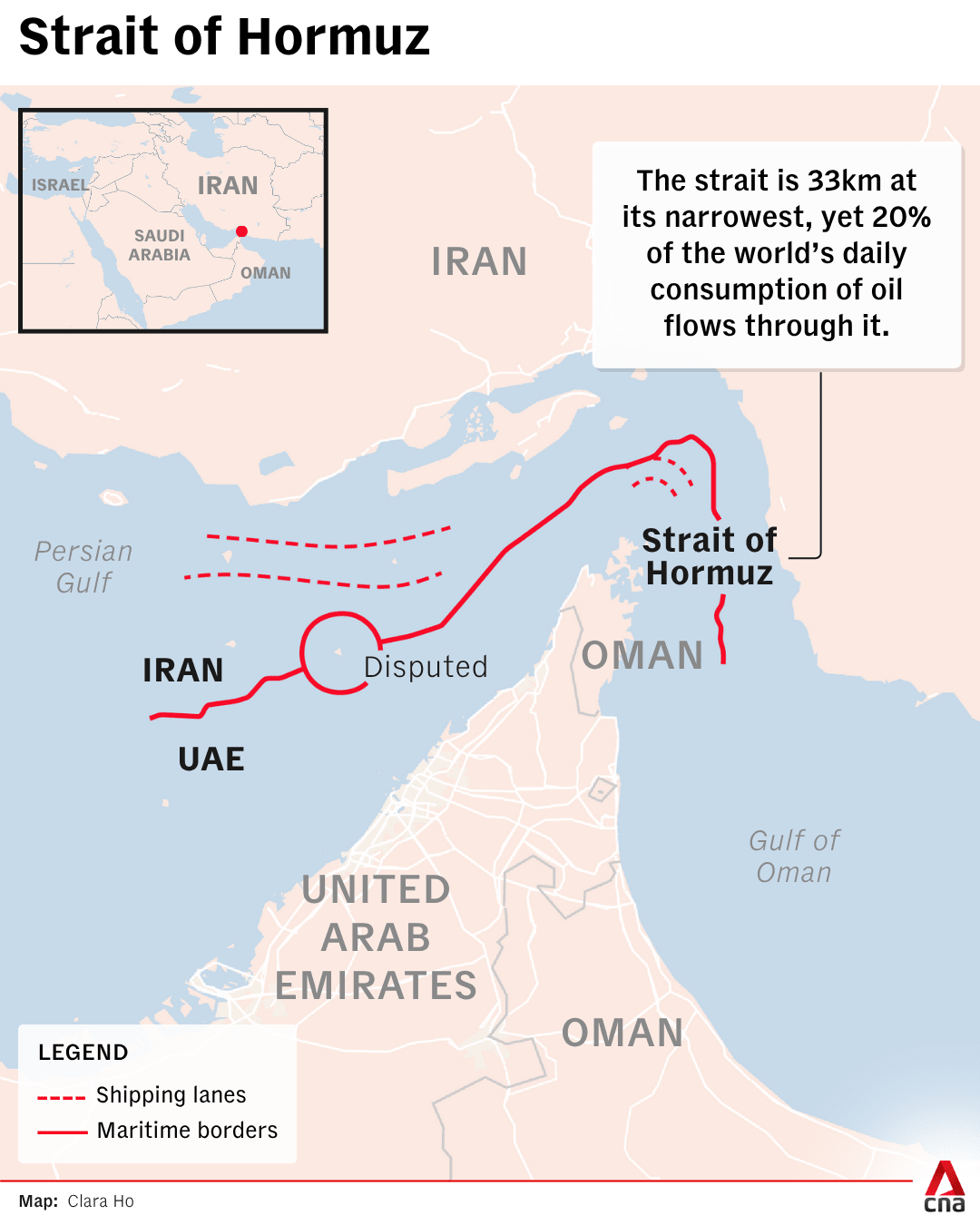
“The narrowest point of the Strait of Malacca is less than two nautical miles. For comparison, the narrowest point in the Strait of Hormuz is 21 nautical miles. So this is ten times narrower, or Strait of Hormuz is 10 times bigger.
“So how should we respond when someone says: Civilian ships have to pay a toll to pass through the Strait of Malacca, otherwise, they face missiles, mines or drone strikes?” he said.
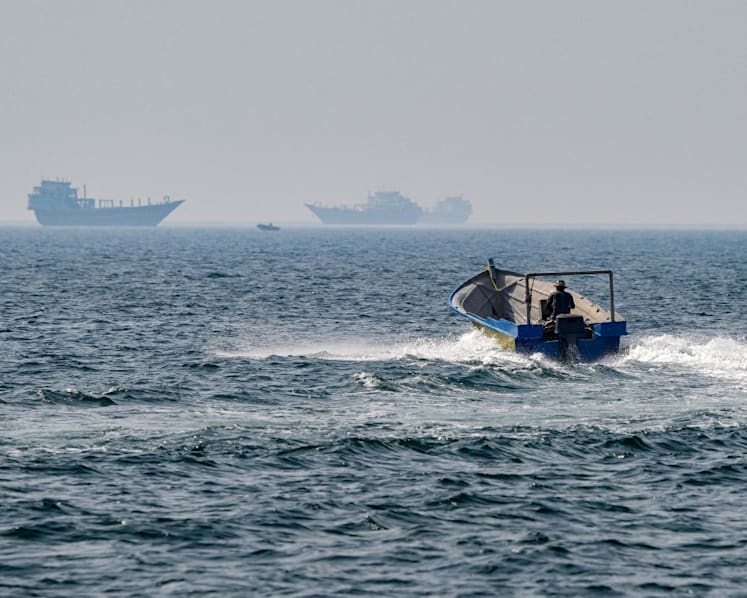
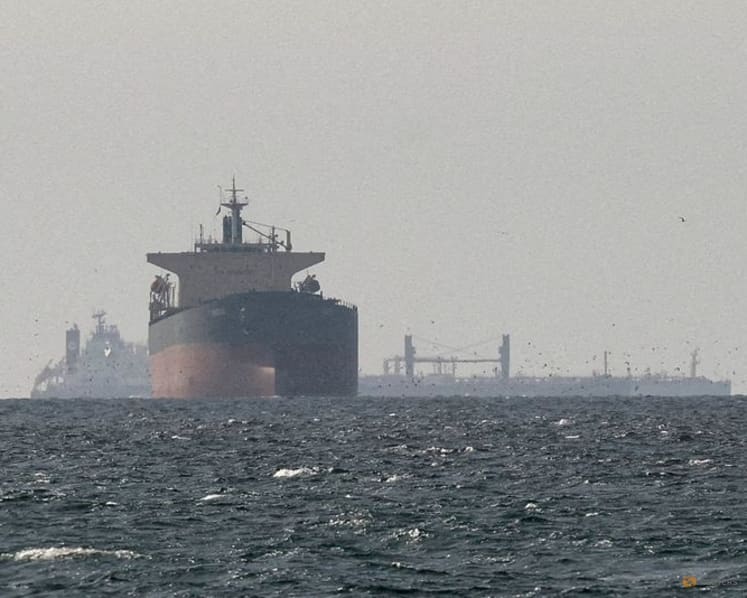
Mr Shanmugam also echoed Foreign Affairs Minister Vivian Balakrishnan's statement in parliament last week – that Singapore cannot engage in negotiations for safe passage of ships or negotiate on toll rates in the Strait of Hormuz.
He noted there were some immediate reactions to what Dr Balakrishnan said.
For example, Deputy President of Malaysia’s People's Justice Party (PKR), Ms Nurul Izzah said Dr Balakrishnan’s remarks echoed the “strategic preferences of external powers, whose interests do not always align with our region”.
She also said that the remarks reflected a “narrow strategic posture that prioritises alignment over regional responsibility and international law".
Mr Syahredzan Johan, the vice president of the Democratic Action Party, said in response to another commentator that the Malaysian government will do "what is needed to protect its people, including negotiating for passage through the Straits of Hormuz".
Mr Shanmugam said that Malaysian Prime Minister Anwar Ibrahim has acknowledged that Singapore’s position was its matter and it was important for Singapore and Malaysia to maintain their friendship.
“We appreciate his statement. This is not a case of Singapore siding with the US or Western countries. We have said what we have said in our own strategic interest – consistent with international law,” he said.
“MIGHT IS RIGHT”
Mr Shanmugam also touched on several consequences that have arisen from the current Middle East situation.
One of them was the continuation and assertion of a "phenomena in world order" that started in the last few years. He referred to this as “might is right”, where the strong will do what they can and the weak will suffer what they must.
It creates a very serious situation for small countries like Singapore, he emphasised.
He also said since the war started on Feb 28, terrorism threats have increased.
There have been attacks targeting US, Jewish, Israeli institutions in various European countries. And closer to home, there have been serious reports for many years on the presence of Hamas operatives in nearby countries.
“And this is a risk. It’s a serious risk. Last year alone, the Immigration and Checkpoints Authority (ICA) cleared 245 million visitors through our checkpoints. 186 million of them came through our land checkpoints – an average of half a million people per day.
“The Home Team has to try to counter this threat. ICA has increased security checks at our checkpoints. Police have stepped up patrols in areas of concern. So that is one risk and one consequence,” he said.
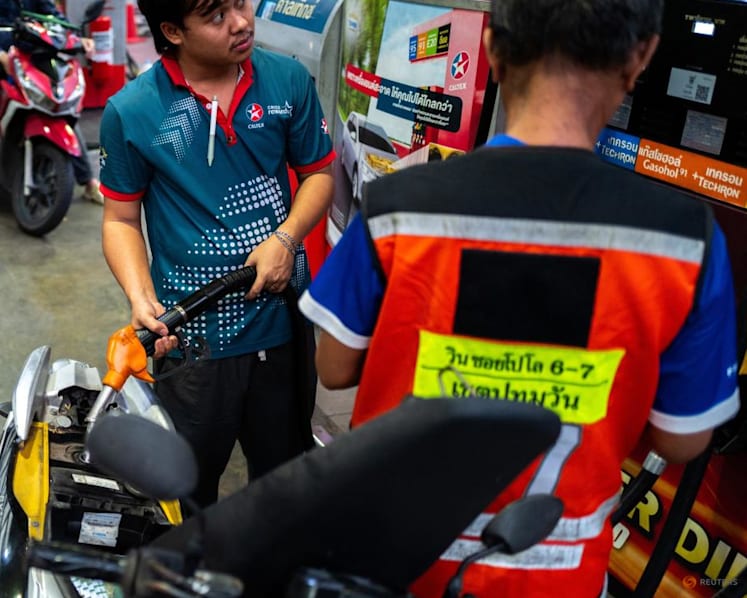
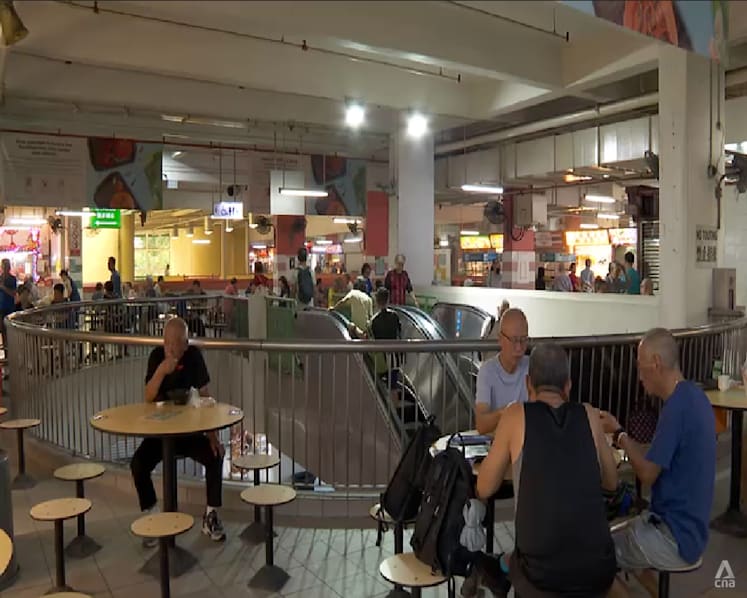
Developments in the Strait of Hormuz also mean trouble for the world’s supply of seaborne oil and gas.
“Iran has now significantly disrupted that supply. There is a global market in oil. So when prices rise in one place due to supply shortages, prices will rise everywhere because people will want to sell to the person who pays the most,” he said.
He added that there are no signs that Iran will stop its effective closure of the strait.
Iran has also said that if there is any permanent peace agreement, it must be allowed to impose transit fees on all ships passing through the waterway.
“All these have significant consequences for Singapore,” he said.
“We are a small and very open economy. We import nearly all our energy. Fuel and electricity costs will go up, because everything depends on fuel and energy, and therefore pretty much everything will be affected. But at least the lights are on.
“You have seen in other countries, some other countries, rationing has started. We do not know how long these disruptions will last,” he said.
Mr Shanmugam said that even if the strait were to fully reopen tomorrow, it would take time to repair the damaged oil infrastructure across the Middle East. Some measurements are that it will take years, he added.




