CNA Explains: Why Asia will bear the economic brunt of the Iran war
Singapore's Foreign Affairs Minister Vivian Balakrishnan has described the closure of the Strait of Hormuz as an "Asian crisis".
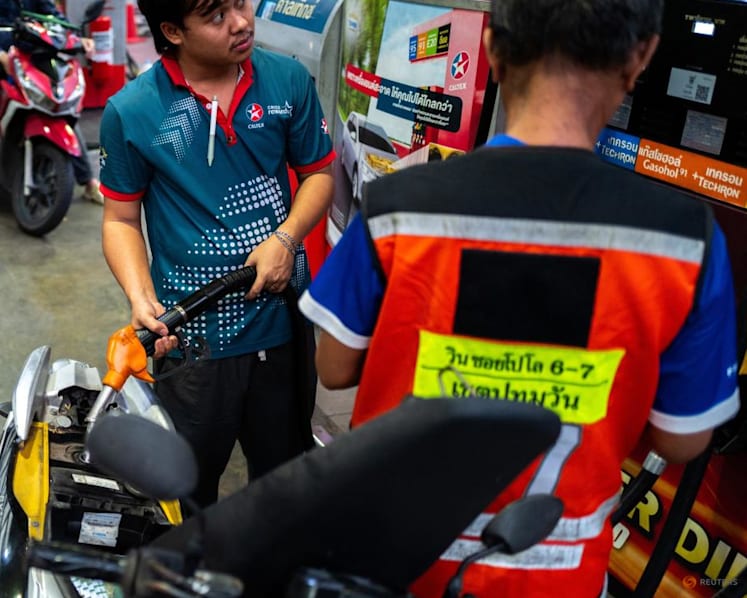
Riders with vehicles queue to fill up fuel at a gas station amid the US-Israeli conflict with Iran, in Bangkok, Thailand, on Mar 26, 2026. (Photo: REUTERS/Athit Perawongmetha)

This audio is generated by an AI tool.


SINGAPORE: A war in the Middle East has become an economic crisis for Asia.
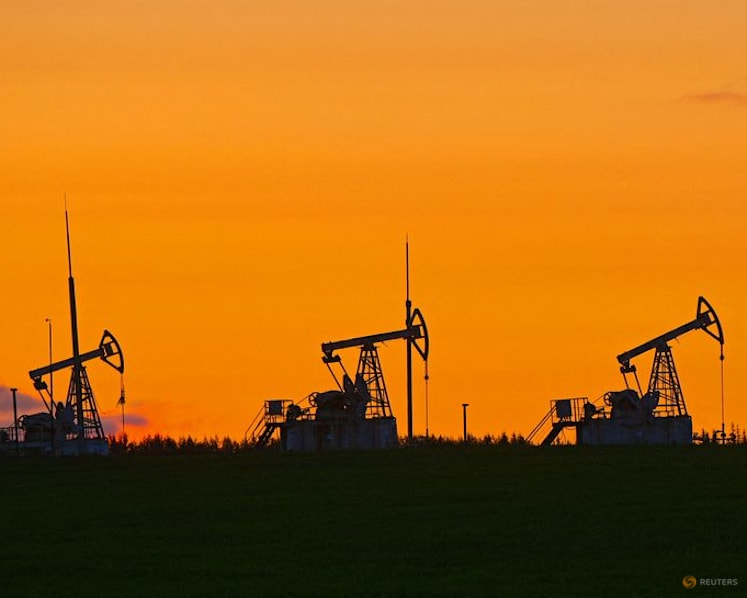
The closure of the Strait of Hormuz, one of the world's most critical energy chokepoints, has disrupted fuel supplies and pushed up prices across the region.
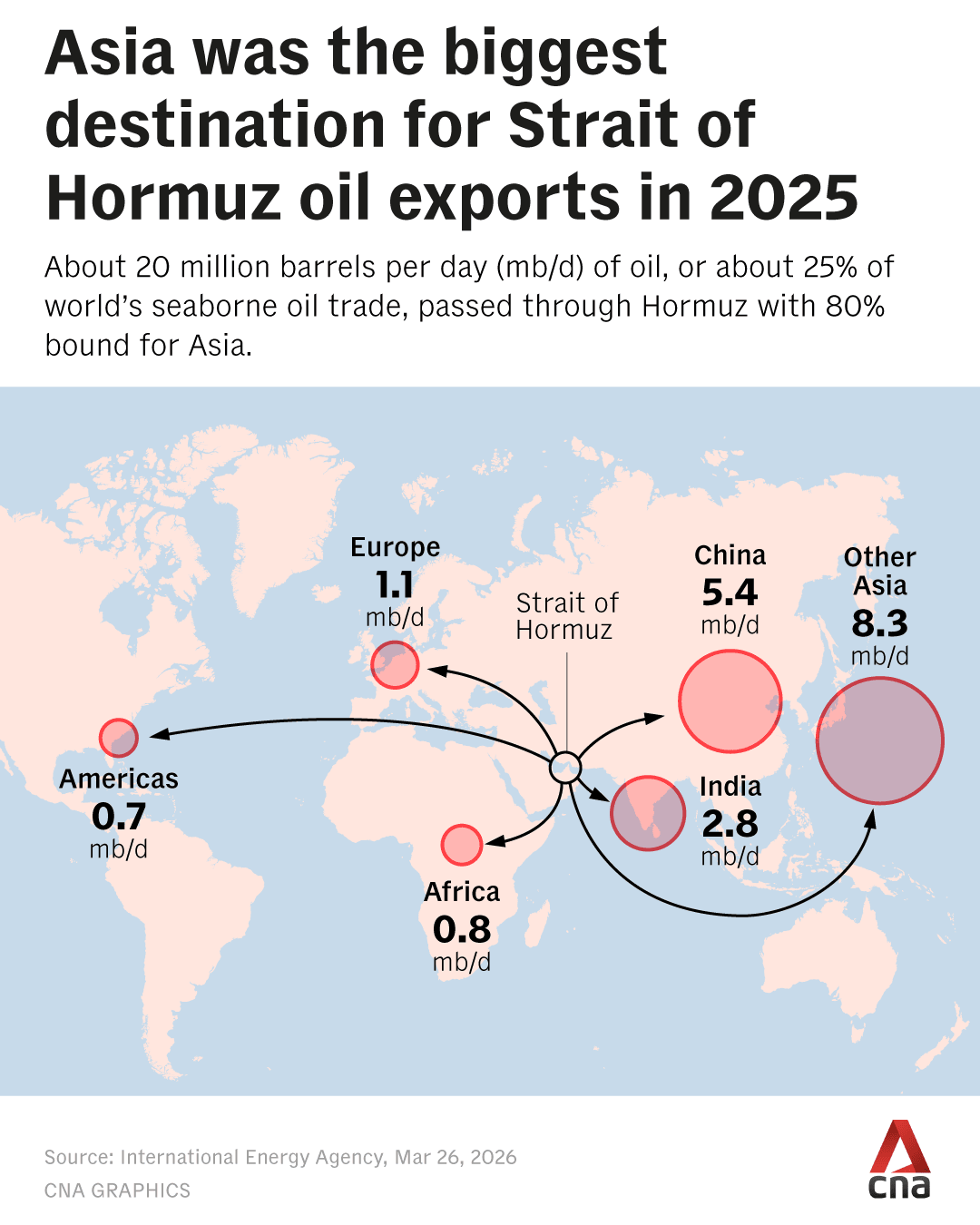
About 20 million barrels per day (mb/d) of crude oil and oil products, or roughly a quarter of the world’s seaborne oil trade, passed through the strait in 2025. About 80 per cent of those shipments were bound for Asia, according to the International Energy Agency (IEA).
That means any disruption is felt most acutely in energy-importing economies thousands of kilometres away from the war zone.
In an interview with Reuters, Singapore's Foreign Affairs Minister Vivian Balakrishnan described the situation as an "Asian crisis".
CNA explains why.
Why is this war being described as an "Asian crisis"?
The answer lies in where the world's energy is going.
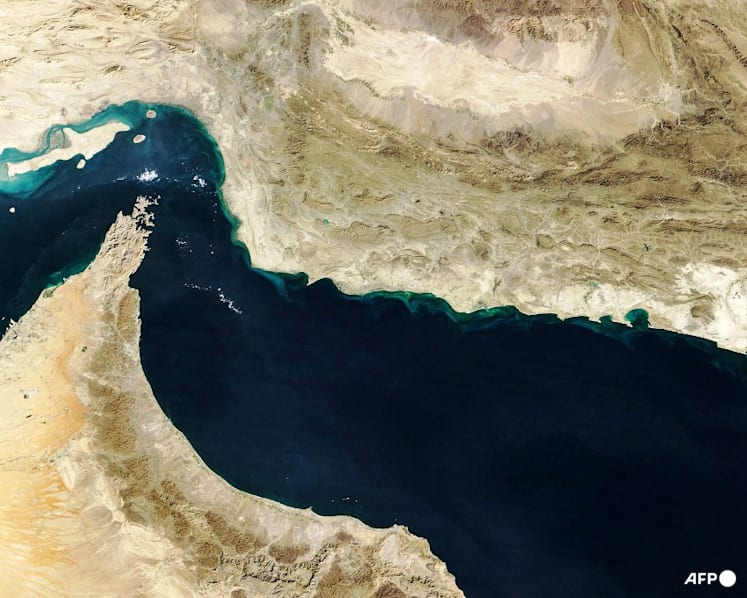
The Strait of Hormuz is a narrow sea passage, separating the Arabian Peninsula from Iran, and connecting the Persian Gulf with the Gulf of Oman and the Arabian Sea.
As the primary export route for oil and gas produced by Saudi Arabia, the United Arab Emirates, Kuwait, Qatar, Iraq, Bahrain and Iran, and with limited options to bypass it, any disruption to flows through the strait would have huge consequences, says the IEA.
But the impact is not evenly distributed.
Asia is the primary destination for these energy flows, with China, India and Japan among the largest importers.
This creates a mismatch between where the conflict is happening and where its economic effects are felt.
Dr Balakrishnan described this as an "asymmetry of the military dimension and the economic dimension".
In addition to oil, nearly 90 per cent of liquefied natural gas (LNG) exported through the Strait is also bound for Asian markets, which accounted for around 27 per cent of Asia’s total LNG imports that year.
Bangladesh, India and Pakistan imported almost two-thirds of their total LNG supplies via the Strait of Hormuz in 2025.
"Almost all Asian countries, in particular India, China, Japan, South Korea and several Southeast Asian states are heavily dependent on oil and gas imports from the Middle East,” Mr Lawrence Anderson, a Senior Fellow at the S Rajaratnam School of International Studies (RSIS), Nanyang Technological University, told CNA.
Why does Asia bear more of the economic impact than the US?
A key reason is how differently major economies are positioned in the global energy system.
While Asian economies remain heavily dependent on imported oil and gas, the US has undergone a major shift over the past decade.
It is now much less dependent on the Strait of Hormuz than Asia. According to the US Energy Information Administration (EIA), the US has been an annual net total energy exporter since 2019.
"A lot of people still have not realised: In 2016, America overtook Saudi Arabia to become the largest oil producer; in 2017, the largest natural gas producer," said Dr Balakrishnan.
"By 2019, America was a net energy exporter - very different from the circumstances five decades ago."
What is the Carter Doctrine and does it still matter?
The Carter Doctrine, announced by US President Jimmy Carter in 1980, declared that the US would use military force if necessary to defend its interests in the Persian Gulf, particularly to ensure the free flow of oil through critical routes such as the Strait of Hormuz.
At the time, the US was heavily dependent on Middle Eastern energy supplies, and disruptions posed a direct threat to its economy and security. This strategic imperative shaped decades of US policy in the region, including its involvement in the 1990-1991 Gulf War and the 2003-2011 Iraq War.
But that calculus has since shifted.
"Remember, there was a Carter Doctrine on the importance of the Strait of Hormuz for America?" asked Dr Balakrishnan in his interview with Reuters.
"You think about the Gulf wars, the strategic calculus and the dependence of America on uninterrupted energy supplies is completely flipped."
In 2024, the United States' natural gas exports reached a record high, equal to about 25 per cent of total US energy exports on an energy content basis, according to the EIA.
This means that while the US will still be affected by global oil prices, it can rely on its domestic production to act as a buffer.
"Asian countries are so much more dependent on Middle East oil than the US," said Mr Anderson of RSIS.
"For instance, more than half of India's oil and two-thirds of its LNG imports comes from the Middle East; for China, half of its oil and a third of LNG imports; Japan imports 95 per cent oil and 11 per cent LNG from the Middle East; for South Korea, 70 per cent of its oil and 20 per cent LNG is from the Middle East."
Why does the Strait of Hormuz matter more for Asia than for other regions?
In addition to being net energy importers from the Middle East, the closure of the Strait of Hormuz comes at an inopportune time for Asia.
"This is happening at the time when Asia was hoping to be on a more stable footing and getting growth in order, and spreading the fruits of that growth to as many people within your population as possible," said Dr Balakrishnan.
"It is not coming at a brilliant moment. That is where both the economic and political anxiety are."
According to the International Monetary Fund (IMF), Asia now generates two-thirds of the global GDP growth and accounts for 40 per cent of world trade.
“Oil and gas powers the high-energy-consuming Asian economies and manufacturing practices, all of which makes them highly vulnerable to the disruption in the energy supplies from Iran and the Gulf states," said Mr Anderson, who was also previously Singapore's Ambassador to Cambodia, Saudi Arabia and Bahrain.
"Another dangerous concern is Iran's threat to cut the undersea energy and fibre-optic cables in the Persian Gulf," he added.
"If carried out, it will cause tremendous dislocation to international internet connections and global data flows, particularly banking and other financial activity between Europe and Asia."
How could the shock spread through Asia’s economies beyond energy prices?
The impact of a disruption in the Strait of Hormuz does not stop at higher oil and gas prices, which can quickly feed into broader inflation.
According to the United Nations Trade and Development (UNCTAD), about a third of global seaborne fertiliser trade passed through the Strait of Hormuz in 2024.
"When gas prices go up, fertiliser prices often go up. When oil prices go up, food prices often go up," it said. "Many developing countries already face high debt service burdens, limited fiscal space and constrained access to finance."
Mr Anderson from RSIS warned that businesses and ordinary consumers will have to grapple with price hikes and possibly currency fluctuations, all of which will affect not only food, transportation, and other basic necessities domestically, but also tourism and travel to Asian countries and beyond.
"Asia's financial markets - stocks, bonds, and investments - will also be hit, especially if the crisis persists over several months,” he said.

In the Philippines, rising fuel prices have led to protests by transport workers.
"If you're somebody who's trying to buy gasoline at a petrol station, and as the Philippines adjusts its weekly fuel prices, you can see the price going up and up and up and higher,” said Mr Putra Adhiguna, managing director of Energy Shift Institute.
"Ninety-eight per cent of the Philippines' crude imports come from the Middle East," said Mr Putra Adhiguna, managing director of Energy Shift Institute.
"Now, a lot of the products, which are usually diesel and gasoline, come from other places, like China," he told CNA's Asia Now.
"But then we also heard the fact that China restricted the export of their fuel, which means the effect is happening on both sides for the Filipinos."
What does this mean for Singapore - and how exposed is it?
Like most of Asia, Singapore relies heavily on imported energy. About 95 per cent of its electricity is generated using imported natural gas, says the Energy Market Authority (EMA).
"We have got some very good, steady, and reliable friends amongst the Gulf states, who have absolutely been trustworthy, reliable partners all these years. But through no fault of theirs, this transmission of energy to Singapore has been impacted," said Dr Balakrishnan.
“Fortunately, because we have LNG terminals, we are therefore able to import from the world market. And also, fortunately, because we have got the fiscal buffers. We will have to pay what the international rates are."
However, those measures will not protect the country from the inflationary impact of high energy prices, he added.
"This is something which we will have to deal with within our economy and obviously from a social security point of view."

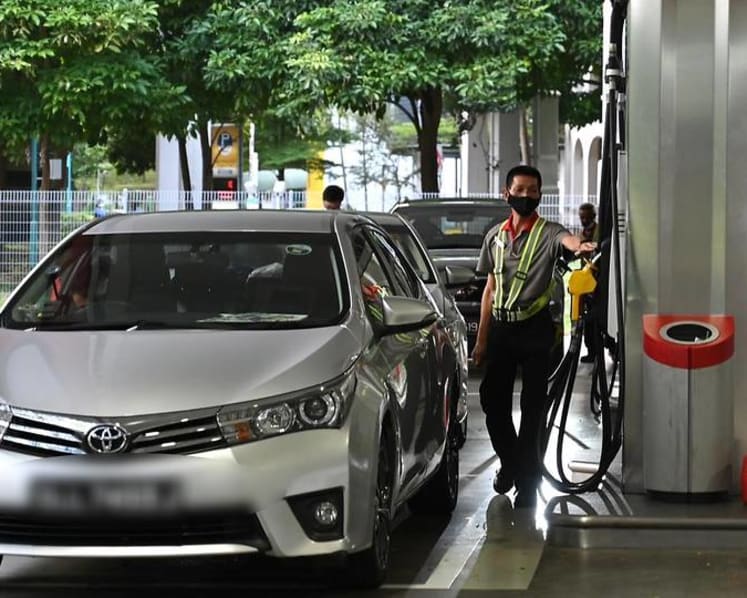
Singapore is also a major maritime hub, and its energy and chemicals sector is its second-largest manufacturing sector, both of which are dependent on the external environment.
"Singapore is a non-energy producing country and highly vulnerable to trade disruptions … we face the potential effects of rising energy costs and supply chain disruptions on businesses, consumer spending, and inflation," said Mr Anderson.
"The government has taken several measures to lessen the impact … However, so much depends on how quickly the Strait of Hormuz is open to safe passage for ships to ensure a regular flow of energy traffic, and the end of the war."
Want an issue or topic explained? Email us at digitalnews [at] mediacorp.com.sg. Your question might become a story on our site.