







Taxi groups seek tougher rules to ensure a level playing field for cabbies
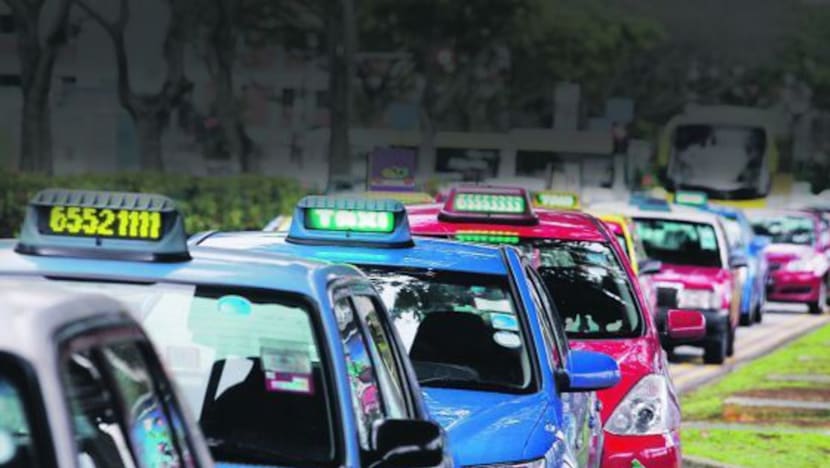
TODAY file photo


SINGAPORE — The proposed regulatory framework for private-hire cars yesterday drew mixed responses: While private-hire car operators welcomed it, the National Taxi Association (NTA) exhorted the authorities to take “bolder” steps to ensure a level playing field for cabbies whose livelihoods have been affected by these services.
Transport analysts interviewed said the regulations signalled a “light-touch” approach by the Government, and set minimum standards that should be expected of drivers providing a public service. They were divided over whether the authorities should have gone further — which some argued could stifle innovation, to the detriment of commuters.
Noting that some places have decided to outlaw chauffeured services provided by companies such as Uber and Grab, SIM University adjunct associate professor Park Byung Joon said the regulations have settled the debate here: These services are “officially legal” in Singapore.
SIM University senior lecturer Walter Theseira, however, said the framework was a “substantial improvement” over the practice of most other countries, as it strikes a balance between having no regulations at all and banning such services.





However, National University of Singapore transport researcher Lee Der-Horng felt there was scope for more stringent rules to safeguard the welfare of taxi drivers. For example, while only citizens can apply for the Taxi Driver’s Vocational Licence, permanent residents could obtain a Private Hire Car Driver’s Vocational Licence (PDVL) under the regulatory regime if they are employees of limousine firms.
And just as taxi drivers here are required to provide operating data — such as mileage driven — to the Land Transport Authority, so too should private-hire car drivers, he said. These data could form the basis for “further policy evaluations”, he added.
Taxi drivers TODAY spoke to also pointed out the disparities.
Mr Harry Ng, 57, who drives a Comfort cab, said the lack of a stipulated minimum age for PDVL applicants raises issues of safety. TDVL applicants, meanwhile, must be at least 30 years old.
Taxi operators ComfortDelGro and SMRT did not respond to queries by press time.
Premier would only say that it was glad the Ministry of Transport (MOT) has “looked into the interest of the commuting public” by regulating the private-car hire industry. It will wait for further details before concluding on the impact of the regulations on the taxi industry, the firm said.
In a press statement, NTA executive adviser Ang Hin Kee said the association was glad that commuters’ safety and security concerns were taken into account. But he noted that there should be a clear and transparent accountability system provided by private-hire services, to facilitate “proper recourse” for commuters embroiled in accidents or disputes.
Among other measures, Mr Ang —who is a Member of Parliament for Ang Mo Kio GRC — also urged the removal of “unnecessary” rules for the taxi industry, such as requiring taxis to run a minimum of 250km daily.
When contacted, Uber and Grab said the new regulations would strengthen passenger safety and complement their existing practices.
Uber Singapore general manager Warren Tseng said the firm was pleased that the Government has adopted many of its existing safety standards as part of the new regulatory regime, including pre-screening and training for drivers.
Head of Grab Singapore Lim Kell Jay said the company saw the regulations as an “endorsement” of private-hire cars and a “positive development for the industry as a whole”. He added that some requirements, such as licensing and training, would reduce his firm’s operational costs incurred from background and medical checks.
Real estate agent Rennu Mahajan, 55, who drives part-time with GrabCar and Uber to supplement her income, said the requirements would not deter her from continuing in the trade. In particular, she said she did not mind attending the 10-hour PDVL course since it lasts “only a few hours”.




