







Tech helping with productivity, but it has its limits
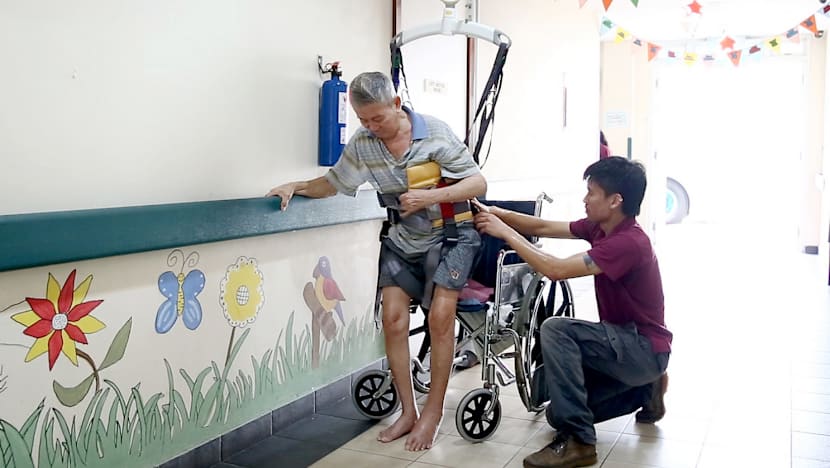
Physiotherapy assistant Brian Tan helping a resident at the Peacehaven Nursing Home
to a ceiling track hoist, which supports patients as they walk over short distances. Photo: Nuria Ling


At the Home Nursing Foundation, a digital workforce optimiser schedules home visits based on a patient’s care team’s assessments and care plan. The system automatically sends electronic text reminders to patients and caregivers three days before home visits.
Peacehaven Nursing Home, meanwhile, is trying out a new type of robotic-assisted bed that activates an alarm whenever an elderly resident attempts to step out of the bed, allowing them to be remotely monitored rather than having to station staff nearby.
Using technology to raise productivity is one of the key thrusts of the Ministry of Manpower’s 2020 Healthcare Manpower Plan launched last month, and many healthcare providers are already on board.
Peacehaven and St Andrew’s Community Hospital, for instance, make use of a ceiling track hoist to support patients as they walk from one end of the centre to the other. The hoist also lets patients practise going up and down steps.





Many public and private hospitals now use inventory management systems that allow suppliers to monitor and top up the level of consumables and medication within the ward, reducing the manpower required for such tasks.
Such a system at Mount Elizabeth Hospital has reduced man hours by 48.5 per cent, saving a total of 387 man hours per month, the hospital said.
At Tan Tock Seng Hospital, nurses are now able to spend 35 per cent of their time on direct patient care — up from 10 per cent in 2010 — thanks to new technologies, such as wearable devices, that have freed them up from other tasks such as administration and paperwork.
But while technology helps streamline back-end work, it cannot replace many aspects of healthcare, say those in the industry.
“Robots will not be able to replace nurses and healthcare professionals, as the role of caregivers is more than just being on hand to assist with medication and routine patient care but to focus on rehabilitation, with the aim of improving the patient’s quality of life, morale, independence and, where possible, improve recovery and/or delay the progression of the illness,” said Ms Yorelle Kalika, who founded home-care provider Active Global Specialised Caregivers.
Jamiyah Nursing Home director Lai Foong Lian added that the cost of technology is often too high for long-term care institutions to bear.
“With subsidies, (tech innovations) become affordable, but how sustainable will that be? Will the Government give you subsidies all the time or just for the initial tryout?” she said. KELLY NG




