My family fell for a phishing scam – and found a buffet of niche insurance plans for everything from kids' illnesses to EV batteries
Protection against scams, dengue fever and the theft of high-end bicycles are among the insurance plans available in the market.
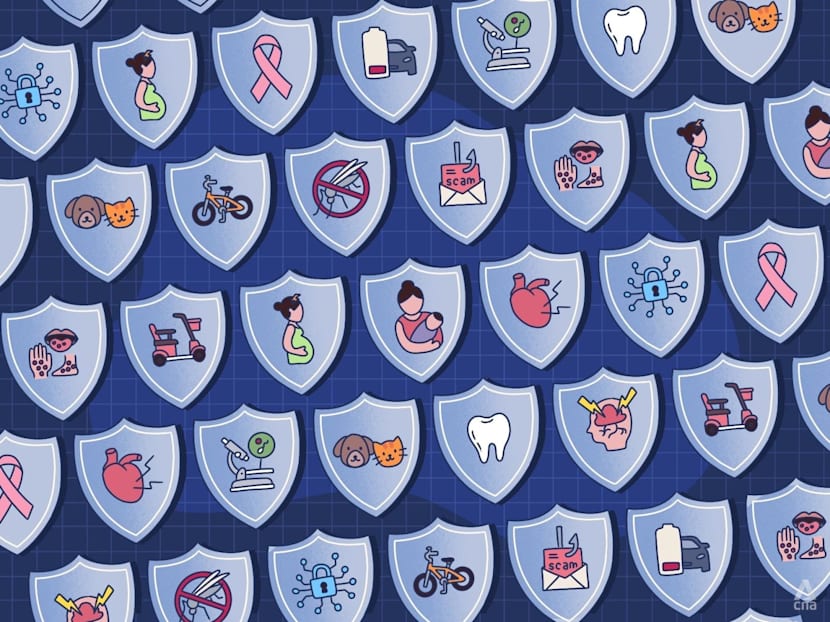
The Monetary Authority of Singapore's Financial Planning Guide states that people should aim to spend no more than 15 per cent of their income on insurance protection, so that coverage remains sustainable alongside other financial priorities. (Illustration:CNA/Nurjannah Suhaimi)

This audio is generated by an AI tool.


To get away from the busy city life last December, my family decided to head to Ipoh, Malaysia to usher in the new year.
We were looking forward to quiet mornings, good food and visiting 400-million-year-old limestone hills. But before we could make it out of Singapore, we stumbled on something far less ancient — a digital-age trap that ensnared my husband.
In the blur of getting our toddler ready for bed, packing and wrapping up some work before our break, we remembered at the last minute that we needed to buy travel insurance.
As we were doing that, a well-meaning relative sent us a link to submit a Malaysian digital arrival card, but it turned out to be a phishing link and we lost S$200 instantly.
After the holiday, we wondered if a personal cyber insurance plan should become an essential add-on to our family's insurance portfolio, since there is a growing menu of niche options available in Singapore.
As I did some research into personal cyber insurance coverage, I discovered a number of relatively new products in the market, including policies to protect against common childhood infections such as hand, foot and mouth disease (HFMD), flat battery situations for electric vehicle (EV) users, and extra medical coverage for babies born out of assisted reproductive procedures.
WHAT'S FUELLING THE GROWTH OF SPECIALISED INSURANCE PRODUCTS?
Evolving consumer needs, a competitive industry and technological innovation have driven this growth in specialised policies in Singapore, industry experts said. These niche policies cater to specific demographic groups, seasons and "pain points" in a person's life, they added.
Mr Dhiren Amin, chief customer officer for Income Insurance, said that as consumers seek tailored coverage that meets their lifestyle needs, insurers are presented with an opportunity to “think out of the box and uncover unmet needs that niche insurance can address meaningfully”.
He highlighted the company's eDrivo policy for EVs as one such policy.
In the last few years, there has been a growth in EV ownership – the number of electric cars in Singapore has increased from just under 3,000 in 2021 to more than 46,000 as of November 2025. The eDrivo policy, which was launched two years ago, addresses a common worry among owners: having their EVs run out of battery mid-journey.
Policyholders may tap a 24/7 emergency mobile rescue service to charge their vehicle in Singapore and parts of Malaysia.


Separately, Manulife’s ReadyMummy, which was launched in 2019, reflects the growing awareness of the mental health needs of mothers, its chief product officer Frank O'Neill said. The policy covers the psychotherapy needs of a mum, including prenatal anxiety and postnatal depression.
The plan also has an add-on component, with coverage for modern family planning needs that include pregnancies conceived via assisted reproductive methods such as in-vitro fertilisation (IVF).
In 2022, about 10,500 cycles of assisted reproductive technology treatments, including IVF and its variations, were carried out in Singapore. This was an 81 per cent increase from about 5,800 cycles in 2013.
FWD Insurance said it found that consumers, particularly younger professionals, have become more interested in products relevant to their life stage rather than those with broad, blanket coverage.
To keep up with what customers want, the insurer analyses data from claims, health trends and treatment pathways "to determine where protection can make the biggest impact".
For instance, FWD Insurance noted that many young professionals prefer to start buying insurance that offers affordable protection before committing to more extensive coverage for a long list of illnesses.
Its FWD Big 3 Critical Illness plan meets this need by focusing coverage on cancer for all stages, late-stage heart attack and late-stage stroke — conditions that make up the majority of critical illness cases in Singapore.
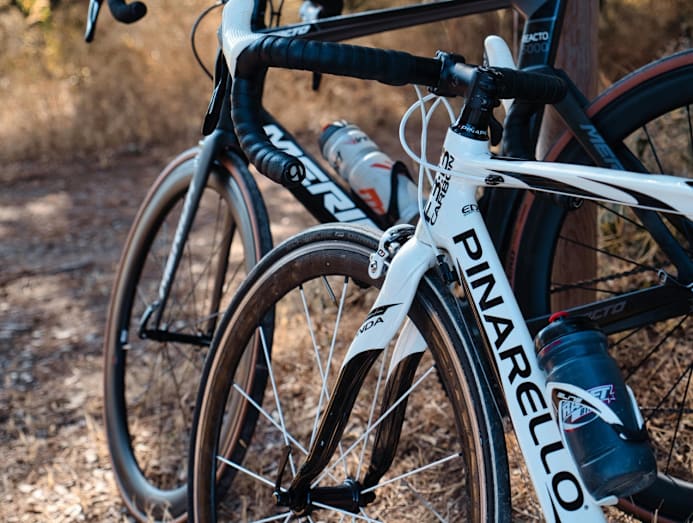
Other insurers said that they have been fielding calls from clients seeking coverage for their prized possessions, a reflection of Singapore's growing affluence and consumers' range of lifestyles and interests.
Among the requests received was coverage for top-of-the-line bicycles that retail for five-figure sums or up to S$25,000 a piece. Policies such as AIG's Premier Client Solutions and Chubb Insurance's Masterpiece insure for damages, loss and theft of high-value personal artefacts.
KEEP COVERAGE FLUID, DON’T OVERINSURE
Financial advisers who spoke to CNA TODAY highlighted a few policy areas that consumers could consider.
If you have children, Mr Joshua Cheok, 38, an associate director from financial advisory firm Professional Investment Advisory Services, recommended looking at coverage for infectious diseases.
He pointed to Income Insurance's Personal Accident Assurance policy, which offers an add-on component for coverage against 25 infectious diseases, including chicken pox, dengue fever, shingles, as well as common infections among preschoolers such as HFMD, which can affect adults, too.
Think fever, painful blisters and ulcers.
Mr Cheok said: "I've gotten HFMD once from my kids and it was bad. I was reimbursed for the couple of visits I had to make to the clinic. It makes sense for me to opt for such a cover since my younger boy is in preschool and premiums are relatively affordable at about S$200 to S$300 yearly."

Other agents suggested insurance coverage for pets, given that veterinary costs have been rising. Some policies, such as MSIG's PawEasy, launched in April last year, even cover some of the costs of pet acupuncture and mobility aids.
Communications specialist Soh Xing Huei, 29, insured her mini goldendoodle pet dog within weeks of getting it, after the costly experience of caring for her late poodle.
Towards the tail-end of the pet poodle's life, her family spent a staggering S$23,500 in a single month treating its debilitating liver masses, followed by tens of thousands of dollars more in its final months.
Ms Sharon Jiang, 41, an associate director at financial advisory firm Avallis Financial, highlighted good-to-have policies for specific demographic groups.
Freelancers and self-employed individuals keen on dental care, for example, may explore personal dental policies that are bundled with personal accident plans. She added that such coverage is typically reserved for corporate group plans for which they would not qualify unless employed by a company.
Freelancers and self-employed individuals keen on dental care, for example, may explore personal dental policies that are bundled with personal accident plans. She added that such coverage is typically reserved for corporate group plans.
She also suggested a policy add-on offered by insurers such as AIA and Singlife. These plans provide payouts for people with dementia conditions and can help cover caregiving costs such as daycare centre or domestic worker fees, which can ease the burden down the road for care providers.


Although many niche policies may help people gain coverage in specific areas of their lives, insurance agents encouraged consumers to look closely at the policy wording and check for exemptions.
They should also assess if there is a prudent need to take up such specialised plans. For instance, scam protection coverage might not be worth the while unless the person is exceptionally vulnerable or in a position of constantly being exposed to scams.
Ms Jiang said that insurance is fundamentally about covering unavoidable and unforeseeable risks — not lapses in personal vigilance.
“Scam policies have specific terms and conditions before the individual can qualify for claims. It would be more cost-effective to expend time and effort to exercise caution and evaluate links and calls (suspected to be scams) carefully,” she added.
JUST HOW MUCH INSURANCE IS ENOUGH?
With a buffet of insurance products in the market, financial consultants generally recommend taking a fluid approach, adding or dropping policies as needed, keeping coverage responsive rather than static.
Mr Tay Kah Lok, 34, a branch director at Finexis Advisory, said that consumers "generally don't wake up thinking about buying insurance", but are usually prompted to look at new policies due to life events or changing responsibilities.
"It is not uncommon for us to recommend reviewing and removing unnecessary covers or reducing expenditure," he said.
"The extra cash can go towards supporting their parents, taking a holiday or building their retirement savings."
But do we need to go all out to get covered for a suite of scenarios that may or may not happen?
Infinity Financial Advisory's financial services associate director Nicholas Lee, 37, said: "Niche plans are supplementary and only make sense when concerns are specific and surplus budgets allow.
“If funds are limited, I would advise allocating (money) towards strengthening essential coverage that truly safeguards a family’s long-term well-being.”
This means prioritising core protection coverage such as hospitalisation, critical illness, life, disability and long-term care, because "these are where major financial and emotional risks lie", he advised.
Mr O'Neill from Manulife said that people should take time to assess their own life stages, health profiles, dependants and financial commitments.
He referred buyers to the Monetary Authority of Singapore's Financial Planning Guide, which states that individuals should aim to spend no more than 15 per cent of their income on insurance protection, so that coverage remains sustainable alongside other financial priorities.
The guide also advises individuals to get insurance coverage for death and total permanent disability of about nine times their annual income, and critical illness coverage of around four times their annual income.
As for my family, my husband made a police report about the phishing link and eventually recovered our S$200 after sending a strongly worded email to the scam website.
Since the incident, we have decided to reserve our more clear-headed moments for tackling important bills, administrative tasks and financial decisions.
We have also set aside a date to review our insurance portfolio but at the moment, cyber insurance is not on the cards.