Why sexual crimes on public transport persist despite stricter enforcement
Experts say sexual offences on public transport persist because the crowded and transitory nature of these spaces grants perpetrators a sense of anonymity, thereby fuelling the impression that the chances of being caught are low.

The number of reported cases of sexual crimes onboard trains and buses has remained stable. However, victims and experts say that many people do not report crimes to the authorities for various reasons. (Illustration: CNA/Clara Ho)

This audio is generated by an AI tool.




It was supposed to be just another morning commute for tutor Winnie Ong as she headed for work that day in October 2024. Standing on the train platform at Serangoon MRT station, with music in her ears and eyes on her phone, Ms Ong was immersed in her own world – until a sudden tap on her shoulder threw her off kilter.
A woman with a child in tow gestured at Ms Ong. "She ... told me: 'I caught this person taking your upskirt photo'."
Ms Ong, now 30 and a livestreamer, said: "I felt confused, because I didn't see an adult man (next to the woman) but a boy who was 12 or 11 years old."
For the next few minutes, her mind went blank. She did not expect to have someone film up her skirt, let alone by a primary school student. On the advice of the woman who had caught the boy, Ms Ong decided to seek help from the authorities.





"The boy kept crying and begging me not to call the police. But I decided to do so, because I worried that this may not be (his) first time," she said.
"Later, (the police) found more photos on his phone."
The boy was given a conditional warning after investigations. It requires him to remain crime-free for a specified period. Failing that, he may face prosecution.
Looking back, Ms Ong felt that the bystander’s intervention was fortunate. Otherwise, she might not have realised that a crime had occurred, or have been in the right state of mind to make a police report.

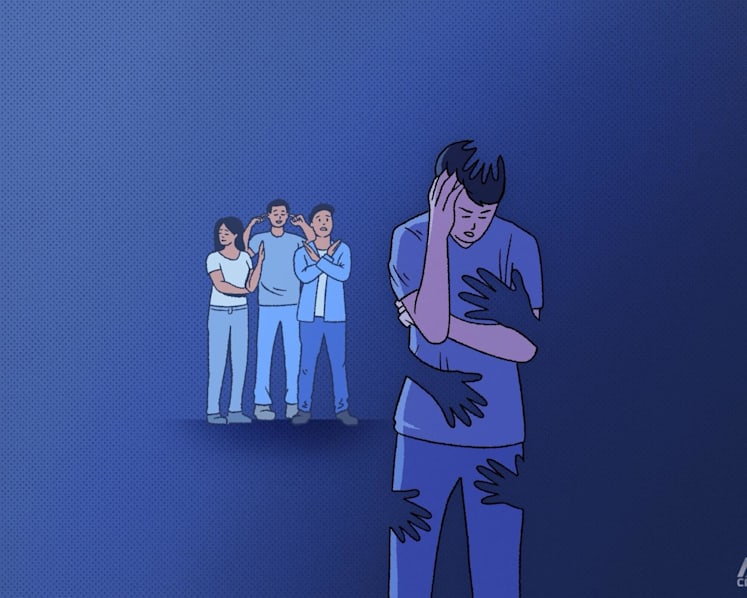
For 29-year-old Jason (not his real name), the stigma of being molested stopped him from making a police report.
An older man had touched him while he was riding a bus one afternoon four years ago.
"He sat next to me and put his hand on my thigh. I didn't know what to do. I thought he was asleep.
"But when I tried to move his hand away, he grabbed onto (my thigh) before letting go."
Unsure of what to do, Jason moved to a different seat until he reached his stop.
"You don't hear about men getting molested, let alone on a bus in broad daylight … I was really embarrassed and I kept thinking, 'Why me? How can I get molested?'
"When I told my friends a year later, they laughed," Jason said. He did not report the crime to the police.
Over the years, the Singapore Police Force has stepped up efforts to address sexual crimes. These include enhancing the punishment for sexual crimes such as outrage of modesty in 2021, and introducing educational campaigns across Singapore, including on public transport.
The latest campaign is aimed at those who witness such offences taking place.
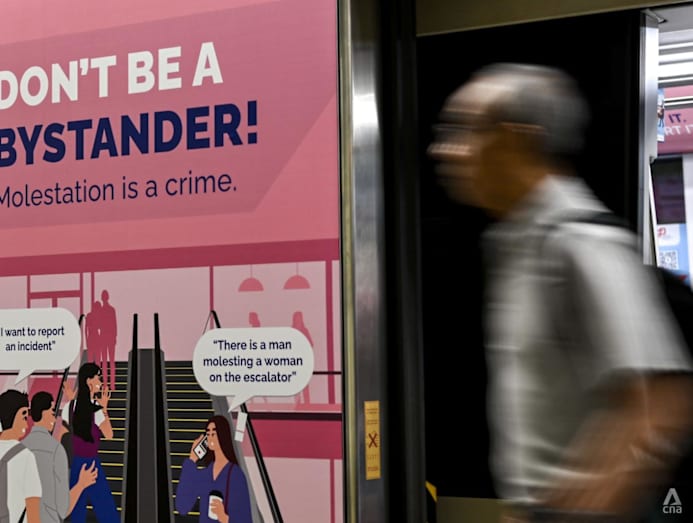
During the fifth Police Sexual Crime Awareness Seminar on Apr 27, the police launched a year-long campaign titled Don't Be A Bystander! SPOT it. Report it.
Witnesses are encouraged to follow the SPOT framework:
- Spot it (the crime)
- Protect the victim and oneself
- Observe key details
- Tell the police
The police also announced a new "Sexual Crime Report" option at the queue management system kiosks at police stations, giving victims priority and privacy when they report a sexual crime.
However, despite various initiatives and stricter enforcement over the years, sexual crimes on public transport, which include MRT trains and buses, have persisted.
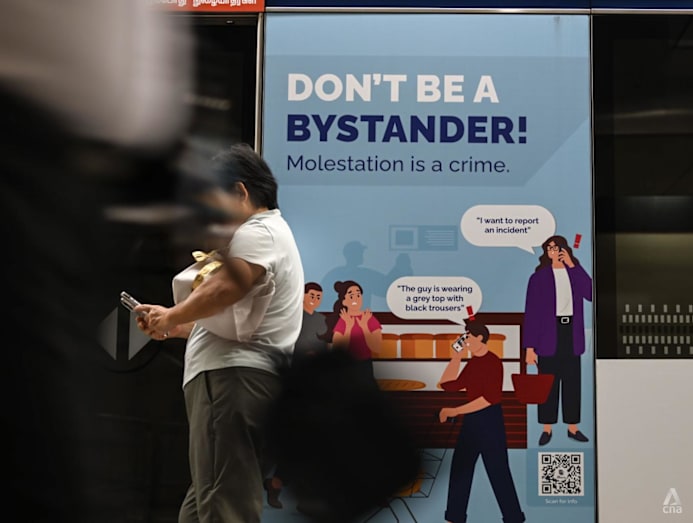
In 2025, the police received 164 reported cases of molestation on public transport, up from 158 in 2024. There were 48 reports of voyeurism in 2025, down from 69 the year before.
These numbers may not reflect the true extent of sexual crimes occurring on public transport in Singapore. Experts told CNA TODAY that such crimes are often underreported because victims fear making a scene, lack evidence, or worry about stigma, among other reasons.
Jason said: "I also wondered whether I was overthinking it – that the uncle didn't mean anything. Maybe it was really an accident, and it wasn't (molestation)."
His sentiment was echoed by other victims, who told CNA TODAY that in the immediate aftermath of being molested, they doubted what had happened to them.
Aside from molestation and voyeurism, some victims recalled other forms of harassment that made them feel deeply uncomfortable.
For example, Ms Chen, who declined to give her full name, has had men stare at her and take photos of her without her consent while on public transport.
"I feel angry because it happens too many times, almost daily," said the woman in her 20s, who also declined to reveal her occupation.
"When I stare back at them, they often look or walk away. But some are blatant and just continue to stare at me. When it comes to non-consensual photography, there's nothing I can do but ask them if they have taken my photo ... of course, they'll say 'no'."
And for many victims, the impact of a sexual crime lingers long after the incident.
Some said that years on, they still feel uncomfortable in crowded spaces, while others are extra vigilant when taking public transport. Several of those interviewed declined to be named, fearing public judgment.
ANONYMITY AND AMBIGUITY IN CROWDED SPACES
To explain why perpetrators commit such offences in the first place, and why they would choose public transport as the scene of the crime, experts pointed to both biological and environmental factors.
Associate Professor Razwana Begum Abdul Rahim, head of the Global Security and Strategy Programme at the Singapore University of Social Sciences (SUSS), said that risk factors such as childhood sexual abuse, substance abuse, having a preoccupation with sex, and hypersexuality – having frequent and high sexual urges or sexual activity – may contribute to the commission of sexual crimes.
Associate Professor Olivia Choy, a biopsychosocial criminologist from Nanyang Technological University, said that research has shown differences in brain structure and brain activity between offenders of violent crimes, including sexual crimes, and non-offending individuals.
However, she added: "Biology is not destiny, just as the environments that we grow up in and the experiences that we have do not 100 per cent determine our behaviour or life outcomes.
"Instead, our social environment and our biology are inextricably linked, and the combination of those influences shapes our behaviour."
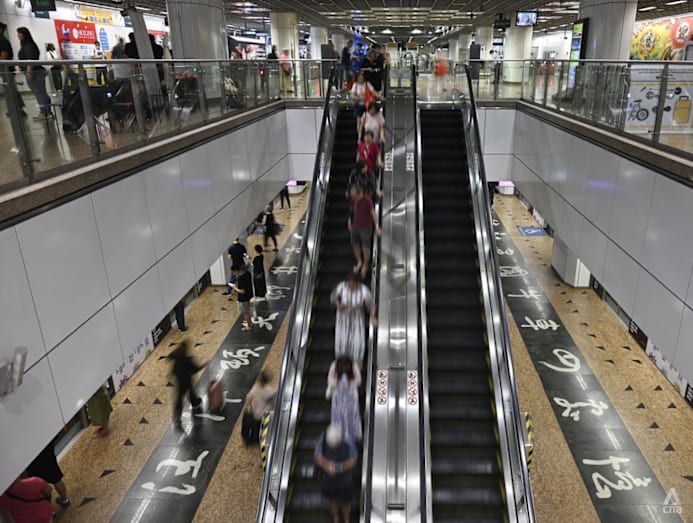
As for why sexual crimes happen so frequently on public transport, the experts said that the waves of people, the continual boarding and alighting, and the proximity between individuals in these spaces create opportunities that perpetrators exploit.
The crowded and transitory nature of public transport grants commuters a sense of anonymity, thereby fuelling the impression that the chances of being caught for sexual crimes are low.
"Motivated offenders target public transport because crowded trains and buses allow them to touch or rub other passengers while evading detection," Assoc Prof Razwana said. "They can claim contact was accidental or a result of the vehicle's movement."
This ambiguity also extends to bystanders, further emboldening potential perpetrators.
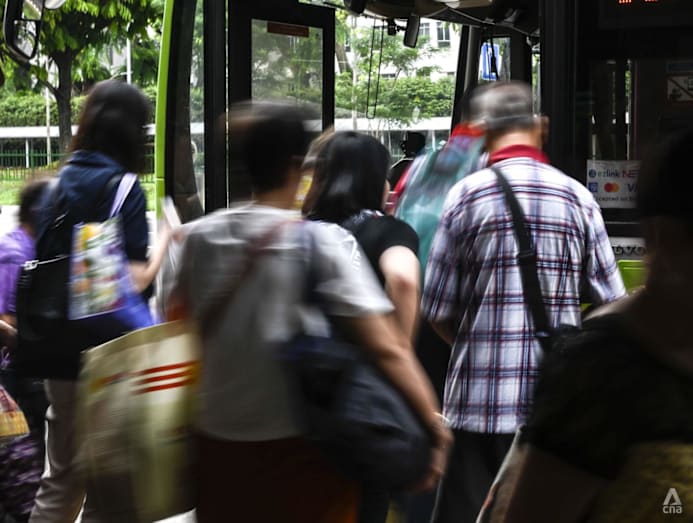
Dr Shawn Ee, a clinical psychologist and director of The Psychology Practice, said: "In crowded public transport settings, it can be difficult to determine whether what one is seeing is intentional or accidental.
"People often hesitate to act unless the situation is clearly defined."
Associate Professor Walter Theseira, a transport economist from SUSS' School of Business, said that the numerous entry and exit points, as well as the continual arrival and departure of trains in MRT stations, also provide perpetrators with easy avenues for escape and make it particularly difficult for station staff members and the police to apprehend offenders.
HURDLES TO REPORTING CRIMINAL ACTS
For the same reasons, many victims told CNA TODAY that they were unsure about filing police reports because they were paralysed by shock and riddled with self-doubt.
Jason, who was molested by a bus passenger, said he could not believe that the incident had occurred at all. It certainly did not help when he was doubted and mocked by the very people he chose to confide in a year later, further validating his decision not to pursue the matter.
Dr Ee said that Jason's response is quite a common one seen among victims.
"Psychologically, this reflects what we call cognitive appraisal. If an experience is minimised – either internally or by perceived social norms – the likelihood of reporting decreases."
This minimisation of experience – that voice in one's head saying "maybe it wasn’t that serious" – led many victims to believe that their experiences did not meet the supposed "threshold" for reporting.

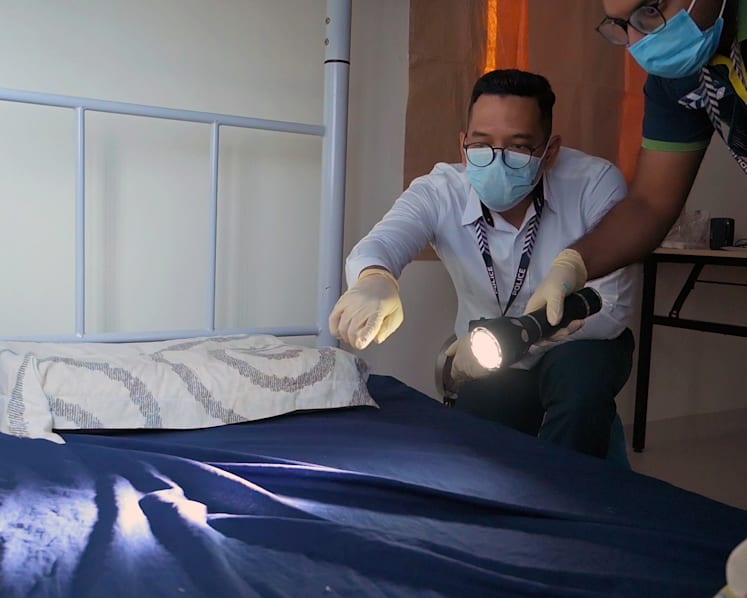
For instance, Ms YY, who is in her 20s and declined to be identified by her full name, repeatedly wondered if the touch she had experienced at an MRT station truly constituted molestation. The incident occurred on an afternoon in January 2022 and she cannot remember which station it was now.
She was on a crowded escalator when she felt a hand pressing on her buttock.
"I wasn't sure at first if it was an accident because of the crowd, but it was quite a sustained press," she said.
It was impossible to tell if the touch had come from the man standing behind her, or one of the countless passengers who had walked up the escalator next to her.
Ultimately, she decided not to report the incident because she could not point to the perpetrator anyway.
Dr Ong Mian Li, a clinical psychologist and founder of Lightfull Psychology Practice, said that such doubt, coupled with the urgency of the situation – victims barely have time to gather themselves before they must act – poses a significant hurdle in reporting such incidents.
He also pointed to "tonic immobility", or what most people call the "freeze", which occurs in roughly 37 to 70 per cent of sexual assault cases that happen.
"When in a state of tonic immobility, one literally cannot move and, in many cases, can't even speak or call out (for help)," Dr Ong explained.
As a result, victims might miss the opportunity to track down the perpetrator or to note down any details of the incident.
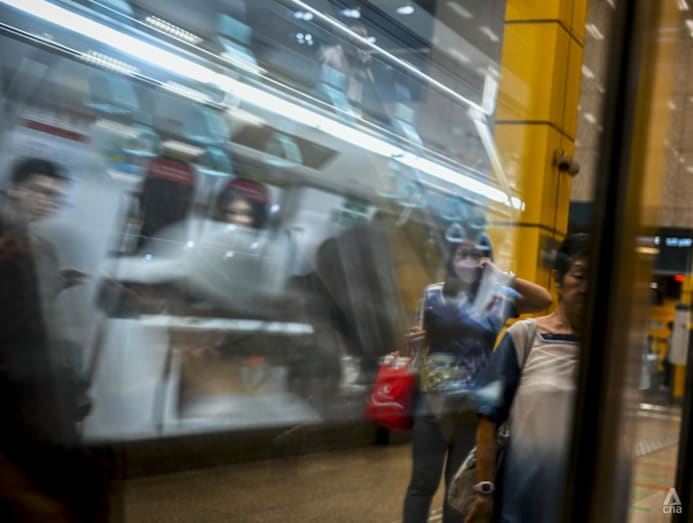
Dr Ong stressed that the freeze "is a neurobiological response, not a choice, and it is one of the most weaponised misunderstandings against victims".
That is, victims sometimes face blame or doubt for not reacting immediately when such sexual crimes occur.
Indeed, among the victims who spoke to CNA TODAY and who did make reports, many said that they did so on the urging and support of those around them.
Among them is Amy (not her real name), now 24. In 2018, when she was 16, she was on the train to Bugis when she felt a man rub against her chest.
She was initially reluctant to report the incident, and it was only at her boyfriend's insistence that she did so.
"I was quite shocked by the incident, and I couldn't really think properly," she said. "If not for my boyfriend, I wouldn't know what to do in the moment."
Similarly, Ms YY, who had not reported the 2022 incident in which she may have been molested on an escalator, said that she was encouraged by friends to report another incident two years later, when she caught a man taking a photo up her skirt on a train headed towards Paya Lebar.
And Ms Ong, who was upskirted at Serangoon MRT station, recalled how she likely would not have filed a report if not for the encouragement of the bystander who had caught the perpetrator.
But sometimes, bystanders themselves may hesitate to act after witnessing a sexual crime.
Amy, now a mother of a toddler, said she would think twice about stepping in if she were to witness a sexual crime being committed on public transport, if she were with her child.
"What if the suspect makes a scene or puts us in danger? If others react, perhaps I would feel safer and more empowered to step up. Otherwise, I'd think twice."
ARE GENDER-RESERVE CARRIAGES EFFECTIVE?
Sexual crimes on public transport are not unique to Singapore. Other cities worldwide, from London to Tokyo, grapple with the same issue.
A 2024 survey of more than 36,000 commuters in Japan aged 16 to 29 found that 10.5 per cent had experienced sexual harassment. Of these, 62.8 per cent of incidents had occurred inside trains.

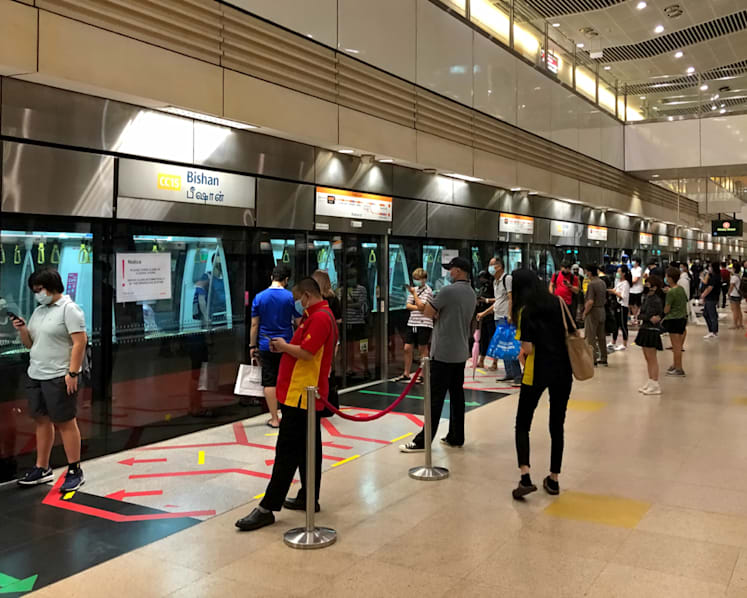
In Indonesia, a 2018 survey found that 46.8 per cent of the 62,224 respondents had experienced sexual harassment on public transport.
Many cities have adopted an array of initiatives to deal with this scourge, though with differing outcomes.
A 2015 campaign to encourage the timely reporting of sexual crimes on public transport in London increased arrests by about 40 per cent between April and December 2015, as compared to the same period in 2014.
A 2024 study in England and Wales also found that increasing non-police security patrols in train stations reduced reported unwanted sexual behaviour by about 66 per cent.
Some countries, such as the United Kingdom and Australia, have also rolled out anonymous reporting systems to lower the bar for reporting sexual crimes.
Elsewhere, countries such as Japan, Brazil and Mexico have adopted gender-reserved carriages on public transport, which means that only women and children may ride certain carriages, either all day or during peak periods.
While this might seem like a straightforward and logical solution, experts told CNA TODAY that it serves to reinforce assumptions that victims of sexual crimes are only women, and that it has had mixed results worldwide.
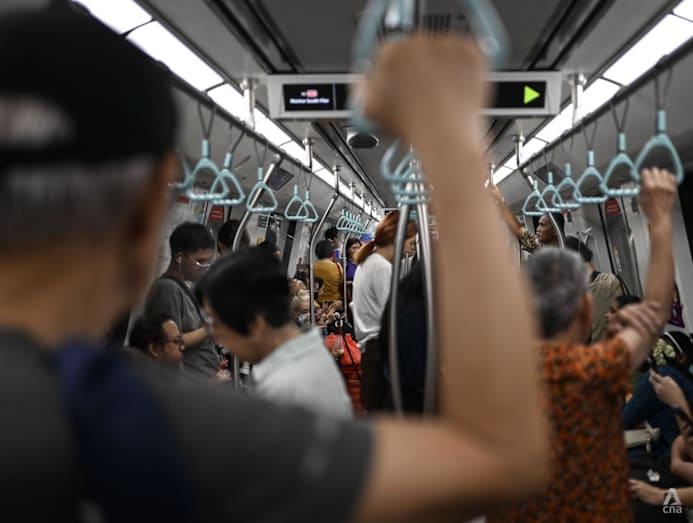
When Kuala Lumpur's women-only coach was first introduced on the Kajang MRT line in September 2023, Malaysia's Minister for Transport Anthony Loke told The Star that complaints of sexual harassment dropped.
The MRT operator had received eight complaints of harassment in the first quarter of 2023, 11 in the second quarter, and eight in the third quarter, but complaints dropped to three between September and November 2023.
In Mexico, though, a 2021 study found that women-only metro cars reduced sexual harassment by just 2.9 percentage points.
In Singapore, women-only carriages are simply not a good solution, an official from the Association of Women for Action and Research (AWARE) said.
Ms Shamima Rafi, a senior community engagement manager for AWARE's Support, Partner and Act Through Community Engagement, added: "At best, they create safe islands while leaving the rest of the network unchanged – and offenders simply shift their behaviour to mixed carriages or station platforms.
"These measures also send the wrong message entirely, suggesting that keeping women safe is a matter of physical segregation rather than holding perpetrators accountable."
Assoc Prof Theseira agreed: "While this may be a way of addressing concerns, I think it would also signal defeat in the sense that we don't think enforcement can be effective at deterring such behaviour.
"Thus, I would generally think that stronger enforcement is a better solution than accepting that the only way to provide safety is to segregate women."
These measures also send the wrong message entirely, suggesting that keeping women safe is a matter of physical segregation rather than holding perpetrators accountable.
Beyond educational campaigns, public transport companies in Singapore have introduced various measures to keep commuters safe.
SBS Transit said its staff members are trained to handle incidents such as outrage of modesty. The company operates about 200 bus services, and MRT train services on the North East Line and Downtown Line, as well as the Punggol and Sengkang LRT.
Mrs Grace Wu, a representative of public transport operator SBS Transit, said that when bus drivers are alerted to a sexual crime, they will attend to the affected passenger and contact SBS Transit's Bus Operations Control Centre, which will contact the police for assistance.
"Meanwhile, efforts will be made to close the doors to prevent the perpetrator from alighting pending the arrival of the police," she added.
A traffic inspector will also be dispatched to assist, such as by transferring other passengers onto another bus to continue their journey.
Passengers onboard trains may press the Passenger Emergency Communication (PEC) button, which is located at the side of the train doors.
This connects them directly to the Rail Operations Control Centre, which is able to identify the train and the specific train carriage where the PEC button was activated, Mrs Wu said.
When the train pulls into the approaching station, station staff members will be on hand at the specific platform doors to render help, she added.
Staff members will then escort the affected passenger and the crime suspect to the Passenger Service Centre to await police assistance.
Workers are also trained to handle incidents at bus interchanges and train stations.
Mr Muhammad Farhan Abdul Sattar, 34, an assistant station manager at SBS Transit, said this training proved useful when he apprehended a man who had peered under the door of a female toilet cubicle at Bugis MRT station in March 2023.
When caught, the man sprinted for the station exit, prompting Mr Farhan to jump over the gates and chase him.
"Without hesitation, I chased after the man. And when I caught up with him, he apologised profusely and tried to leave. I managed to grab a hold of his wrist and escorted him back to the Passenger Service Centre," he recalled, adding that he and his colleague also obtained details of the incident from the victim and witnesses while waiting for the police.
"My reaction was instinctive as I saw this as part of my duty. I feel a sense of responsibility for the well-being of my passengers, especially in moments like these where they look to us for support."
For his efforts, he was awarded the Community Partnership Award from the police's Public Transport Security Command in April 2023.
On top of such training, Mrs Wu said that public service announcements are played and police-led roadshows on anti-voyeurism and anti-outrage of modesty have been conducted at interchanges.
SMRT and Tower Transit did not respond to CNA TODAY's queries by publication time.
KEEPING PUBLIC TRANSPORT SAFE
Given the impact of sexual crimes on public transport, the experts said that more can be done to prevent such crimes and encourage victims to report to the authorities.
Assoc Prof Razwana from SUSS said: "While Singapore already has strong legal frameworks and well-designed transport infrastructure, the greater challenge is cultural.
"Victims are often reluctant to come forward due to fear, stigma or a lack of confidence in the authorities, which conceals the true scale of the problem.
"The priority now is building a culture of greater community involvement, mutual support and willingness to report."
She suggested that Singapore could consider real-time digital reporting, which would allow victims to file a report directly from their phones while on the train, with the report automatically time-stamped and cross-referenced with surveillance video footage before the offender leaves the train.
"Another is shifting campaign messaging away from advising victims on how to stay safe, towards targeting bystanders and potential offenders directly; using peer-led, behavioural insights and nudges in providing informed content," Assoc Prof Razwana said.
"The goal is to make non-intervention socially unacceptable."
Victims are often reluctant to come forward due to fear, stigma or a lack of confidence in the authorities, which conceals the true scale of the problem.
To encourage timely reporting, Ms Shamima of AWARE said that survivors of sexual crimes must feel safe, supported and confident that they will be treated with dignity.
"Creating a supportive reporting environment requires both public awareness and trauma-informed institutional responses," she added.
"Clear and accessible information should be made available on what sexual violence is, how to report incidents, what survivors can expect during the reporting process and what support services are available."
Such information could be displayed in public areas, such as MRT stations, bus interchanges and police stations.
"Ultimately, encouraging reporting is not only about asking survivors to come forward quickly, but also about ensuring that systems and public responses are supportive, accessible, consistent and trustworthy when they do so," Ms Shamima said.
"As a society, we should also be asking what more can be done to ensure that everyone feels safe commuting on public transport, instead of focusing on what survivors should do."
Mrs Wu from SBS Transit said that the company encourages passengers who experience or witness such incidents to alert its staff members promptly and, where possible, provide details such as the location of the incident and a physical description of the perpetrator "to support timely investigations".
By pressing the PEC button, the Rail Operations Control Centre can determine crucial details such as the train carriage and the door where the button was pressed.
Passengers can also take note of the carriage and door identification numbers, which are displayed inside trains.
Besides the SPOT framework by the police, Ms Shamima from AWARE said there are also the "5Ds" that bystanders can do:
- Direct – If it is safe, say something like "Are you okay?" or "Stop that."
- Distract – Create a diversion. This can be asking for directions, dropping something, or starting a casual conversation with the potential victim.
- Delegate – Find someone else to help, such as by alerting transport personnel, calling the police or asking another passenger to assist.
- Delay – If you freeze in the moment, check in on the victim after that. Offer to accompany the victim, ask if the person wants to report, or note down details such as time, location and description of the perpetrator to give to the police.
- Document – If safe, record what you saw, without shaming online, and offer the evidence to the victim or the authorities.
Last August, Ms Chen, the commuter who has had men take non-consensual photographs of her, was stalked by a stranger while changing trains at Bishan MRT station.
She quickened her steps when she noticed the man, but he ran up to her and professed his admiration for her. She immediately ran away, approaching some police officers who happened to be nearby.
"I feel profound anger that women have to go through harassment while out and about ... I'm frustrated and feel helpless because it's an issue that can't be resolved easily," she said.
On her part, Ms Chen is taking further action – she is designing a campaign called "See. Speak. Stop." Her hope is to raise awareness of such harassment and find new ways to empower victims.
Among other ideas, she plans to call for QR codes to be displayed on public transport that victims can scan to find a guided reporting system.
For Ms Ong the livestreamer, sharing her experience as an upskirt victim on social media made her realise that there were many victims of sexual crimes on public transport – but not many had filed police reports like she did.
She hopes that increasing security presence on public transport could serve as a deterrent for would-be perpetrators.
For now, she tries to take private-hire vehicles to avoid crowds on public transport and for more personal space.
"I'm not scared (to take the train or bus), but I'm definitely more aware," she said.
"Being on alert all the time is exhausting. There's no real choice because I don't want to fall prey again to such a crime."
WHERE TO GET HELP
- National Anti-Violence & Sexual Harassment Helpline: 1800 777 0000
- AWARE's Sexual Assault Care Centre: 6779 0282
- SHECares@SCWO: 8001 01 4616