Spare the rod, spoil the child? Adults who were caned as children disagree
A stricter school discipline framework announced by the Ministry of Education has revived debate on the effectiveness of caning. CNA TODAY speaks to adults who were caned as children on how corporal punishment affected them.
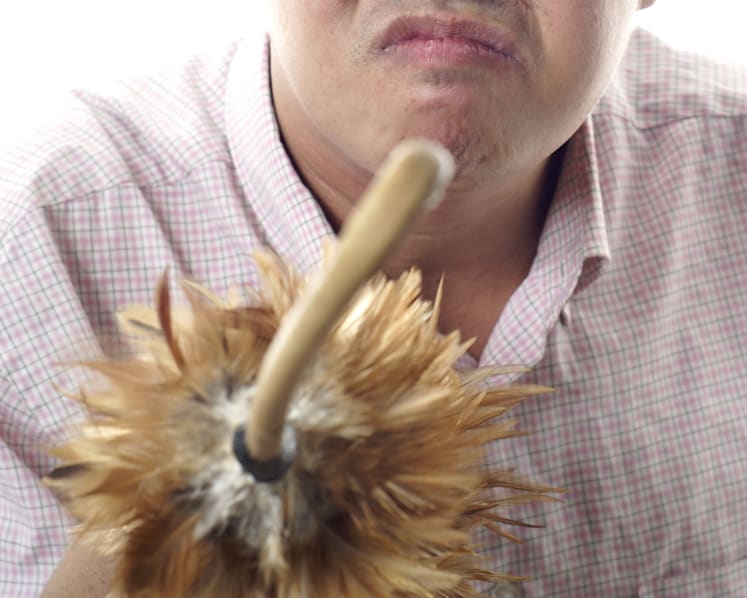
In disciplining children, older generations of parents in Singapore had used the feather duster (pictured) or cane as a tool, and adults remember such punishments as par for the course in their childhood. (Photo: iStock)

This audio is generated by an AI tool.


When Ms Joline Lim's mother was spring-cleaning her family home a few years ago, she discovered a dusty stash of canes in different lengths and thicknesses, strategically hidden behind a large wardrobe.
As a child, Ms Lim was caned by her mother for being naughty. To avoid being punished, she would hide the canes behind the cupboard or lock herself in a room.
Her mother did not catch on to the graveyard of canes, but she did remove the locks on every room in the house – bathrooms included – so that her daughter could not hide in a locked room.
To Ms Lim's mother, caning as a disciplinary tool was only the "natural" course of action because she herself was caned as a child.
Ms Lim recounted: "I remember thinking we were like Tom and Jerry, as she chased me around the dining table with a cane in hand." She was only spared the rod when she turned nine years old.





Now 40 years old, Ms Lim is the director of social enterprise Chapter Zero, and she can look back and laugh at these memories today.
However, the tears she shed while being caned and the fear she felt were enough for her to decide that she would never use the same tool on her son, aged 10, and daughter, seven.
The debate around corporal punishment for children has returned to the public spotlight, after the Ministry of Education (MOE) last month announced stricter disciplinary measures to tackle bullying and serious student misconduct.
First-time offenders of serious misconduct face one to three days of detention or suspension, or both, as well as an adjusted conduct grade.
Older boys may receive one stroke of the cane if aggravating factors are present.
In parliament earlier this month, Education Minister Desmond Lee said that caning is used alongside a suite of restorative and disciplinary measures.

The move has divided some parents in Singapore, with some viewing caning as an effective deterrent to bad behaviour, and others worrying about its effects on a child's development.
The most recent study by the Singapore Children's Society and Yale-NUS College, done in 2022, found that 44.8 per cent of parents surveyed used physical discipline at least once in the past year.
Of those surveyed, however, 27.4 per cent found that physical punishment is never effective, while 42.8 per cent believed that it is not effective most of the time.
CNA TODAY looks at the impact of corporal punishment and whether it still holds a place in Singaporean homes and schools today.
"I NEVER UNDERSTOOD WHY"
For 46-year-old Jane, like many other Singaporean adults of her generation and before, corporal punishment was a normal part of growing up.
Sometimes her parents used a cane, sometimes a feather duster, and if they could find neither, they would use "whatever was at home", she recalled.
"It was never a quiet affair. There was always shouting, screaming and questions, like, 'Why don't you listen?'
"It always ended in tears, and I would feel scared, in pain, humiliated and most of all, angry," the homemaker said, declining to reveal her full name for fear of upsetting her parents.
Jane added that her parents typically did not explain to her what was wrong with whatever she had done in the moment.
"I never understood why I was being caned. They assumed the cane did its teaching."
Jane simply accepted it at the time, especially since most of her peers were facing the cane at home, too. "To me, being caned was just part of childhood."
When her son was born, however, Jane began reading more about parenting and questioning the use of corporal punishment.
She could not comprehend the thought of hitting her own child or "hurting someone so innocent and pure".
"I started wondering, 'Why was I hit? Why couldn't they just explain what I did wrong?'" she told CNA TODAY.
"I know my parents did what they could at that point, and (caning) was the way they were taught. But the resentment built up when I became a mum myself and they told me to discipline my son in the same manner. There was much conflict between us."
She forbade her mother from using a cane on her son.
Even though Jane does not use a cane herself, learning to discipline her child without anger is still a work in progress.
"I'm working through it in counselling. But I often yell because of (what happened in) my childhood," she said.
"I know there are many other ways to better reach out to a child."
Including Jane, 10 adults who spoke to CNA TODAY said that despite being used to having a cane at home, the object did little more than instil fear, even for one person who had not been caned before.
For Ms Lim, the caning stopped when she plucked up the courage one day to ask her mother why she had to be caned while being chased around the dining table.
"I remember she shouted, 'Okay then, let's talk!' And we had a conversation about what I was doing wrong and why it was wrong.
"I don't remember what exactly it was about, but all I know was, I (finally) learnt (something)," Ms Lim said.
"Caning didn't teach me anything besides fearing the pain."
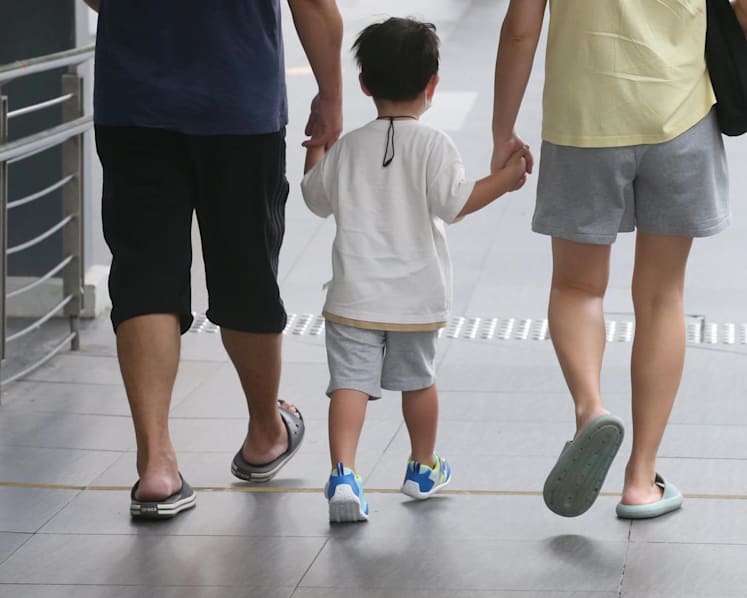
Mr Sree, 37, who works in the education sector, had a similar view.
The teacher, who declined to give his full name because he is not allowed to speak to the media, said that he faced the rod in Primary 5 after being involved in a brawl during a football match.
He recalled being taken to the principal's office, told to line up with several other children, and being given a textbook to place on his bum to protect his spine while the caning was carried out.
"I remember feeling lots of fear and then the pain of being caned," Mr Sree recounted.
"Back then, no one explained what happened, why we were caned … there was no investigation into why there was a brawl either.
"We were just told we were called in because we had a physical infraction, and were asked to return to class after (the caning)."
The caning left no physical scars, but the label of being a "naughty child" stuck to Mr Sree throughout his primary school years. Teachers would remind him to behave or risk being caned again, and some classmates avoided him.
"I felt like a second-class student. It ate into my self-esteem," Mr Sree added. Now, as a parent of two toddlers, he does not cane his children.
Caning didn't teach me anything besides fearing the pain.
In the end, it was a talk Mr Sree had with his father after he was caned that made the real difference, in which expectations were laid out for how he should behave and why he should not have been involved in the brawl in the first place.
"I understood (after that) … and it did better in shaping me to be a better person today," he added.
CANING NOT EFFECTIVE IN THE LONG TERM
Experts said that corporal punishment results in an immediate change in children's behaviour, but such a disciplinary strategy is not effective in the long run.
Dr Annabelle Chow, a clinical psychologist at Annabelle Psychology, said: "Since the focus is on pain and fear rather than understanding, it does not effectively teach children why a behaviour is right or wrong."
"Meaningful learning is more likely when children understand and internalise expectations, rather than simply avoiding punishment."
Dr Chow added that corporal punishment also has differing effects on children based on their age.
Younger children aged four to seven tend to generalise experiences rather than interpret them in context.
Instead of thinking that their behaviour was wrong, they may internalise the punishment as proof that they are "bad or stupid".
"Repeated exposure to physical punishment can therefore shape maladaptive beliefs about the self and safety, and in more severe cases, has been associated with stress responses and developmental patterns like those seen in chronic stress or trauma into adulthood," Dr Chow said.
"It is also linked to higher rates of behavioural difficulties and later emotional regulation challenges."
Dr Charlene Fu, head of the research unit at the Singapore Children's Society, said that younger children are especially vulnerable because their brains are still developing and they are likely to have fewer cognitive resources to cope with the negative effects of physical discipline.
"When experiencing fear and distress, the emotional part of the brain is activated, which blocks access to the thinking and learning centres.
"This means that even well-intentioned discipline fails to achieve the desired learning outcomes," she added.
If the effects of physical punishment, like caning, are not addressed, they can persist into adulthood, increasing the risk of chronic health issues, mental health disorders or the perpetuation of violence in future relationships, she cautioned.

Dr Chow said that for adolescents, physical punishment might be seen as humiliating or as undermining their independence and dignity. This can lead to resentment, emotional distancing, secrecy or oppositional behaviours.
"Across both stages, the common risk is that physical punishment can strain the adult-child relationship and shift the child's emotional response from understanding and internalisation towards fear, avoidance or resistance."
Some people might argue that caning is an "Asian style of parenting", but Dr Fu said that the effects of physical punishment on children in Singapore are consistent with the findings of international studies linking the punishment with poor outcomes such as lower self-control, higher aggression, anti-social behaviour and poorer mental health.
She pointed to the 2022 study by the Singapore Children's Society, which found that young adults described receiving physical discipline as a "distressing and emotional experience".
These young adults also said that such a form of discipline strained their relationships with their parents, affected their mental well-being – including their self-esteem – and resulted in poorer emotional regulation.
CANING IN SCHOOLS
As for whether caning is necessary in schools to improve the behaviour of badly behaved youth, all but two of the parents CNA TODAY spoke to were against this form of punishment.
Mr Sree, the teacher who was previously caned in school, said that he has seen firsthand how caning is not effective in changing children's behaviours.
In his own experience as a student, he found that peers who lacked family support and guidance did not change their ways despite being caned at school.
"Some continued fighting, choosing to use physical action to solve their issues," he said, adding that one of his classmates was later jailed for rioting.

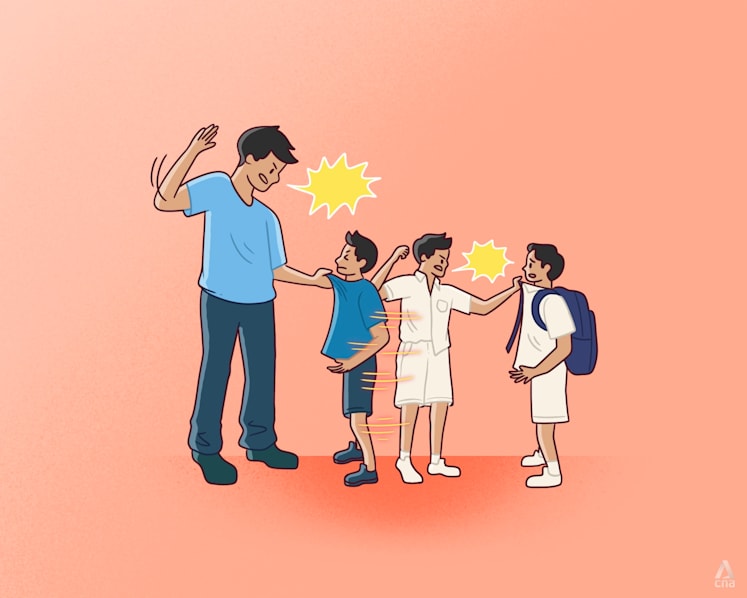
Mr Julian Teo, 49, a former discipline master at a secondary school in the 2000s, said he found that caning sometimes had the opposite effect on students, who thought little of being caned or treated it as a mark of defiance.
"It's a good deterrent, but it's not useful if the student is a recalcitrant one," said Mr Teo, who still teaches in a school.
"Some of them wear it as a badge of honour, that they are the 'cool kids' (who have been caned)."
Without counselling or restorative measures, the punishment may not address the root cause of the behaviour, he added.
"The student only goes back with a few lines on his buttocks, but does not understand what he did wrong."
In parliament earlier this month, Education Minister Desmond Lee said that research links frequent corporal punishment to negative outcomes, but the context in schools is "quite different".
Schools follow strict protocols when caning is considered, he added.
These include assessing the student's maturity and whether caning would help him learn from his mistake. The punishment must be approved by the principal and administered only by authorised teachers.
The approach, he added, is grounded in research showing that children and youth make better choices when there are "clear boundaries enforced by firm and meaningful consequences".
"This has a positive impact on reducing bullying and enables the school community to feel safe to learn in an orderly environment."
Physical punishment can strain the adult-child relationship and shift the child's emotional response from understanding and internalisation towards fear, avoidance or resistance.
In response to CNA TODAY's queries, MOE said that disciplinary measures in schools are meant to help students understand the consequences of their actions and take responsibility for their behaviour.
"When an incident is reported, schools investigate and mete out consequences that are age-appropriate and consider the severity of the misconduct," it added.
"Consequences can range from reflection for minor misbehaviour to detention, suspension or caning for boys for serious offences."
MOE also said that caning is "never done in isolation", but carried out with restorative and disciplinary measures.
"Schools closely monitor the student's progress after caning, with mandatory counselling to help the student reflect and learn, and support the student's rehabilitation and well-being, guide appropriate behaviour and restore relationships with others who have been hurt."
SPARE THE ROD, SPOIL THE CHILD?
Although mental health experts have touched on the negative outcomes of corporal punishment, many parents continue to do so because it results in nearly immediate behavioural changes.
Mr Lee, a 38-year-old who works in finance and has two sons aged seven and five, was one of the few parents CNA TODAY found who would admit to caning their children.
"When my children don't listen to me after three or four reminders, I have to turn to the cane," he said. "They immediately stop once I take the cane out."
Mr Lee, who did not want to reveal his full name fearing public backlash, mainly uses the cane as a threat and hits it on the floor as a warning to his children, but said that he has also hit his children "a few times".

Ms Lee Xin Ying, the head of Chinese curriculum at Grade Solution Learning tuition centre, was one other parent who admitted that her children had been caned before.
The 37-year-old said that her husband used the cane "once or twice" on their two daughters, aged seven and four.
However, she personally does not use the cane and opposes the use of corporal punishment, because it evokes fear and compliance instead of agreement to the principle behind it.
"It is very difficult in modern society to set consistent boundaries when you are overwhelmed yourself, or you are tired and you're busy with work (and) balancing life," she said, acknowledging why other parents might turn to corporal punishment.
"I think it brings about fear, but at the same time, I agree with my husband that we need to set firm boundaries. And setting firm boundaries is a bit difficult sometimes, when you don't have a very absolute punishment."
She added that if parents rely solely on restricting access or on a reward system, the value of these rewards and punishments diminishes over time.
Experts recognised that turning to more "gentle parenting" ways can be tiring and require more patience and consistency than physical disciplining methods.
However, they assured parents that it would be well worth it in the long run.
They said that such methods do not eventually "spoil the child" – referring to the phrase "spare the rod, spoil the child" – because there is still a need to guide children towards the right behaviour, and that includes disciplining them.
Dr Ho Boon Tiong, the principal consultant educationist at educational training and consulting firm Classpoint Consulting, said that parents should stay calm and not act in anger when doing so.
"A guiding principle is to not discipline in anger … It can cause character assassination, impacting a child and tearing them down."
He also said it is crucial that parents shape children in their formative years up to age seven, because that is when children absorb and learn how best to behave.
"Corporal punishment is not effective as children get older. All you do is inflict pain.
"That's why it's ideal that children are taught well from the get-go and are kept away from an environment where they fall into such behaviour," Dr Ho added.
Everychild.sg, an advocacy group that champions the holistic well-being of children, told CNA TODAY that restorative practices and approaches to teaching children are ideal ways to discipline young ones.
It said that such an approach involves stopping negative behaviour by de-escalating the situation. This can be done using a steady tone and minimal words, as well as giving children space to settle before any discussion takes place.
After that, a parent should guide children through reflecting on what happened, how they felt and who was affected by their actions.
This should be followed by the children taking accountability for the situation such as repairing the damage done, whether to objects or other parties.
The final step is to then teach the children not to repeat such behaviour and what to do or how to act instead.
This could include teaching them skills such as emotional regulation, how to communicate better, deal with conflict or even coping with stress.
Psychologists such as Dr Chow said discipline strategies that do not involve physical punishment may seem ineffective, but it is often because they are "inconsistently applied, not developmentally appropriate or introduced only after situations have escalated emotionally".
"Effective discipline often requires repetition, patience, emotional regulation from the adult and a strong relational foundation," she explained.
"While children need to learn to respect parental authority, it is equally important for adults to foster an environment where the children feel respected, emotionally safe and understood."
Growing up, Ms Jaslyn Ng was never caned. Similarly, her daughter, 14, has never felt the pain of the rod, either.
Her son, now 12, was caned before, but she stopped the punishment when he was about three years old. This was because she felt it was ineffective and only served to scare him.
Today, when either child misbehaves, they face a punishment arguably worse: Their already limited screentime is reduced or removed.
Alongside the punishment, the 42-year-old rationally explains to her children why their behaviour was wrong and what could have been done better.
"My daughter is going through puberty and she has had some challenges and conflicts with friends saying mean things," Ms Ng said. "But she repeated something I always tell her: 'What they say is on them. How I react is on me'."
"It's very validating to see my children grow up mature and in control of their emotions."