Do morning routines actually work, or are they just the latest obsession?
From cold plunges to supplements and 4am alarms, morning routines have become the holy grail of productivity and mindfulness. Do elaborate routines actually improve our lives, or is there a simpler way to start the day well?
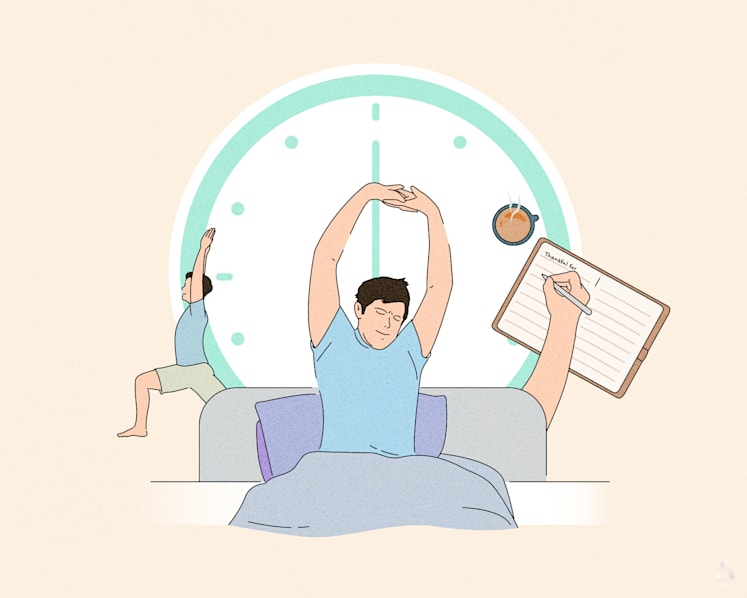
People have long been curious about the morning routines of the famous and successful, and have tried to emulate them. (Illustration: CNA/Samuel Woo)

This audio is generated by an AI tool.


When dawn breaks each day, the first thing communications executive Cass Zheng reaches for is not her phone but her toes.
The 27-year-old performs a set of long stretches, breathes in deeply for a minute, then takes her medication before she turns on the soft amber light in her bathroom.
There she washes her face before showering with a specific gel for mornings only. Then it's body lotion, skin care and a gulp of room temperature water – in that specific order.
Only then does Ms Zheng's day start for real.





It has been five months since she began this structured routine, and it has helped her feel more ready to take on whatever life throws at her.
"I think it helps (me) set myself up for success in the day, to tell myself mentally that I have time, I have space and that I got this – as opposed to rushing and feeling frantic and frazzled," she said.
It is a routine she adheres to even while overseas for work, as she believes it helps her mind and body adjust better to changes in her environment.
"When I don't do it, I feel a bit more uneasy throughout the day."
The idea of morning routines has been increasingly revered in the past few years, with public figures often espousing and swearing by regimens that have improved their lives.
For instance, Joe Rogan, host of the biggest podcast in the United States, starts his mornings by downing a smorgasbord of supplements before plunging into a cold bath and pumping iron with kettlebells.
Actor Dwayne Johnson famously wakes up before the roosters crow and even has a mobile app – The Rock Clock – to help others get up early and be productive.
Then there are people such as Snapchat CEO Evan Spiegel, who drinks a double espresso when he wakes up before meditating or exercising at the gym for 45 minutes.
Whenever I come across these routines online, I can't help but feel as though a similar daily ritual would make me a better, more enlightened – and probably a more muscular – human being.
Even hearing less "extreme" examples, such as Ms Zheng's, makes me think that those with routines have got it "together" more than most.
Where does this feeling come from, and why are we so captivated by these morning routines?
A ROUTINE OBSESSION
People have long been curious about the morning routines of the famous and successful, from US founding father Benjamin Franklin in the 1700s to celebrities of today, said Mr Chris Wong, clinical psychologist at Heartscape Psychology.
That is because people naturally compare themselves with others and want to learn from those whom they perceive to be better than them, he said.
"Hence, for many people, it stands to reason that if they learn about and emulate the morning routines of such successful people, they will similarly improve their own well-being and productivity."
Mr Wong added: "While that is perhaps not the only factor to their success, it is probably the most relatable and replicable as everyone 'has a morning'."
Intuitively, this makes sense. I did not think I was in any way, shape or form similar to the late Steve Jobs, though that did not stop me from attempting to emulate some of his habits when I was younger (sans turtleneck) – like asking self-reflective questions in the mirror each day.
Dr Joel Yang, clinical psychologist at Mind What Matters, said that people are also fascinated with morning routines because humans "like predictability", and that it helps us feel in control.
"The morning is the first 'fresh start' to each day, so we naturally project a lot of meaning onto it," he said.
"Culturally, we're drawn to stories of transformation and discipline, and morning rituals have become an easy shorthand to recognise positive change."

BENEFICIAL PRACTICE
This fascination with morning routines is not without merit however.
Dr Roy Chan, founder of psychology clinic Cloaks and Mirrors, noted several studies that point to the benefits of having one.
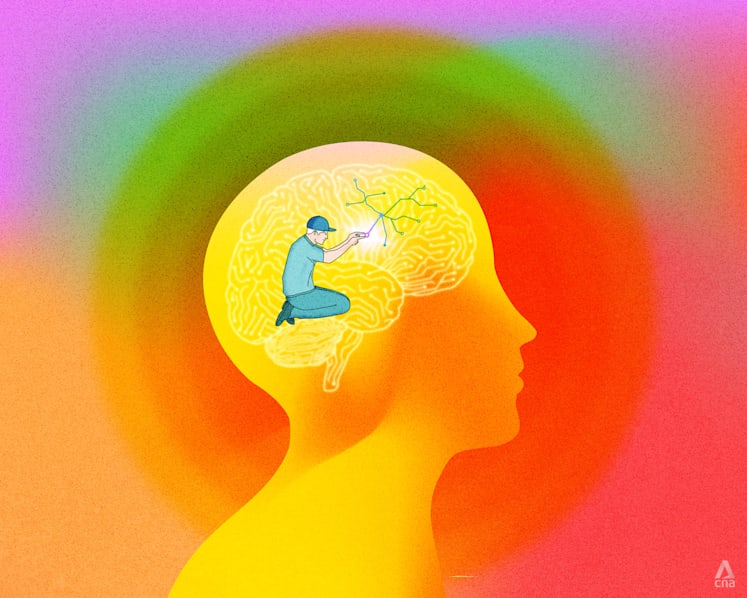
In one study published in the Journal of Occupational Health Psychology last year, adults who had the opportunity to have a brief meditation in the morning were better able to regulate their emotions without too much thought.
The study also found that these adults could control their emotions with less effort when faced with challenges at work, and that they had a higher sense of vitality at home.
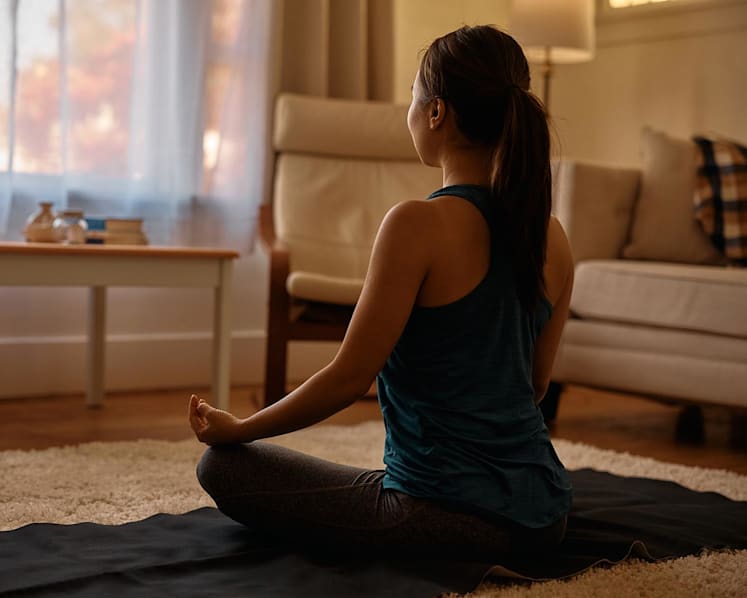
It is the same type of feeling that Ms Zheng had told me about. But what happens when that routine is disrupted? Are we doomed to be moody and cranky?
Several friends I spoke to who have been consistent with their routines for years said they experience varying levels of annoyance, with one describing missing his morning gym session as "leaving a bad taste in my mouth".
Still, Dr Yang said that while a disrupted morning can be jarring, research does not support the idea that it dooms the rest of the day.
People who cope well (in life) tend to be those who can reset (their moods), not those who maintain perfect routines.
He pointed out that while people have varying degrees of "mood inertia" – an emotional state that tends to carry forward into other parts of the day – one's mood need not be fixed.
"What matters is not the disruption itself but how quickly we can emotionally recalibrate, " he said. "How are we able to accept that things are not going the way we want them to and shift our focus onto other things?"
"Small regulating actions like a short break, a reset ritual, mindful breathing, briefly stepping outside or even simply reframing the situation can interrupt that inertia.
"People who cope well (in life) tend to be those who can reset (their moods), not those who maintain perfect routines."
TIMING LESS IMPORTANT THAN HABIT
For those who find themselves scrambling in the morning – like parents rushing to get their children ready for school, or shift workers whose days begin at odd hours – the idea of a curated morning routine can feel a little unrealistic.
But the good news is that it does not have to be.
The experts I spoke to were unanimous on this: What matters most is not when you practise self-care, but that you practise it consistently at all.
"Timing is far less important than habit," said Dr Yang.
"There's no evidence that meditation, grounding or self-care activities must happen in the morning to be effective… In fact, for many parents, shift-workers, or caregivers, mornings are the worst time to expect calm."

So what does this mean for the rest of us who cannot – or simply do not want to – adopt elaborate morning rituals?
Dr Chan explained that any routine activity can become an opportunity to regulate our mood and prepare mentally for the day, as long as it is done with intention.
Take brushing your teeth, for instance. It is the time of day that my mind has habitually allocated to race through my impending to-do list.
But Dr Chan suggests otherwise: "Focus on visual colours and form as the toothpaste is slowly squeezed onto the brush, the physical sensation of the toothbrush as it rubs along our teeth, the taste of mint on our tongue, and the coolness as we rinse our mouths."
He said the same principle applies to noticing trees on your walk to work, or taking a moment in the mid-morning to savour a drink where the taste and stillness of sipping becomes a sensory experience of connecting with yourself, free from the intrusion of others.
Mr Wong noted that short "micro-interventions" during the day – mindfulness, breathing, or movement prompts of between one and five minutes – have been shown to help as well.
"Flexibility and finding a routine that fits is more important than rigidly following a particular one espoused or popularised by other successful people," he said.
In the next few weeks I will be setting off overseas for an important work trip, and there's a part of me that feels slightly intimidated by the tasks about to land on my hands.
I have made up my mind to at least attempt a morning routine.
But even if it doesn't quite work out, I'll know the secret doesn't lie entirely in waking up early or following a 20-step ritual before breakfast.
Rather, it is simply finding moments throughout the day to be present.