My dream of a career in aviation keeps me going as I navigate life with severe haemophilia
About 280 people in Singapore have this rare blood condition that makes it difficult to stop bleeding. For World Haemophilia Day, 20-year-old Irfan Sulaiman shares why he refuses to let it stop him from pursuing his dreams.
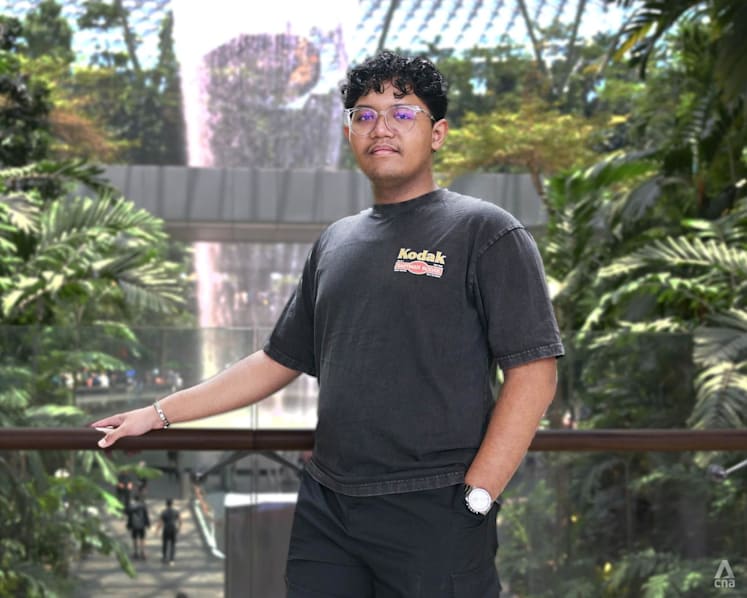
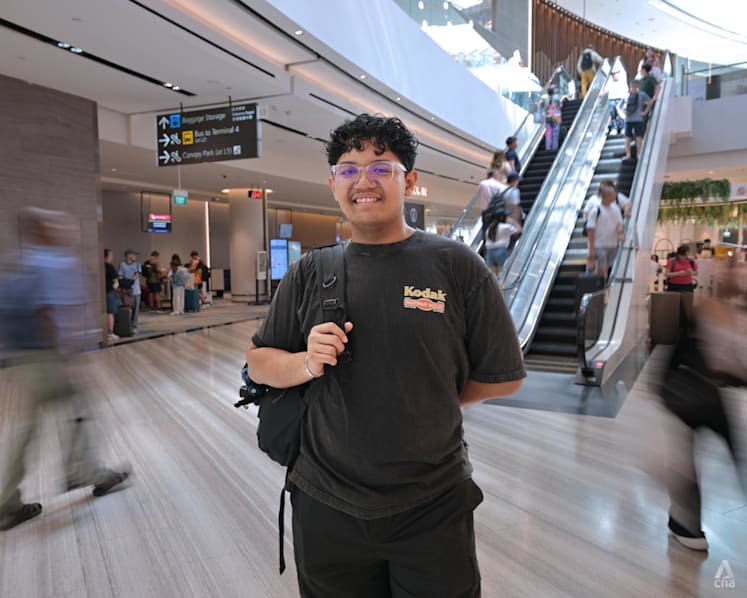
Mr Irfan Sulaiman, 20, an aerospace engineering student living with severe haemophilia A, at Changi Airport. He said his dream of working in the aviation sector keeps him going. (Photo: CNA/Raydza Rahman)

This audio is generated by an AI tool.
Growing up, my biggest wish was just to be "normal" like everyone else. I wanted to play tag, run around freely and perhaps join a sport or two.
Instead, I felt like I was wrapped in bubble wrap and forced to be cautious of my every movement to prevent any little injury.
When I was two years old, I was diagnosed with severe haemophilia A.
This lifelong diagnosis means that my blood lacks the clotting factor, known as Factor VIII, needed to control bleeding.
I am one of about 280 people in Singapore living with haemophilia A or B. Even small cuts can cause prolonged bleeding, as well as bruising and bleeds into joints and muscles.





My ankles are my "target joints", which means that blood often pools there after bleeds. This used to happen once every few weeks. Sometimes, it would be so severe that I couldn't walk.
Managing a condition where even a small cut can be deadly was stressful for my family and me.
As a child, I did not fully understand why I could not be like my friends who climbed monkey bars and slid down slides without a care. After all, I look no different from them.
My parents' concerns were tenfold as they did not just worry for my safety and well-being – they had to handle the finances, scheduling and logistics of managing my condition, all while caring for my three other siblings.
GAINING INDEPENDENCE
While learning to walk, I fell and injured my ankle. But unlike other children who bounced back quickly, my injury did not heal properly.
As a result, I was sent to the hospital and was diagnosed with severe haemophilia A.
Twice a week, I had to visit KK Women's and Children's Hospital for infusions necessary to prevent bleeds. These infusions lasted 30 to 90 minutes.
I tried skipping hospital visits as it was a hassle and I preferred staying at home.
But as I grew up and realised that treatment could ease my worries when trying new activities, my mindset shifted. I began adhering strictly to the treatment because it was the only way to prevent further harm to my body.
So it felt like my first step towards independence when, on my 15th birthday, I learnt how to self-administer my treatment.
My twice-per-week infusions at the hospital could now be done from the comfort of my home. If I injure myself, I've been taught how to increase my treatment dosage.
It was challenging at first. I had difficulties finding my veins and planning my treatment schedule was tedious. Doing treatments myself also does not mean I can avoid the hospital entirely – I still have to head there for X-rays and physiotherapy sessions if I experience severe bleeds.
But I wanted to feel more independent and responsible for my health. So I persevered.
This was a huge turning point. I not only felt more empowered, but I also saw a reduction in bleeds. More importantly, I could assure my parents that I was taking good care of myself and ease their burden, at least a little.
LEARNING TO LIVE WITH HAEMOPHILIA
As I gained more independence, I've been able to become more active and play sports with my peers – something people are often surprised about when they learn of my condition.
Unfortunately, the sports I play are limited to safer ones such as badminton and volleyball. I must avoid contact sports because they come with a higher risk of serious accidents. And even though I long for the thrill of ice skating and rollerblading, both are too risky as well.
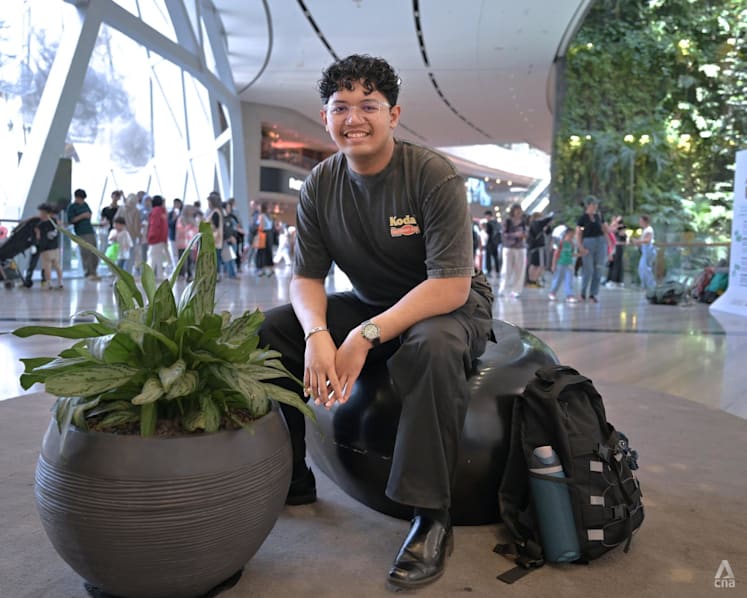
Travelling is also tricky as managing my condition adds a laundry list of tasks and considerations:
Is there a hospital near my accommodation?
Did I pack my ankle brace to support my constant walking?
Is the hotel refrigerator large enough to store my medication?
But even with planning and precautions, things can still go wrong.
When I visited Australia with my family in 2016, I grazed myself while coming out of a swimming pool on the first day. The trip was timed between my treatments, so I didn't manage to bring enough medicine for on-demand treatment.
I could manage the bleeding only by constantly applying pressure and changing my bandages. This limited my mobility and affected my entire trip as the bleeding stopped only on the last day.
I felt guilty that my family had to accommodate my restricted mobility, and I also felt stressed that even all the precautions didn't stop me from getting hurt.
This is the reality of living with haemophilia; I have to make a judgment call on whether an activity is worth the risk of a bleed.
HOW HAEMOPHILIA IS SHAPING MY FUTURE
Beyond physical and social activities, haemophilia also plays a major role in how I prepare for my future, including career choices.
Aviation is my passion and I would have loved to become an aerospace engineer. However, it is a physically demanding job that requires very literal heavy lifting, which may not be ideal for me.
But that doesn't mean I can't work in the aviation industry.
I am currently pursuing a Diploma in Engineering (Aerospace) at Temasek Polytechnic and plan to work in the aviation industry.
Though I haven't pinpointed my perfect job yet, I know there are options available. For example, becoming an air traffic controller is a possibility, as the demands of the job are manageable with regular prophylaxis and careful management of my condition.
So, I remain hopeful about building a career in the aviation sector – and this dream is what keeps me going.
A FUTURE WITHOUT ANXIETY
The constant vigilance against every cut and injury used to make me anxious. I worried about being excluded by my peers and missing out on activities. Fortunately, my friends are my pillars of support, even though they sometimes forget the nitty-gritty details of my condition.
When living with a lifelong condition that requires caution, risk assessment and hard choices, it's easy to feel as if you are defined by it.
But as I've grown up, I've come to realise that anxiety doesn't serve me well as I can't change who I am. While haemophilia does not have a cure yet, it is manageable with treatment.
Having lived my childhood with worry, I embrace my independence more, and that includes wanting to cover my treatment costs. Since 2023, I've been working part-time as a passenger service associate.
When coupled with subsidies from the Haemophilia Society of Singapore and recent MediShield Life and MediSave enhancements, my medical costs have become more manageable.
While my family supports my independence, they want to help cover my expenses. So, after much insistence on my part, I split the medical costs with my father 50-50, or sometimes 60-40 whenever I manage to convince him to let me pay a larger share.
As World Haemophilia Day falls on April 17, my hope for people living with haemophilia is that we gain easy access to treatments that provide sustained protection, are easier to administer and less logistically complex, so as to give us greater peace of mind.
I also hope that other people with haemophilia – especially young people – don't let this incurable condition define them.
Our burdens don't have to be invisible. Finding ways to empower myself towards greater independence and building a supportive community have been important for me, and I encourage others to find the courage to make their voice heard, as well as to connect with others.
In this way, I truly believe that we can move towards a "haemophilia-free mind" as a community and live our lives to the fullest.
Irfan Sulaiman is a 20-year-old aerospace engineering student living with severe haemophilia A.
If you have an experience to share or know someone who wishes to contribute to this series, write to voices [at] mediacorp.com.sg (voices[at]mediacorp[dot]com[dot]sg) with your full name, address and phone number.