







COP30 struggles over fossil fuels as Indigenous groups demand protection for Amazon
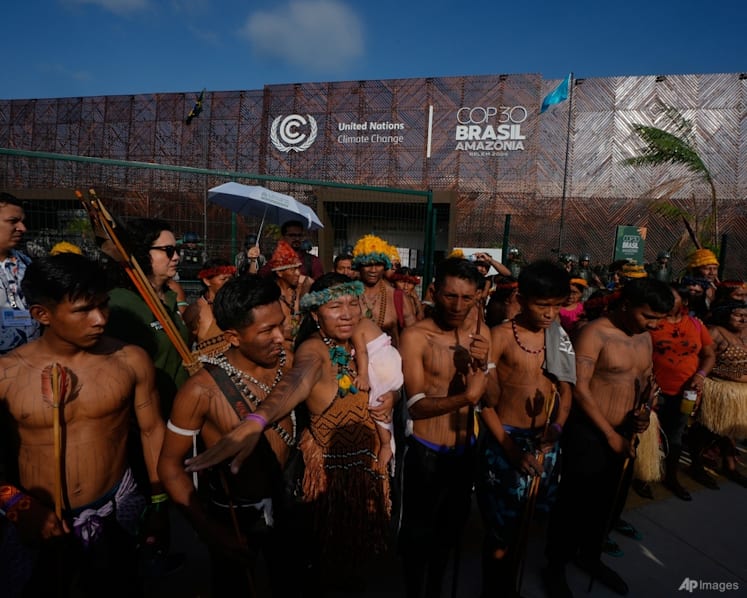
An Indigenous group blocks an entrance to the COP30 UN Climate Summit, Nov 14, 2025, in Belem, Brazil. (Photo: AP/Fernando Llano)
BELEM: Countries at the COP30 climate summit were still divided on Friday (Nov 14) over what they can agree on in a final deal, raising questions about whether the two-week talks can deliver a meaningful outcome.
Outside the venue, Indigenous groups protested against development pressures on the Amazon forest. They staged a sit-in at the entrance before securing a meeting with COP30 President Andre Correa do Lago.
The Munduruku Indigenous group said in a statement that Amazon destruction “cannot continue to enrich big companies”. Their territory in northern Brazil covers nearly 24,000 sq km, roughly the size of the US state of New Hampshire.
Brazilian President Luiz Inacio Lula da Silva has highlighted Indigenous communities as central to this year’s negotiations. Protesters urged him to listen to their concerns, saying they refused to be “sacrificed for agribusiness”.





Brazil’s COP30 presidency has said the summit’s focus is on delivering past promises rather than creating new ones.

NERVES OVER SUMMIT AMBITION
To avoid early deadlock, organisers agreed to handle contentious issues separately, including climate finance, gaps in national climate plans and global emissions-cutting targets.
Negotiators from 195 countries are working through the main agenda, which includes advancing measures to help countries adapt to worsening climate impacts.
Some delegates fear the summit could deliver a weak response to the climate crisis or collapse without agreement. Andrew Wilson of the International Chamber of Commerce warned that the talks risked becoming “a washout” unless ambition increases.
Brazil and several others want a strong signal advancing the COP28 commitment to “transitioning away from fossil fuels”. It is unclear if COP30 will deliver such language before talks conclude on Nov 21.
Because fossil fuels are not on the formal agenda, one option is to embed progress in the summit’s “cover text”, a negotiated statement seen as the conference’s central political outcome.
Norwegian climate minister Andreas Bjelland Eriksen told Reuters a clear message on fossil fuels would be welcome, even if difficult to negotiate.
Momentum is building for a cover deal to show global climate unity remains intact, despite the United States stepping back from international climate leadership.




