







Finland's icebreaker ships prove vital as melting Arctic ice opens shipping routes, fuels global rivalry
As warming waters make the High North increasingly accessible, interest from the United States, Russia and China is growing.
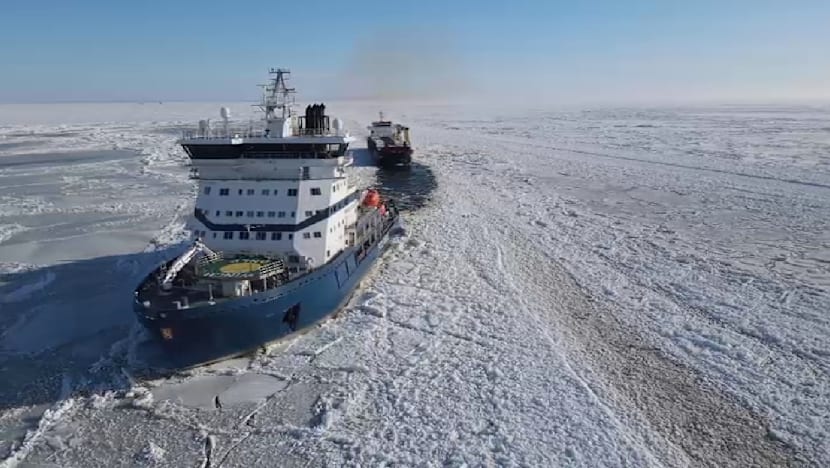
Finnish state-owned firm Arctia, which operates one of the most experienced icebreaker fleets supporting winter navigation for merchant vessels, said warming Arctic waters could open up new trade opportunities. (Photo: Arctia)

This audio is generated by an AI tool.


HELSINKI: Shrinking Arctic sea ice driven by climate change is opening new shipping routes and unlocking access to vast natural resources.
This has, in turn, intensified competition among global powers seeking to expand their presence - and has also thrust Finland’s icebreaker expertise into the spotlight.
As warming waters make the High North increasingly accessible, interest from the United States, Russia and China is growing.
Yet navigating these icy waters still depends on icebreakers – specialised vessels designed to cut through frozen seas – and Finland is emerging as a global leader in their construction.





BUILT FOR FROZEN SEAS
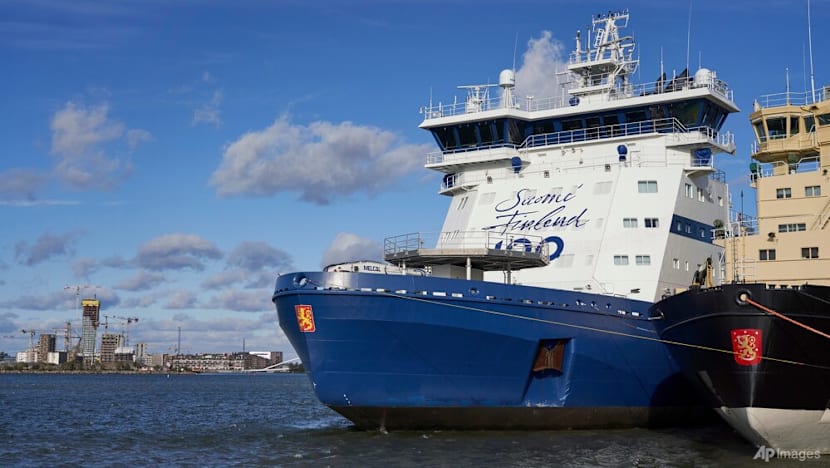
Icebreakers are engineered to operate in the harshest maritime conditions.
Built with reinforced steel hulls far thicker than standard merchant ships, they use powerful engines to ride up onto ice sheets and crush them under their weight.
This allows them to carve navigable paths through Arctic waters for other vessels to follow.
Icebreakers have existed since the late 19th century, with Finland emerging as a global hub for their development.
Finnish icebreaker design company Railo Technology (Railotech), formerly known as Aker Arctic, is among the firms leading innovation in the field, adapting designs to meet the challenges of an Arctic warming three times faster than the global average.
While thinning ice is making the region more accessible, increasingly erratic weather conditions are also creating new navigational risks, said Arto Uuskallio, head of sales and marketing at Railotech.
“The icebreakers have to be more capable of operating in open waters and in high seas,” he noted.
FINLAND’S ICEBREAKING DOMINANCE
Finnish firms are responsible for designing around 80 per cent of the world’s existing icebreaker vessels – a dominance rooted in the country’s geography.
Experts say Finland is the only country in the world where all ports freeze over in winter, driving the need for advanced icebreaking capabilities.
Maritime access has long been vital for Finland. With about 95 per cent of its foreign trade transported by sea, icebreakers play a critical role in keeping commerce moving year-round.
That expertise is now drawing international attention as the race for influence in the Arctic heats up.
Last October, the US signed a deal with Finland to acquire 11 icebreakers, known as Arctic Security Cutters, citing national security concerns and growing activity by Russia and China in the region.
Mike Sfraga, interim chancellor at the University of Alaska Fairbanks, said there are clear warning signs that require close monitoring.

NEW TRADE OPPORTUNITIES
Beyond security considerations, the Arctic is increasingly seen as a strategic trade corridor.
Arctic routes could potentially halve the time needed to transport goods from China to Europe, offering a faster alternative to traditional shipping lanes.
Finnish state-owned firm Arctia, which operates one of the most experienced icebreaker fleets supporting winter navigation for merchant vessels, said warming Arctic waters could open up new trade opportunities.
Jukka Viitanen, its director of sustainability and communications, said that as traffic increases, demand for icebreaking services will also rise to keep these routes operational.
Geopolitical tensions, including the war on Iran and disruptions in the Strait of Hormuz, could have ripple effects on Arctic shipping, said observers.
Jari Eloranta, professor of economic history at the University of Helsinki, said: “Just shutting down one particular logistical chain in world trade can have tremendous impacts in terms of the world economy.
“So, companies (and) countries are looking for other ways or more reliable ways of transporting goods and services.”




