







Iran hits Gulf states after agreeing to 'fragile' truce with US
The strikes on UAE and Kuwait on Wednesday (Apr 8) were in retaliation for airstrikes against Iran’s oil facilities, state media said.
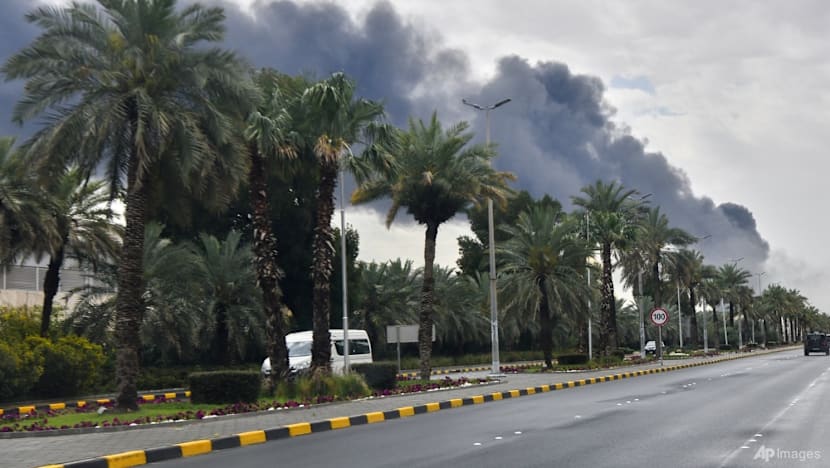
Smoke rises from Kuwait international airport after a drone strike on fuel storage in Kuwait City, Kuwait, on Mar 25, 2026. (File photo: AP)
TEHRAN: US Vice President JD Vance warned the truce between Washington and Tehran remained "fragile" on Wednesday (Apr 8) as several Gulf nations endured fresh attacks just hours after the rivals agreed a two-week ceasefire.
The strikes on Kuwait and the United Arab Emirates came as two ships passed through the Strait of Hormuz after Iran agreed to temporarily reopen the strategic waterway under threat of annihilation by President Donald Trump.
Both sides claimed victory as the eleventh-hour ceasefire was announced but Iran warned the war was not over until formal terms were negotiated, with talks between Tehran and Washington expected in Pakistan on Friday.
Tehran's demands over future control of Hormuz - a narrow strait through which one-fifth of the world's oil usually passes - uranium enrichment and economic sanctions are at deep odds with Washington.
Vance, speaking in Budapest, said negotiations could turn a "fragile truce" into a deal if Iran was "willing in good faith to work with us".
If not "they're going to find out that the President of the United States is not one to mess around. He's impatient. He's impatient to make progress", Vance said.
Pope Leo was among a chorus of world leaders to call on Wednesday for a full end to the war, which has killed thousands of people, sparked an energy crisis and roiled global markets.
Trump told AFP the deal was a "total and complete victory" for the US, which conducted airstrikes with Israel on Feb 28 that killed Iran's supreme leader Ayatollah Ali Khamenei and ignited a regional war.
Iran also hailed the ceasefire as a win but warned it "does not mean the end of the war" unless its terms were met.
Its powerful Revolutionary Guards said on Wednesday they had "no trust" in US promises and warned their "finger is on the trigger".

GULF STRIKES
Underscoring the precarity of the situation, Iranian state media announced fresh "missile and drone attacks" on Wednesday on US-allied Gulf states UAE and Kuwait in retaliation for airstrikes against its oil facilities.
Kuwait said its oil facilities and power and desalination plants were damaged in "an intense wave" of strikes that lasted hours, and demanded Iran cease its attacks.
The UAE said it was intercepting Iranian attacks while Bahrain also said its capital Manama had been hit.
Iran has unleashed weeks of aerial attacks on Gulf Arab states, citing their role as hubs for US troops and shattering their hard-fought reputation for safety and stability.
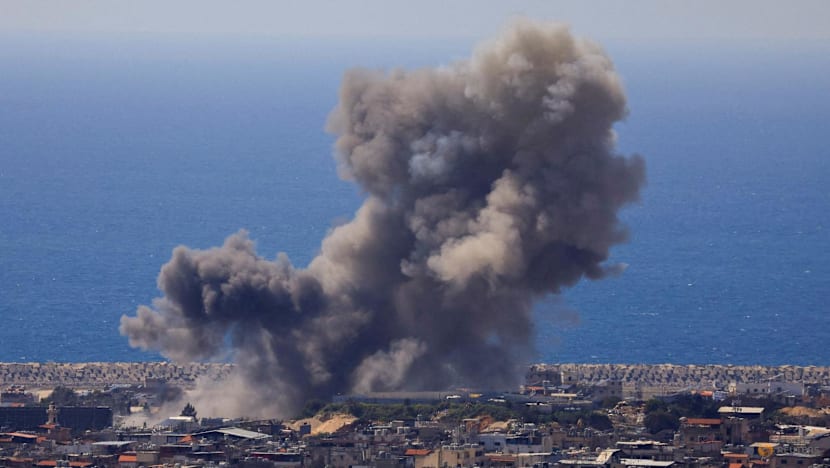
There was also no let-up to fighting in Lebanon, where Israel renewed strikes against Hezbollah on Wednesday despite the Iran-backed armed group not claiming any operations since 1am (6am, Singapore time).
It announced its "largest coordinated" strikes across Lebanon, while Lebanese state media reported strikes on Beirut and its suburbs.
The White House said Israel had agreed to the ceasefire but Prime Minister Benjamin Netanyahu said it did not include Lebanon, where Israel's operation has killed more than 1,500 people, according to local authorities.
Israel had encouraged Trump to launch the war against Iran, its arch-foe, according to a report in The New York Times.
A peace agreement would leave in place the Islamic Republic despite US and Israeli hopes of toppling it. The US and Israel said that they attacked Iran to degrade its military capacity.
In Tehran, streets were quieter than usual on Wednesday, with many shops closed after a long and anxious night for city inhabitants fearing a massive US attack.
Trump had earlier warned a "whole civilisation will die" in Iran if the Strait of Hormuz was not opened by midnight GMT but said he held off after speaking with Pakistan's leaders.
He later told AFP he believed China had helped get Tehran to negotiate.
Iranian Foreign Minister Abbas Araghchi confirmed safe passage for two weeks for ships through the strait, which Tehran sealed off in retaliation for the war, sending global energy prices soaring.
A Greek-owned bulk carrier and a Liberia-flagged vessel sailed through on Wednesday, said the maritime monitor Marine Traffic.
Trump on Wednesday posted on social media that the US would "be helping with the traffic buildup in the Strait of Hormuz".
"NO ENRICHMENT OF URANIUM"
Trump said earlier that the US was "very far along" in negotiating a long-term agreement with Iran, which had submitted a 10-point plan that he said was "workable".
But Iran publicly released points that took maximalist positions, including lifting long-standing US sanctions, guaranteeing Iranian "dominion" over the strait and removing US forces from the region.
Crucially, it also said its plan would require Washington to accept its uranium enrichment programme.
Trump said that there will be no enrichment of uranium by Iran and that the countries will work together to "dig up and remove" nuclear material buried by US strikes last year.
"The US will work closely with Iran, which we have determined has gone through what will be a very productive Regime Change!" he said in a later post on Truth Social.
"There will be no enrichment of uranium, and the US will, working with Iran, dig up and remove all of the deeply buried (B-2 Bombers) nuclear 'dust,'" he added.
In June 2025, US forces struck three nuclear sites in Iran - Fordo, Natanz and Isfahan - with powerful bunker-busting bombs dropped from B-2 stealth bombers.
Trump at the time claimed the operation "obliterated" Iran's nuclear capability and set back its nuclear program by decades.
But the exact extent of the damage is unknown.
Prior to last year's strikes, Iran was enriching uranium to 60 per cent, according to the International Atomic Energy Agency.
That is far higher than necessary for civilian reactor levels, and close to the 90 per cent required to build a nuclear weapon.
While Western powers and Israel have long accused Iran of seeking to acquire atomic weapons, Tehran denies it.
Trump also said that as part of engagement with Tehran, "we are, and will be, talking tariff and sanctions relief with Iran".
But he warned against anyone supplying military weapons to Iran, threatening 50 per cent US tariffs, "effective immediately", on countries that do so.
Oil prices plunged by more than 17 per cent after the ceasefire announcement, while European natural gas dropped 20 per cent. Stock prices also soared in early trading on Wednesday in Asia.
Much of the global reaction to the ceasefire focused on the need to turn the ceasefire into a workable peace deal.
Egypt praised efforts to "give diplomacy a chance", while Oman spoke of finding "solutions capable of resolving the crisis at its roots".
Ahead of a visit to the Gulf, British Prime Minister Keir Starmer pledged Wednesday to do everything possible to turn the ceasefire "into a lasting agreement" that ensures the reopening of Hormuz.




