Israel pounds Lebanon with heaviest airstrikes of the war
Pakistan's prime minister said a two-week ceasefire between Iran and the US included Lebanon, but Israel later denied this.
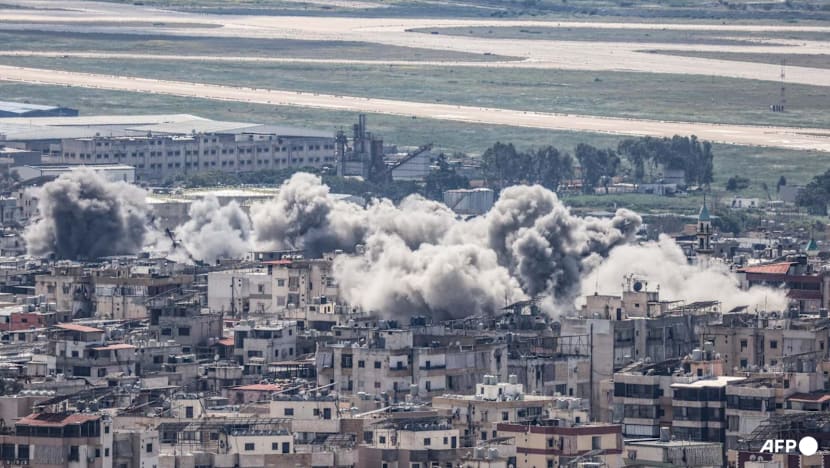
Smoke rises following Israeli airstrikes in Beirut's southern suburbs, with the capital's international airport visible in the background, on Apr 8, 2026. (Photo: AFP/Anwar Amro)
BEIRUT: Israel launched a series of strikes on Beirut on Wednesday (Apr 8), the most violent attack on the Lebanese capital since the start of the United States-Israel conflict with Iran.
AFPTV's live broadcast showed several plumes of smoke rising over Beirut and the suburbs, and AFP journalists saw panic in the streets.
The strikes came as Iran-backed armed group Hezbollah, which drew Lebanon into the war by attacking Israel on Mar 2, claimed it was close to a "historic victory".
Hezbollah, however, did not claim any operations against Israel since 1am (6am, Singapore time), around the time a temporary ceasefire between Iran and the US took hold.





Israeli Prime Minister Benjamin Netanyahu had said earlier that the truce excluded his country's fight with Hezbollah.
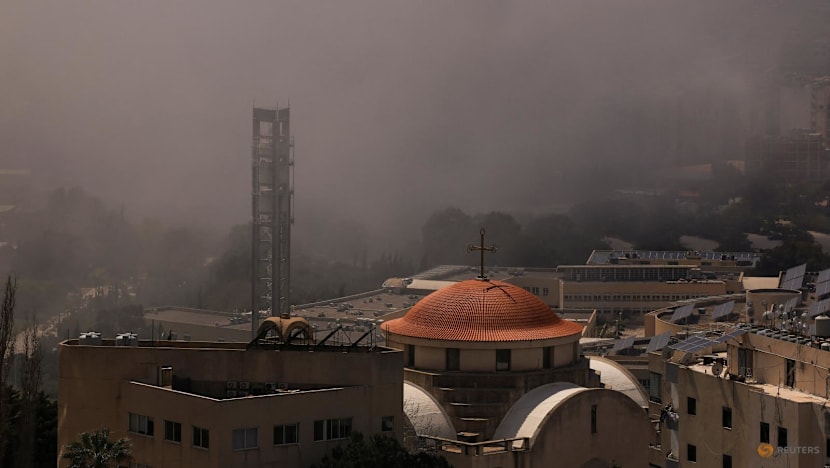
Israel renewed an evacuation order for an area more than 40km inside Lebanon, saying "the battle in Lebanon is ongoing", before also reiterating its call for residents of Beirut's southern suburbs to leave.
It also issued a warning for a building in the coastal city of Tyre, after striking another one near it.
NNA reported several strikes across the south.
Ali Mahdi, who was displaced from the border town of Naqura, said he "does not feel" like the Iran war truce applies to them "since some of our loved ones are being targeted, and the decision itself is still unclear".

"HISTORIC VICTORY"
Israel's attacks in recent weeks have killed more than 1,500 people and displaced over a million, according to Lebanese authorities, especially in the country's south, east and Beirut's southern suburbs, areas where Hezbollah holds sway.
On Wednesday, an AFP correspondent in southern Lebanon saw small numbers of people heading south, some in cars and others carrying their children on motorcycles.
But Lebanon's military warned displaced people against returning south "since they may be exposing themselves to the ongoing Israeli attacks".
Hezbollah, meanwhile, said that while it was nearing a "historic victory" against Israel, displaced people must "not head to the targeted villages, towns, and areas in the south, the Bekaa, and the southern suburbs of Beirut before the official and final ceasefire declaration in Lebanon is issued".
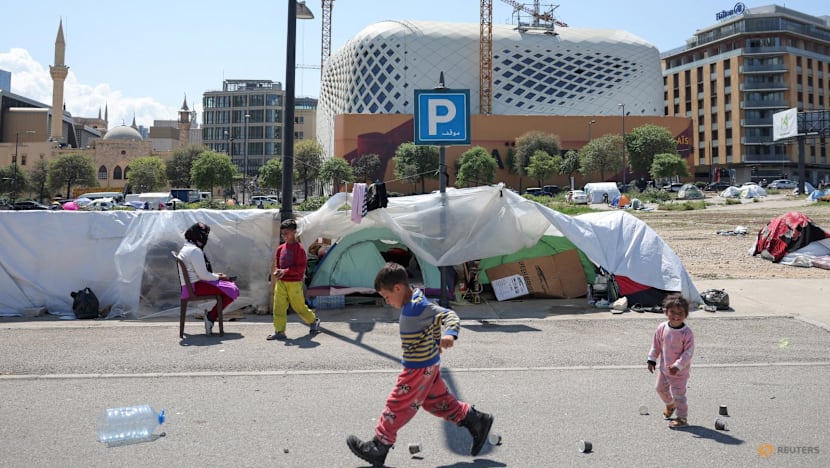
Staying in a tent near Beirut's southern suburbs, 50-year-old delivery worker Ali Youssef said he was "waiting for Hezbollah to issue an official statement".
Youssef said he was confident that "Iran will not let us down" if Israel keeps attacking Lebanon.
Shortly before the ceasefire announcement, an Israeli strike on the southern city of Sidon killed eight people.
"REGIONAL PEACE"
In a statement, Lebanese President Joseph Aoun welcomed the two-week truce between Tehran and Washington, and said his government "continued efforts to ensure that the regional peace includes Lebanon in a stable and lasting manner".
Aoun noted that "the decision regarding war and peace ... rests solely with the Lebanese state".
Prime Minister Nawaf Salam also insisted that "no one negotiates on behalf of Lebanon except the Lebanese state".
Pakistani Prime Minister Shehbaz Sharif, who has acted as a mediator in the regional conflict, said the two-week ceasefire between Iran and the US applied "everywhere, including Lebanon".
But Netanyahu later said the country was excluded, and a Lebanese official told AFP that authorities "have not been informed" of Lebanon being included in the truce.