







Israelis weary but prepared for possible Iran strikes
"The threat of war is, for us, a kind of routine," said a local Israeli amidst looming strikes from Iran.
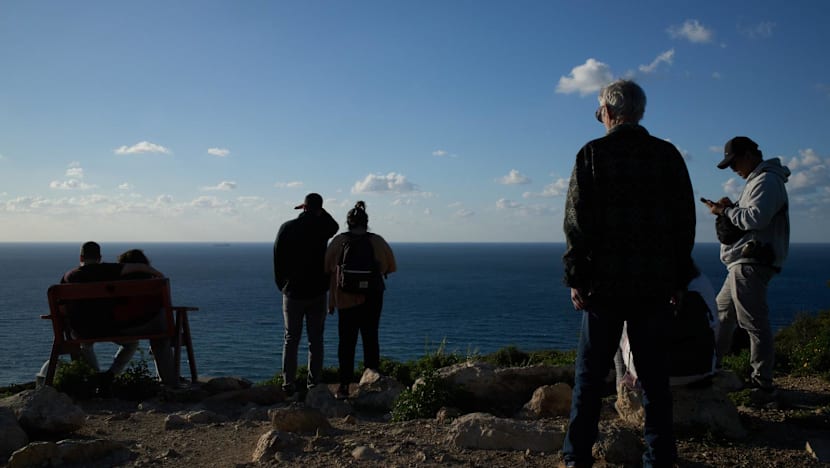
People gather at a lookout to look for the possible arrival of the US Navy's aircraft carrier USS Gerald R. Ford in the Mediterranean Sea near the coast of Haifa, northern Israel, Friday, Feb 27, 2026. (Photo: AP/Leo Correa)
"The threat of war is, for us, a kind of routine," lawyer Maya Liya Cohen told AFP in the northern port city of Haifa.
"No matter what happens, what we do, if it has anything to do with us or nothing to do with us, then we are under continuous threat," she added.
US President Donald Trump has repeatedly threatened to strike Iran, and the US is currently pressing its biggest military build-up in the Middle East in decades.
If war erupts, Israel could end up in the firing line of its regional arch-foe.
For Israelis, memories of missile barrages from Iran lie in the not too distant past.
Israel launched unprecedented strikes on Iran last June, triggering retaliatory drone and missile attacks and sparking a 12-day war.
The US briefly joined to bomb Iranian nuclear sites.


The lingering threat of war has prompted Cohen to adopt round-the-clock preparedness.
"We always have a safe place. It's actually our bedroom in our house," Cohen explained.
"We have water, we have an emergency kit, we always have things that are ready over there in case."
The military "is closely monitoring developments in Iran and remains alert and prepared to defend you", he said.
"We are operating in full coordination with our partners in order to strengthen our defensive posture," he added, emphasising that the guidelines for the public had not changed.
"BECOME RESILIENT"
Pinkas lives with her twin six-year-old daughters on the fifth floor of an apartment building.
Like Cohen and many other Israelis, her apartment is equipped with a "mamad", or reinforced room, but even with the shelter she said she did not feel safe.
"Last time (in June), 10 minutes from here in Petah Tikva, there were people who had taken refuge in a mamad on the fifth floor and were killed by a missile," she told AFP by phone.


During that war, Pinkas said her family slept in her basement yoga studio a few streets away, and that she was preparing her daughters for the same possibility now.
"A month ago, I was really stressed, I didn't want to relive what I had experienced in June. But now I'm less stressed. We're a bit jaded," she said.
"I find that to survive situations like this, when you don't know what the future holds, whether or not there will be a threat to your life, to be able to cope with it all you have to change your perspective, become resilient."
"PREPARED FOR EVERYTHING"
Iran said Friday that in order to reach a deal, the US will have to drop its "excessive demands", tempering the optimism expressed after ongoing Oman-mediated talks seen as a last-ditch bid to avert war.
The US on Friday authorised the departure of non-emergency embassy staff from Israel "due to safety risks", saying that people who wished to leave should do so while flights were still available.
But for Yehuda Goldberg, a communications company manager in Haifa, life was continuing largely as normal.
"We're always prepared for everything. But on the other hand, we're living life to the full," he told AFP.
"To tell you it's comfortable, to tell you it's easy, it's not. But we are definitely at the best time of the existence of the Jewish people in the world. We have our own country," he added.
"It is our honour and duty to defend our country, to defend our people."




