







Japan asks G7 to prepare more measures to stabilise energy markets
Japan warned energy shortages are “becoming increasingly acute” and urged the G7 to prepare to stabilise energy markets.
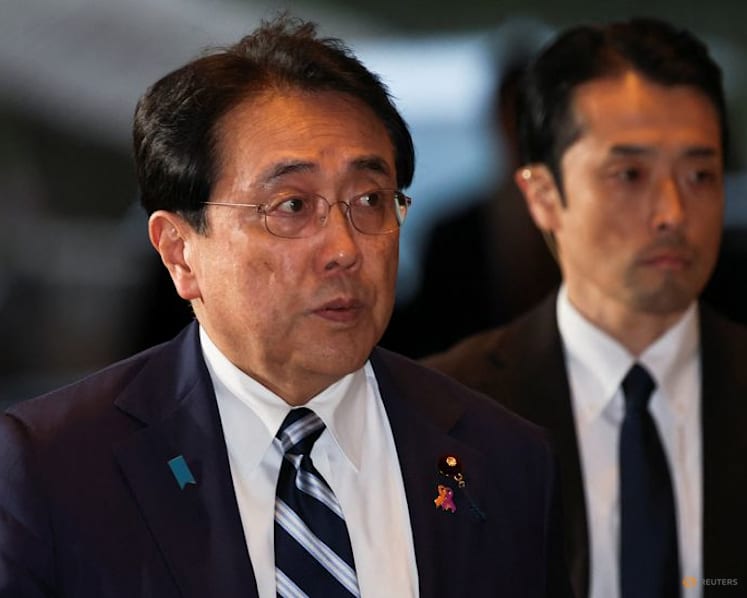
Japan's newly-appointed Minister for Economy, Trade and Industry Ryosei Akazawa arrives at the prime minister's official residence in Tokyo, Japan Oct 21, 2025. (Photo: REUTERS/Kim Kyung-Hoon)
TOKYO: Japan called on the Group of Seven wealthy nations and the International Energy Agency to be ready to take further flexible measures to stabilise energy markets if the Iran war drags on, its industry minister said on Monday (Mar 30).
Those actions could include additional coordinated oil stockpile releases at an appropriate time, Ryosei Akazawa told reporters after attending an online meeting with G7 finance ministers, energy ministers and central bank governors.
"In Asia, soaring (energy) prices and supply concerns are becoming increasingly acute, with shortages of fuel and raw materials disrupting global supply chains and potentially having a significant negative impact," he said.
The war on Iran launched by the US and Israel on Feb 28 has spread across the Middle East, killing thousands of people and hitting the world economy with the biggest-ever disruption to global energy.
On Monday, Iran described US proposals to end the conflict as "unrealistic, illogical and excessive" and unleashed more missiles on Israel.
In response to the crisis and the resulting supply crunch, a number of countries, notably China, that are dependent upon oil, gas and product imports from the Gulf have implemented export restrictions to shore up local supplies.
Following Monday's meeting, however, the G7 called on countries "to refrain from imposing unjustified export restrictions on hydrocarbons and related products".
Japan's Kyodo news agency reported on Monday that the Philippine government had procured 142,000 barrels of diesel from Japan that arrived on Mar 26.
Akazawa said that Japan has supply chains in place across Southeast Asian countries and from the perspective of maintaining these chains, it was important to ensure fuel supplies in each country in the region.
"Whilst giving top priority to securing a stable domestic energy supply, we intend to maintain close communication with each country," he added.




