Trump threatens to obliterate Iran's oil wells, Kharg island if no deal
US President Donald Trump warned he will "completely obliterate” Iran’s infrastructure if no deal is reached soon.
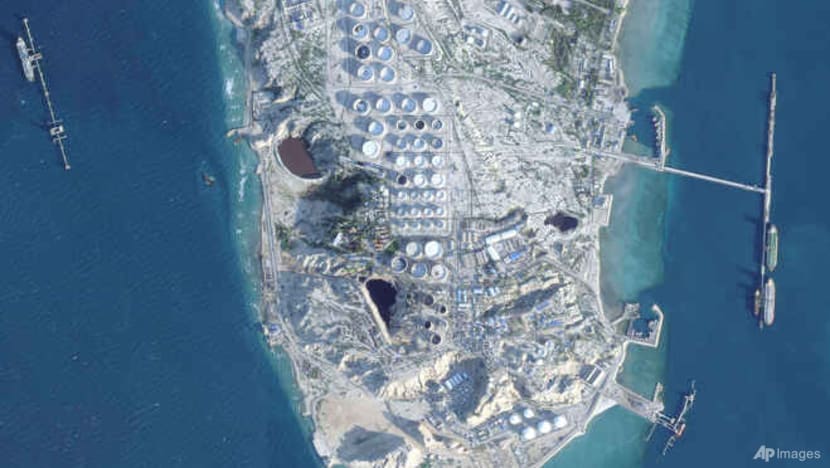
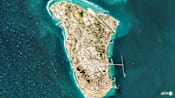
In this satellite photo from Planet Labs PBC, Iran's Kharg Island is seen on Feb 26, 2026. (Photo: AP/Planet Labs PBC)
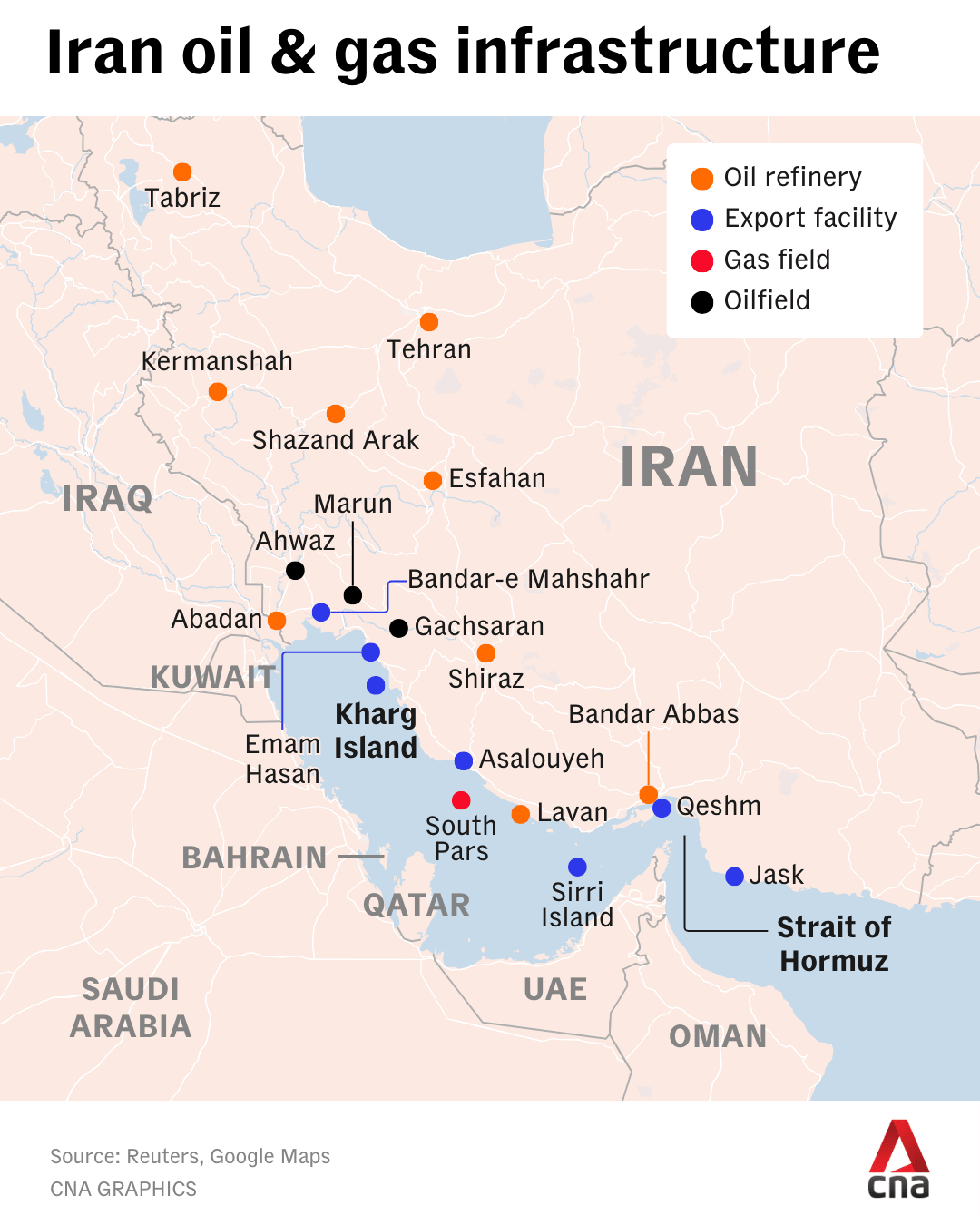
WASHINGTON: US President Donald Trump threatened Monday (Mar 30) to destroy Iran's oil export hub of Kharg Island, oil wells, power plants and other civilian infrastructure if it does not soon agree to a deal to end the war.
A day after sounding conciliatory and suggesting a deal could be reached this week, Trump wrote on his Truth Social network that the United States is in "serious discussions" with "a more reasonable regime" in Tehran.
But he added an ominous warning.
"If for any reason a deal is not shortly reached, which it probably will be, and if the Hormuz Strait is not immediately 'Open for Business,' we will conclude our lovely 'stay' in Iran by blowing up and completely obliterating all of their Electric Generating Plants, Oil Wells and Kharg Island (and possibly all desalinisation plants!)," Trump said.
White House Press Secretary Karoline Leavitt repeated the administration's insistence that the US war against Iran should be over within another two weeks.
Trump "has always stated four to six weeks, estimated timeline," Leavitt told reporters. "We're on day 30 today. So again, you do the math."
"He wants to see a deal over the next 10 days," she said.
Asked whether Trump's threat to devastate Iranian civilian infrastructure would not risk committing war crimes, Leavitt said the US armed forces would always act within the law.
However, she warned Iran that the US military "has capabilities beyond their wildest imagination and the president is not afraid to use them".
On Sunday night, Trump told reporters on Air Force One that the United States had achieved "regime change" in Iran through the war launched a month ago with Israel, citing the number of Iranian leaders who have been killed. He called the new leadership "much more reasonable".
"We're dealing with different people than anybody's dealt with before. It's a whole different group of people. So I would consider that regime change."
There could be a deal "soon", Trump said when asked if an agreement could come this week.
Meanwhile, when asked if US allies in the Gulf - like Kuwait, Saudi Arabia and United Arab Emirates - should help pay for the costs incurred by the war, Leavitt said Monday it was something Trump was "quite interested in doing."
"It's an idea that I know he has," she said without further detail.
KHARG DISRUPTION MAY ESCALATE OIL CRISIS: ANALYST
Speaking to CNA’s Asia First, Rapidan Energy Group founder and former White House energy advisor Bob McNally said markets may be underestimating the risks to global oil supply.
He warned that any action that prevents Iran from exporting oil from Kharg – its main export terminal – could “incite the Iranians to escalate to the next level”.
McNally noted that while critical energy infrastructure has so far been largely spared in the conflict, such a move could trigger retaliation targeting such facilities.
He added that earlier assumptions – including that the Strait of Hormuz could not be blocked for long and that the conflict would end quickly – are now fading, with markets taking a more “pragmatic and sober” view.
Temporary buffers, such as oil already in transit and releases from strategic reserves, are also “pretty much gone now”, he said, warning that “now comes the pain”.
He pointed to emerging fuel shortages in parts of Asia, with countries across the region facing tighter supplies and rising costs.
McNally said oil prices are likely to keep rising as markets adjust to lost supply, noting that “you cannot consume what you cannot produce”.
If around 20 per cent of energy supply is disrupted, he said, the adjustment will come through reduced consumption and slower economic growth.