Nurses beyond borders: How UK visa changes are putting a strain on healthcare staff numbers
About one-fifth of the UK’s National Health Service workforce was born abroad, but tighter entry requirements may change that. In the third of a four-part series on the global nursing shortage, CNA looks at how that has shaped overseas nurses’ lives.
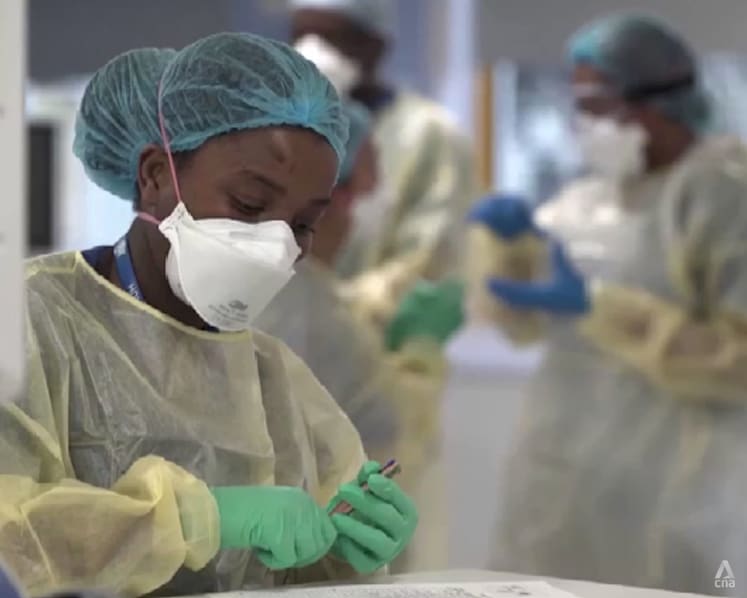
A nurse working in a hospital in the United Kingdom.

This audio is generated by an AI tool.


LONDON: About 25 years ago, Louie Horne left the Philippines to seek work abroad.
She was one of five foreign nurses at her hospital in east England at the time – today, the picture is very different.
In the 2020s, for every United Kingdom-trained nurse joining the national register, an internationally trained nurse joined too, underscoring the health service’s growing reliance on overseas staff.
But the country’s nursing landscape is changing again.
HIGHER VISA FEES
Last year, the UK government tightened entry requirements for overseas nurses to lower record-high net migration numbers. The move shifted resources and recruitment in favour of domestic staff.
Visa fees rose by 7 per cent, and foreign nurses working in the private sector may now have to wait 10 years instead of five to qualify for settled status and live in the UK indefinitely.
Combined with the comparatively lower pay than in countries such as the US, New Zealand and Australia, the changes have made the UK less attractive to foreign nursing talent. Because of that, the number of new international joiners has dropped significantly.
According to quarterly data from the UK’s Home Office, the number of nursing professionals granted visas to the UK fell by 93 per cent – from 26,100 in 2022 to 1,777 in 2025.





Uncertainty, rather than just visas, is the key concern for foreign nurses, said medical education researcher Katherine Woolf from University College London.
“It will give the message that the UK isn't a secure place, in that way where you can come and you know this is what the situation is going to be,” she said.
“I never hear people complaining that they have to have a visa … I think that the issue is that kind of certainty about what they are paying the money to be here for.”
Around one-fifth of the UK’s National Health Service workforce is born overseas.
Half of them are Asian, mostly from India and the Philippines, highlighting how crucial international perceptions of life in the UK are to recruiting the healthcare workers required to sustain the system.
Horne, who was appointed national nursing officer at trade union UNISON in November last year, told CNA that the new visa rules risk increasing vulnerability among overseas staff.
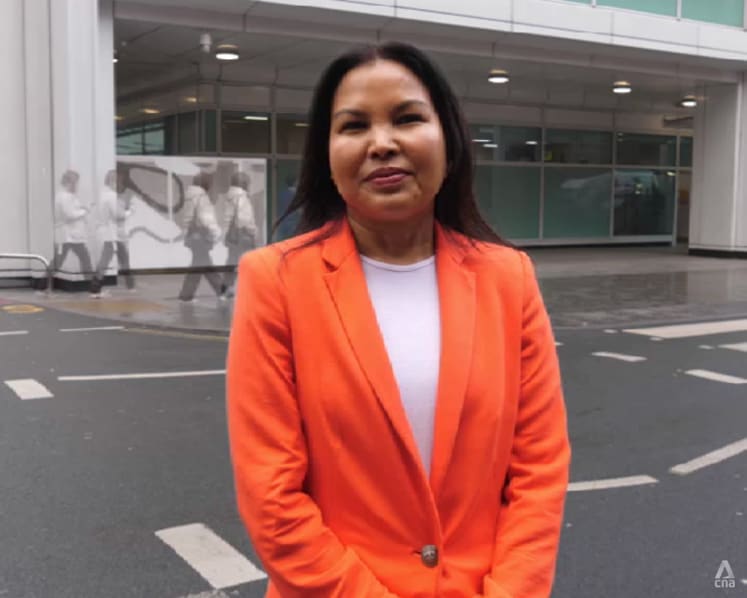
“It's very important as a trade union for us to protect these workers; to make sure that they are safe where they're working; (that) they're not treated unfairly,” she added.
Workforce surveys also point to worsening experiences of racism and xenophobia, making foreign nurses feel less welcome in the UK.
"I think it's still an attractive destination for international nurses and healthcare workers, but it wasn't the number one choice like it was before,” Horne warned.
Global nursing shortage
A global health challenge is intensifying.
Demand for nurses – the backbone of healthcare systems – is growing. While headline figures show supply is also expanding, a deeper look reveals widening gaps, uneven distribution and mounting pressure on poorer regions.
Nurses make up roughly more than 40 per cent of the global health workforce, according to numbers from the World Health Organization (WHO).
Any shortage doesn’t just affect hospitals – it weakens entire healthcare systems, from primary care clinics to emergency response networks.
The numbers: growth on paper
According to the State of the World’s Nursing 2025 report by the WHO and International Council of Nurses (ICN):
- In 2023, there were about 29.8 million nurses worldwide.
- By 2030, that number is projected to rise to 35.9 million.
At first glance, this appears to signal progress.
But by 2030, those nurses will need to serve a projected global population of 8.5 billion people, stretching systems that are already under pressure.
Not all regions are affected equally.
The African and Eastern Mediterranean regions are expected to face the most severe shortages in the coming years. These are also regions with some of the greatest healthcare needs.
On the move
Migration is now central to global healthcare staffing. According to the WHO and ICN report, about one in seven nurses works outside the country of their birth.
This reflects how heavily many healthcare systems depend on migrant labour. But the challenge is not simply about overall supply – it is about distribution.
About 78 per cent of the world’s nurses are concentrated in countries that account for less than half of the global population.
Across much of Asia, the outflow of nurses to wealthier economies is straining local healthcare systems.
IMPACT WORSE ON ELDERLY CARE SECTOR
As the UK government attempts to reduce reliance on international workers and reduce the number of people eligible for permanent residency, the shake-up has been more dramatic in the elderly care sector.
Recruiting carers directly from abroad has effectively been banned. Care homes can no longer sponsor visas for applicants who are not already legally living in the UK.
In a statement to CNA, the UK Home Office said: “We hugely value our international care workers, but too many have seen unacceptable levels of abuse and exploitation. In some cases, leading to debt, mistreatment or finding that jobs promised to them don’t exist.”
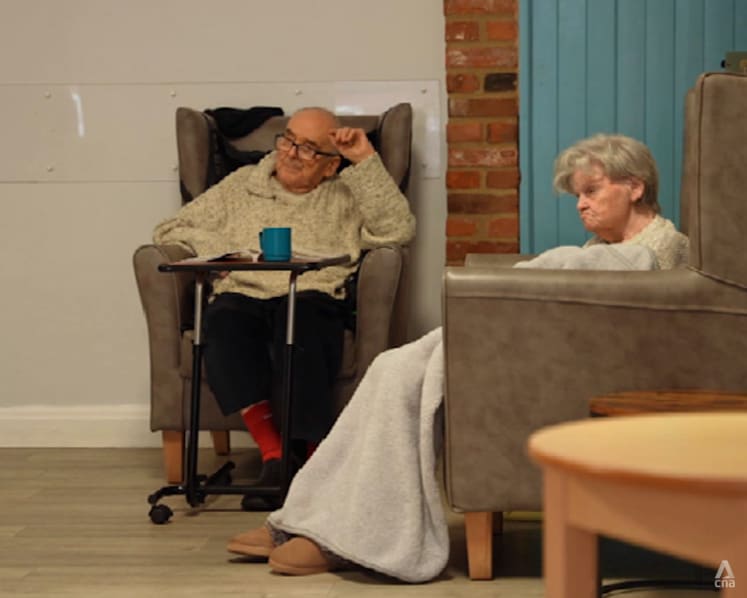
While industry players acknowledged these issues, they said they had already warned the government about this when care visas were issued en masse during the COVID-19 pandemic to fill more than 100,000 vacancies.
“We've always had, both in health and in social care, a percentage of a migrant workforce,” said Nadra Ahmed, executive chair of the National Care Association, a trade association in the UK for small- and medium-sized care providers.
“We did at that time say, ‘could you just make sure that they were for people who were registered providers?’ And they didn't take notice of that.
“And of course, there was an influx, with families. And that has been the challenge,” she added.
The association said a largely domestic workforce will always be the better option, but that has been impossible to achieve.
While wage increases could be the answer, social care is predominantly reliant on public funding, noted Isabel Shutes, associate professor in social policy at the London School of Economics.
“Providers have argued that often they're operating below the fees that actually cover the costs of care and are dependent on private sources of income through people paying for their own care,” she added.
With salaries constrained, international recruitment effectively halted, and an ageing population increasing demand, care providers fear mounting pressure.
Raj Sehgal, chief executive officer of care home services provider Armscare, said the impact is already being felt.
“Firstly, we cannot accept applications from overseas, which is devastating. And what they've said is that we can only recruit migrant workers who are already in the UK,” he said.

Sehgal previously recruited successfully from southern India, where there is a plethora of nursing graduates willing to work - a larger pool of qualified people than he can find in Britain.
He also warned that potential further rule changes could force foreign workers already in the UK to wait 10 or 15 years for permanent residency or to bring family members over, which would harm retention.
“The rest of the world … fortunately for them, is actually welcoming, (like) Australia, Canada, Ireland, the EU. They have the same needs as we do, but they are more welcoming,” he said.
“They have less stringent rules and less sort of draconian rules around family life and everything else, which means that people can work and settle and have a family life.”
FRUSTRATION OVER FUNDING MODEL
One Armscare employee who has been affected is Alamin Mia. He moved to England from Bangladesh in 2021 to study business administration.
After graduating from university in his home country, he struggled to find fulfilling work at home, and now works as a carer in rural east England.
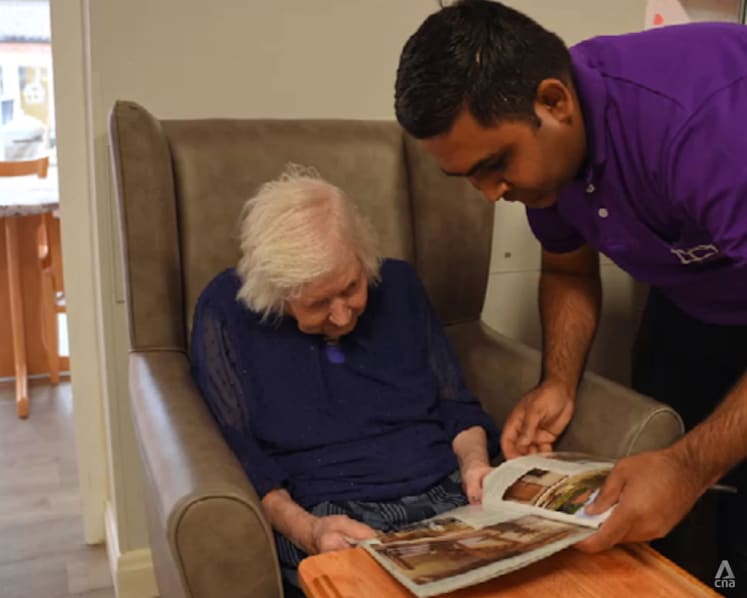
“Lots of people are suffering in different (ways) – different types of dementia, different types of disease. But what I found is, it's enjoyable to work with them, to help them,” he said.
But he is frustrated by the funding model that shapes pay in the sector.
“It's very difficult to survive here when you are working in the care sector. But … what we are doing, we are giving our best. We are working very hard to support people.”
The UK government has said it is creating a new body to negotiate pay between trade unions and employers, which it claims will raise care workers’ salaries by 2028.
But the care sector argues that may be too little, too late – and unlikely to attract enough domestic workers to fill the gap left by the sharp fall in overseas recruits.